











































A BALANCE BETWEEN PUBLIC MEMORY AND PUBLIC AMENITIES IS ESSENTIAL
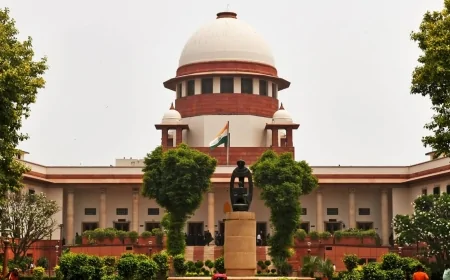
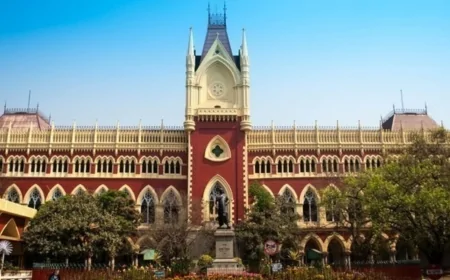
The tradition of erecting statues of leaders and public figures in public places is not new in India. However, the recent harsh remarks by the Supreme Court in a case involving permission to install a statue of M. Karunanidhi, the former Chief Minister of Tamil Nadu and a stalwart of Dravidian politics, have once again highlighted the political and social questions underlying this practice. The court clearly questioned why public tax money should be used to glorify politicians. Is it appropriate for politicians to focus on building their own memories instead of providing the facilities that ordinary citizens deserve?
A BALANCE BETWEEN PUBLIC MEMORY AND PUBLIC AMENITIES IS ESSENTIAL
27-SEP-ENG 10


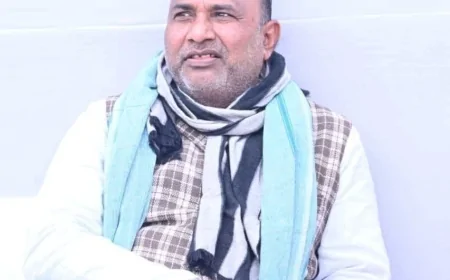
RAJIV NAYAN AGRAWAL
PATNA----------------------The tradition of erecting statues of leaders and public figures in public places is not new in India. However, the recent harsh remarks by the Supreme Court in a case involving permission to install a statue of M. Karunanidhi, the former Chief Minister of Tamil Nadu and a stalwart of Dravidian politics, have once again highlighted the political and social questions underlying this practice. The court clearly questioned why public tax money should be used to glorify politicians. Is it appropriate for politicians to focus on building their own memories instead of providing the facilities that ordinary citizens deserve?


Indeed, the Tamil Nadu government had sought permission to erect a statue of Karunanidhi in Tirunelveli district, but first the Madras High Court and then the Supreme Court both rejected the petition. The courts argued that erecting statues in public places disrupts traffic, inconveniences citizens, and increases pressure on urban infrastructure. Significantly, the Madras High Court offered the state government the alternative suggestion that, if the memory of leaders is to be kept alive, parks should be built in their names, so that people can come there to enjoy the greenery and also become familiar with the leaders' thoughts and contributions. This suggestion is a direction not just for Tamil Nadu, but for the political culture of the entire country.
Statue politics has a long history in India. From heroes of the freedom movement to leaders of regional parties, memorials and statues are found everywhere. This is not merely a gesture of tribute, but also a means of conveying social and political messages. A statue of a leader signals to a particular community or caste that their leader is respected, and to maintain that respect, their vote bank must be secured. This is why the demand for statue politics suddenly increases during election years or after the death of a prominent leader. But the question is: can a leader's legacy be defined solely by a stone or metal statue? Should public money be spent on infrastructure that neither improves education, nor healthcare, nor brings any tangible improvement to everyday life? Indeed, both public memory and public amenities are crucial in a democracy. The contributions of leaders and historical figures inspire society, and preserving their memory is essential. However, the question of how this memory lives on is fundamental. The courts have emphasized that the form of memory should be one that provides tangible benefits to society.
If the memory of Karunanidhi, or any other leader, is to be kept alive, why not establish a library in their name where their books, speeches, and thoughts are preserved and accessible to the new generation? Why not establish a technology park, a research center, or a scholarship scheme in their name that can provide real support to the youth? In this way, the memory of leaders will not merely be a mere showpiece but will also become a tool for social progress. Today, the situation in most Indian cities is such that residents feel a severe lack of clean air, greenery, and open space. Footpaths are encroached, parking is a problem, roads are broken, and traffic is in abysmal. In such a situation, when governments spend millions and crores of rupees to erect statues, it naturally leads to dissatisfaction among citizens. Based on this practical aspect, the courts have recommended that statues be replaced with parks, as they not only enhance the city's beauty but also provide a breathing space for citizens.
Parks are not just a symbol of greenery but also a place for social interaction. Children can play there, the elderly can stroll, and the youth can study or converse. If information about the lives and thoughts of leaders is available in such parks, it will create a balance between memory and convenience. The Supreme Court's comment raises another serious question: what should the public's tax money be used for? The foundation of democratic governance is that the public entrusts the government with the responsible management of its resources. However, when these resources are used to glorify leaders or for electoral gain, the very soul of democracy is hurt.
In a developing country like India, where healthcare, education, clean water, and infrastructure remain severely lacking, every rupee spent on statues is an opportunity taken away from the public. If that same money were invested in improving hospitals, repairing roads, or building parks, it would directly improve the quality of life. Legacy isn't built solely on statues. Legacy is built on ideas, actions, and institutions that make lasting contributions to society. To truly strengthen the legacy of a leader like Karunanidhi, who profoundly influenced Tamil politics and culture, it must be linked to education, literature, and social programs.
For example, if a Dravidian Thought Research Institute were established in Karunanidhi's name, where his writings, plays, and speeches could be studied, it would be far more valuable for future generations. Similarly, if a scholarship scheme for the poor were established in his name, it could improve the future of thousands and millions of young people. This would be a much greater and vibrant legacy than a statue. The stance taken by the Supreme Court and the High Court is a necessary intervention in democratic discourse. This is not a case limited to Karunanidhi or Tamil Nadu, but is a precedent for the entire country. The courts have attempted to shift this debate beyond the political lens and view it from the perspective of civic amenities and public resources. This message should be understood by all parties and states: heritage and memory cannot be separated from public welfare. In essence, today, when citizens of the country struggle daily with traffic, pollution, lack of employment, and a lack of infrastructure, the politics of statues truly mocks their priorities. There is no dispute about the memory and respect of leaders, but the form of that respect should be such that it provides tangible benefits to society. Parks, libraries, research institutes, scholarship schemes—all these are means by which a leader's ideology not only lives on but also provides a path for future generations. On the contrary, statues often become inert, controversial, and cumbersome structures. The Supreme Court's observation is a warning in this direction. It reminds democracy that taxpayers' money is for public needs, not for the decoration of political symbols. If governments and parties internalize this message, the country can achieve a balance of public memory and public convenience that will truly strengthen democracy.
What's Your Reaction?
 Like
0
Like
0
 Dislike
0
Dislike
0
 Love
0
Love
0
 Funny
0
Funny
0
 Angry
0
Angry
0
 Sad
0
Sad
0
 Wow
0
Wow
0