




































MoU SIGNED FOR CONSERVATION AND PROMOTION OF CULTURAL HERITAGE
-Following today's agreement, the Bihar Museum will not only serve as a center for the conservation of antiquities but will also become a vital medium for preserving and promoting Bihar's rich folk and traditional arts. Efforts will be made, particularly through the museum, to secure national and international recognition for endangered art forms such as *Pidiya Lekhan*.

MoU SIGNED FOR CONSERVATION AND PROMOTION OF CULTURAL HERITAGE
17-JULY-ENG 4
RAJIV NAYAN AGRAWAL
PATNA-------------------------Following today's agreement, the Bihar Museum will not only serve as a center for the conservation of antiquities but will also become a vital medium for preserving and promoting Bihar's rich folk and traditional arts. Efforts will be made, particularly through the museum, to secure national and international recognition for endangered art forms such as *Pidiya Lekhan*.


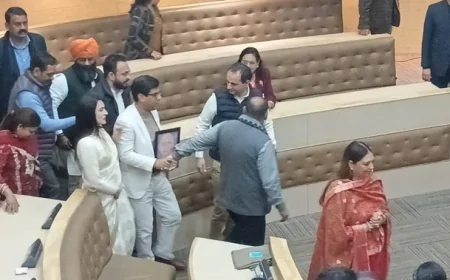
These remarks were made during the signing of a significant agreement regarding the conservation, research, promotion, and technical collaboration concerning art and cultural heritage. The agreement was signed between the Indian Institute of Heritage (IIH), Noida, and the Bihar Museum on July 3, 2026, in the museum's grand auditorium—packed with art enthusiasts—by Dr. Omprakash, Vice-Chancellor of IIH, Noida, and Dr. Anjani Kumar Singh, Director General of the Bihar Museum.
A Memorandum of Understanding (MoU) regarding the conservation, research, training, and technical collaboration in the field of art and cultural heritage was signed at the Bihar Museum by Dr. Sachchidanand Joshi, Vice-Chancellor of the Indian Institute of Heritage (IIH), Noida, and Shri Anjani Kumar Singh, Director General of the Bihar Museum.
Dr. Sachchidanand Joshi, Vice-Chancellor of the Indian Institute of Heritage, stated that the agreement (MoU) signed today between the IIH and the Bihar Museum is of immense importance. Conservation is one of the core areas of operation for the IIH, and collaborating with international bodies like ICOM-CC in this field is the need of the hour. This partnership is significant because the two institutions complement each other in the realm of conservation. It will facilitate the exchange of knowledge, experience, and technical expertise, while also creating new learning opportunities.
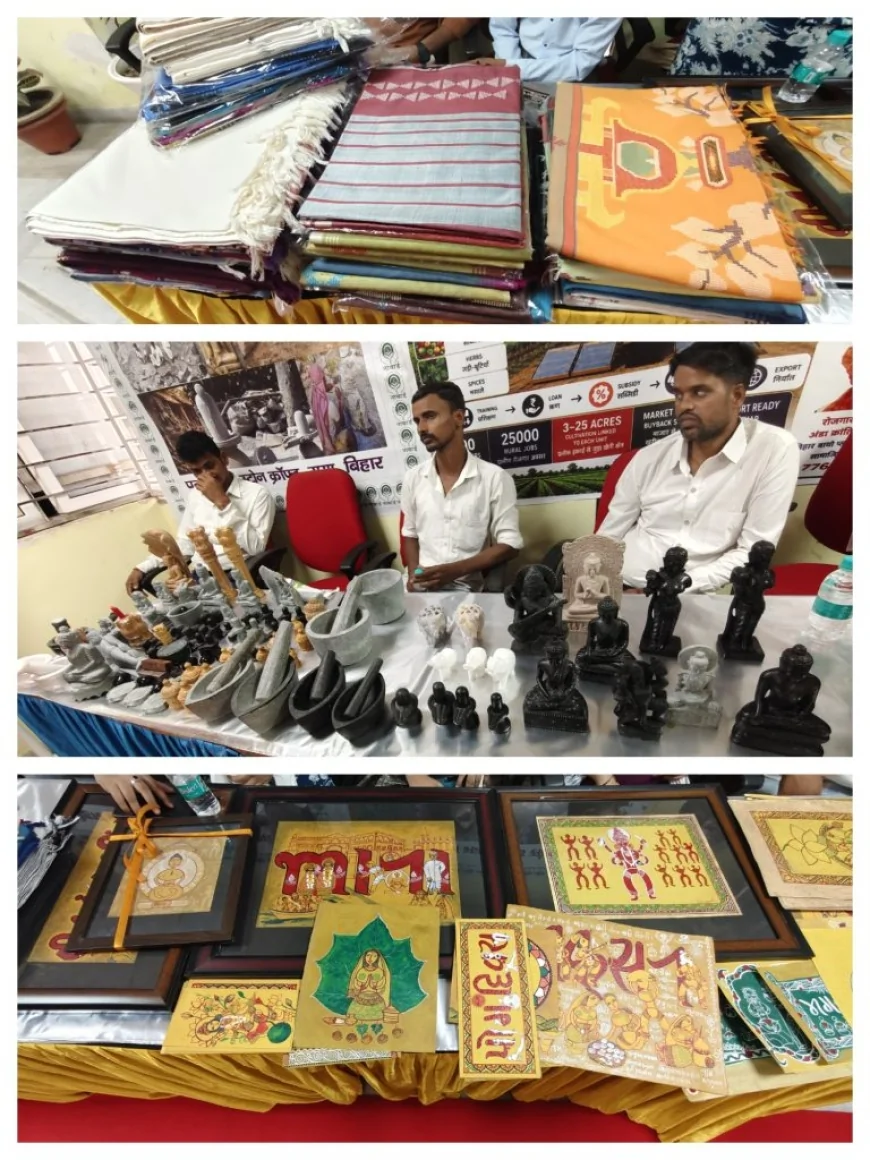
In the second phase of the program, an exhibition of Bhojpuri paintings was inaugurated under the aegis of the Bihar Kala Manch and Aasra Seva Kendra. The exhibition was formally opened through the ceremonial lighting of the lamp by Padma Shri Prof. Shyam Sharma, Padma Shri Ashok Kumar Biswas, Padma Shri Bhim Singh Bhavesh, and Ashok Kumar Sinha, Additional Director of the Bihar Museum. Ashok Kumar Sinha, Additional Director of the Bihar Museum, stated that approximately 100 artworks were received for this exhibition, though only about 45 have been displayed due to space constraints. Bhojpuri painting is deeply rooted in folk life, festivals, rituals, and social traditions; its distinctive linear style, color palette, and symbolic expression give it a unique identity. Tradition is never static; it must be advanced through constant dedication, practice, and innovation. Just as Mithila painting gained global recognition over time, Bhojpuri painting is also poised to reach new dimensions.
He noted that this exhibition would not be limited to merely preserving regional art but would also create employment opportunities for local artists, while simultaneously revitalizing and inspiring traditional art and lifestyles. I find this initiative invaluable. Beyond the mere preservation of diversity, this is a significant opportunity to showcase Bhojpuri identity—our heritage—as a world-class art form. Any art form gains true recognition and respect only when it receives such a platform.
Padma Shri Bhim Singh Bhavesh remarked that this initiative goes beyond art preservation; it creates employment opportunities for local artists and serves as a powerful medium to conserve and encourage their traditional art and skills. I am delighted by this development. Another significant milestone is the hosting of the first exhibition of 'Pidiya Lekhan' (a traditional art form) at the Bihar Museum following its receipt of the GI (Geographical Indication) tag. This is a historic moment of pride for us all. Art gains recognition and respect only when it is presented on a broad platform.
Padma Shri Ashok Kumar Vishwas expressed immense joy and pride regarding the GI tag awarded to 'Pidiya Lekhan'. He stated that receiving a GI tag opens new avenues for the growth and recognition of any art form. This not only garners national and international recognition for the uniqueness of the art form but also opens up new dimensions and possibilities for the associated artists.
Padma Shri Prof. Shyam Sharma remarked that Bihar is a land rich in folk and traditional arts. Cultural traditions such as Maithili, Angika, Vajjika, Magahi, and Bhojpuri have elevated India's cultural stature on both national and international platforms. Bhojpuri folk painting stands as a powerful expression of this rich heritage. It is a matter of immense pride for all of us that the Bhojpuri folk painting exhibition—likely the first organized exhibition of this genre—is being inaugurated at the hands of Padma Shri Dr. Sachchidanand Joshi. This is a moment of honor and inspiration for all the participating artists.
The artists participating in this event include Kamlesh Kundan, Bhaskar Mishra, Aman Raj, Rupa Kumari, Raushan Rai, Anita Pandey, Gudiya Kumari, Mukesh Kumar, Abhinav Mishra, and Ramavati Devi was present.
The event concluded with a vote of thanks proposed by Roshan Roy. Subsequently, all the guests viewed the exhibition and appreciated the displayed artworks and folk art forms. A large number of Bhojpuri painting artists were present at the event.
It goes without saying that today—marked by the inauguration of the Bhojpuri painting exhibition and the signing of an MoU between the Indian Institute of Heritage and the Bihar Museum for the preservation and promotion of cultural heritage—will prove to be a significant milestone, adding a golden chapter to the history of the Bihar Museum. At the same time, this pioneering Bhojpuri painting exhibition—by prominently showcasing the region's artistic identity—will bring honor to the art form and further enrich Bihar's traditional culture; asserting this is certainly no exaggeration.
What's Your Reaction?
 Like
0
Like
0
 Dislike
0
Dislike
0
 Love
0
Love
0
 Funny
0
Funny
0
 Angry
0
Angry
0
 Sad
0
Sad
0
 Wow
0
Wow
0