





















































‘A TRANSFOMED INDIA:A NEW CHAPTER IN CRICKET AND SELF-RESPECT’
“India's Approach to the Asia Cup 2025 Final and a Reflection of National Pride Beyond the Field”

‘A TRANSFOMED INDIA:A NEW CHAPTER IN CRICKET AND SELF-RESPECT’
30-SEP-ENG 11


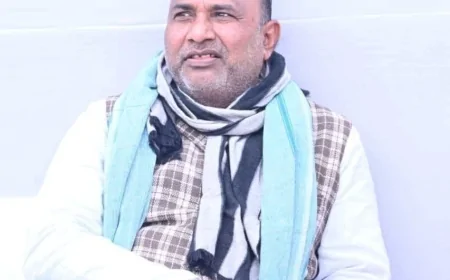
RAJIV NAYAN AGRAWAL
ARA---------------------------“India's Approach to the Asia Cup 2025 Final and a Reflection of National Pride Beyond the Field”


The Asia Cup 2025 final was more than just a game of cricket. India, after defeating Pakistan, refused to accept the trophy because the award-winner was a Pakistani representative. This delayed the presentation ceremony for hours. This move not only demonstrated a sporting victory but also conveyed a clear message of national pride and political significance. Supporters hail it as a manifestation of the strength and courage of the “new India,” while critics see it as an attack on the spirit of sportsmanship. This incident is a memorable turning point in Indian cricket history, bridging sports, politics, and national pride.
The final match of the Asia Cup 2025 was more than just a thrilling game of cricket. It became a diplomatic and cultural message, more than just a game. India not only defeated Pakistan on the field but also adopted a stance during the post-match formalities that captured the attention of the entire world. The Indian players flatly refused to accept the trophy from the President of the Asian Cricket Council, who is from Pakistan. As a result, the award ceremony dragged on for hours and ultimately remained incomplete. This incident marks a turning point in the history of Indian cricket. The question isn't just who held the trophy, but why India took this step and what its consequences are.
Cricket is often called a "gentleman's game," but in the context of India and Pakistan, it has never been merely a game. It has become a symbol of political tension, cultural conflict, and national identity between the two countries. When the Indian players refused to accept the trophy, it sent a clear message that India prioritizes its self-respect over victories on the field. In a way, it was "a reverse version of sport and diplomacy." While sports is often considered a tool to soften politics, India used the platform of sports to deliver a political message.
Under the leadership of Prime Minister Narendra Modi, it has repeatedly been claimed that India no longer bows down, but dictates its own terms. In this context, Team India's stance is being seen as an extension of that mindset. For India, accepting the trophy was merely a formality, but when the recipient is the same country with which terrorism, infiltration, and border tensions persist, the significance of that formality changes. This new India not only speaks in the language of economic and military power, but also is relentless in conveying political messages on the sporting stage. This incident also had a profound impact on domestic politics. Supporters are calling it a bold step in the Modi era, while the opposition considers it an attack on the spirit of sportsmanship. However, among the public, it was widely seen as a victory for self-respect.
Every bold step is accompanied by criticism. India's stance raised many questions. Critics say that the fundamental purpose of cricket is to promote friendship and harmony between nations. When you refuse to accept the trophy, you hurt the very soul of the game. The international media took a mixed view of the incident. Some called it India's "policy of dominance," while others called it "arrogance." The question is whether this will harm India's "soft power." Furthermore, a debate has arisen as to whether the players took this step voluntarily or under pressure from the board and the government. If players become mere pawns in political decisions, it's natural to question their independence and the sanctity of the game.
Controversy in Indian and Pakistani cricket is nothing new. In 1987, when the Pakistani President came to watch the Jaipur Test, it was called "cricket diplomacy." Pakistan's victory in the Chennai Test before the Kargil War in 1999 and the subsequent political turmoil are still remembered. After the 2008 Mumbai attacks, India permanently suspended bilateral series with Pakistan. A venue dispute arose over the 2023 Asia Cup, where India refused to travel to Pakistan, ultimately leading to the tournament being held "jointly." Against these backdrops, the 2025 incident is not an isolated incident but part of a long-standing pattern in which cricket has always been played under the shadow of politics.
This incident could have far-reaching consequences. Although the Asian Cricket Council is headquartered in Dubai, Pakistan has long sought to increase its influence within the organization. India has made it clear that no structure can function without its consent. The International Cricket Council claims neutrality, but if one of the major teams, India, sends a political message by taking such a step, the Council will be forced to decide its stance. It remains to be seen where teams like Bangladesh, Sri Lanka, and Afghanistan will stand in this tussle. India's pressure will influence them, but in the long run, it could weaken regional cooperation.
This stance by India certainly symbolizes the "new India." It is a face of India that prioritizes self-respect and shuns formality or tradition. But it is also true that overly integrating the soul of the game into politics can sometimes be detrimental. Did India do the right thing? For supporters, the answer is simple—yes, because it was a question of self-respect. The answer for critics is no, because the sporting arena should not be a political arena.
The real question is whether cricket will remain just cricket or will it become a sub-continent. Politics will always be amplified on the island. The events of the Asia Cup 2025 only make this question more acute. One thing is certain—this is a changed India. On the field, on the stage.
What's Your Reaction?
 Like
0
Like
0
 Dislike
0
Dislike
0
 Love
0
Love
0
 Funny
0
Funny
0
 Angry
0
Angry
0
 Sad
0
Sad
0
 Wow
0
Wow
0