




















































































FINED IMPOSED FOR DISPLAYING A CASTE NAMEPLATE ON ONE HAND WHILE ON THE OTHER THERE IS FREE REING TO ISSUE CASTE CERTIFICATES
--There is a long-standing adage: "Neither ledger nor account book matters; whatever the government says is right." Conversely, government employees are prohibited from reporting for duty in offices while wearing religious marks—such as a *tilak* or *chandan*—or displaying symbols indicative of their caste.

FINED IMPOSED FOR DISPLAYING A CASTE NAMEPLATE ON ONE HAND WHILE ON THE OTHER THERE IS FREE REING TO ISSUE CASTE CERTIFICATES
8-MAY-ENG 2


RAJIV NAYAN AGRAWAL
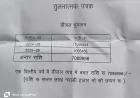
BHABHUA---------------------------There is a long-standing adage: "Neither ledger nor account book matters; whatever the government says is right." Conversely, government employees are prohibited from reporting for duty in offices while wearing religious marks—such as a *tilak* or *chandan*—or displaying symbols indicative of their caste. Meanwhile, those who merely use Dr. Ambedkar as a pawn within the Indian Constitution craft laws that are inherently discriminatory, yet they cast the blame upon the Constitution itself. They assert that anyone who violates the Constitution will face legal action—arguing that the nation is governed by the Constitution and will continue to be so, precisely because it was drafted by Baba Saheb. The Prime Minister, occupying the nation's highest office, is free to visit temples wearing a *chandan tilak* and garlands; yet, on the other hand, a government employee is barred from performing their professional duties while doing the very same.


On one hand, an FIR is registered if one merely mentions caste; yet, in this democracy, seats for contesting elections are allocated based on caste, and government employees are tasked—under official orders—with issuing caste certificates. It is truly a bizarre paradox: while the state facilitates the creation of caste certificates, it simultaneously registers criminal cases against those who speak of caste. What a peculiar system of law! Rights regarding admission to educational institutions, entry into government jobs, and access to scholarships have all been granted in the name of caste. Yet, whenever the issue arises, politicians fall back on the argument that "the Constitution was created by Baba Saheb." They never admit, "We are the ones who framed these specific laws"; instead, they cast blame upon Baba Saheb, thereby tarnishing his legacy. Democracy supposedly grants equal rights to all—but could someone please point out where, exactly, those rights are being effectively exercised? You have likely heard the name "Tughlaq"; people frequently remark—often in exasperation—that a particular order is nothing more than a "Tughlaqi decree" (an arbitrary, whimsical command). Does this old adage not appear to be proving itself true in our present times? If a ruler were to discard poverty as the criterion for social welfare and replace it with caste—thereby sowing seeds of discord and animosity among different castes—what, then, should such an act be called? A "Tughlaqi decree," or something else entirely?
What's Your Reaction?
 Like
0
Like
0
 Dislike
0
Dislike
0
 Love
0
Love
0
 Funny
0
Funny
0
 Angry
0
Angry
0
 Sad
0
Sad
0
 Wow
0
Wow
0