IS DHANKAR’S RESIGNATION A HEALTH PRETEXT OR A SIGN OF A POLITICAL REALIGNMENT?
India's 14th Vice President Jagdeep Dhankhar has created a huge stir in political circles by suddenly resigning from his post on Monday. He cited 'health problems' as the reason for his resignation, but there is scope for doubt in both the ruling and opposition camps about this argument. Such sudden decisions in politics are often not motivated by just a personal reason, factors like power equations, internal disagreements and strategic restructuring are also active behind them. Given Jagdeep Dhankhar's political background and the nature of his tenure, it is politically difficult to accept that this resignation has come only due to a health crisis.
IS DHANKAR’S RESIGNATION A HEALTH PRETEXT OR A SIGN OF A POLITICAL REALIGNMENT?
23-JULY-ENG 7
RAJIV NAYAN AGRAWAL
PATNA--------------------------India's 14th Vice President Jagdeep Dhankhar has created a huge stir in political circles by suddenly resigning from his post on Monday. He cited 'health problems' as the reason for his resignation, but there is scope for doubt in both the ruling and opposition camps about this argument. Such sudden decisions in politics are often not motivated by just a personal reason, factors like power equations, internal disagreements and strategic restructuring are also active behind them. Given Jagdeep Dhankhar's political background and the nature of his tenure, it is politically difficult to accept that this resignation has come only due to a health crisis.
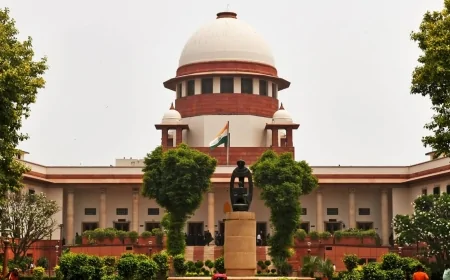
Dhankhar took oath as the Vice President of India on 11 August 2022. His tenure as the Chairman of the Rajya Sabha was full of confrontation and controversies from the very beginning. This confrontation was not only with the opposition parties, but also with the judiciary many times. Particularly controversial was his remark in April 2025 in which he compared Article 142 of the Constitution to a ‘nuclear missile’ that the judiciary always has at its disposal against democratic institutions. Dhankhar’s public protest against the Supreme Court’s deadline for the President and Governors to give their assent to bills was extraordinary in terms of the dignity of the office and the judiciary-constitution balance.
These events raised questions about his ‘neutrality’ as Vice President. It was alleged that he speaks the language of the ruling party and promotes a partisan attitude like the Speaker in the conduct of the Rajya Sabha. The no-confidence motion brought by the India Alliance during the winter session was evidence of how much the opposition disapproved of his conduct. Dhankhar cited health as the reason for his resignation, and senior journalist Neerja Chowdhary also believes that this reason cannot be false, as he was recently hospitalized, but the question arises that if health was the main reason, then the resignation could have been given just before the session of Parliament, or after the session. Resignation given in the middle of an active session, without any public warning or prior notice, does not seem politically natural.
Congress leader Jairam Ramesh's statement that Dhankhar was with other MPs till 5 pm and they also talked on the phone at 7:30 pm suggests that this decision was taken suddenly on the same day, behind which some immediate political development seems more likely. Dhankhar's political life has been multifaceted. He came into politics from Janata Dal, then went to Congress and finally joined the Bharatiya Janata Party in 2003. Dhankhar, a lawyer turned politician, practiced law in the Rajasthan High Court and the Supreme Court, and also served as Union Minister of State in 1990. In 2019, he was made the Governor of West Bengal, where his conflict with the Mamata Banerjee government remained almost constant.
His public image became that of an outspoken, pro-Constitution and Sanatan Dharma, but controversial person. On the one hand, this image matched the ideology of the ruling party, but on the other hand it made him a 'polarizing figure', a character that could become strategically uncomfortable for the ruling party as well. Experts raised the question whether this resignation is related to the internal equations of BJP and RSS? There has been speculation of organizational restructuring in the BJP for a long time. The tenure of the current president JP Nadda has been extended several times, but there is no clarity in the party regarding the appointment of a new president. Is there a plan to give Jagdeep Dhankhar a new role in the organization? Or has he separated due to discomfort with the functioning of the organization? Also, it is possible that with an eye on the 2026 or 2027 general elections, the BJP is adopting a 'cooling off period' strategy, in which controversial faces are being removed from public institutions to prepare for the future. If this is the case, Dhankhar's resignation is a sign of a political realignment.
Dhankhar has been constantly accused of breaking the tradition of impartiality in the Rajya Sabha. He was seen to easily implement the process of keeping the opposition's statements 'off the record'. Recently, during a session of Parliament, JP Nadda's statement that what I am saying will go on record is a serious signal, as such a statement is usually made by the Chairman. This development shows that a conflict or complication was arising in the role of the ruling party and the Chairman.
Overall, Dhankhar's resignation is a symbol of distance not just from a post but from a role, a role in which he was working as a political messenger, but now perhaps that message is being redefined within the power itself. This resignation highlights the lack of transparency and challenges of institutional balance in India's current political culture. Dhankhar may have described his resignation as personal and related to health, but incidentally it is a public and political decision, in the background of which many elements like constitution, power, organization and balance are present. In the coming time it will be clear whether this resignation is a preparation for a new system at the center of power or a public transformation of some disagreement. At present, this is not just a post, but the announcement of the end of an era, and perhaps even the beginning of a new era.
What's Your Reaction?
 Like
0
Like
0
 Dislike
0
Dislike
0
 Love
0
Love
0
 Funny
0
Funny
0
 Angry
0
Angry
0
 Sad
0
Sad
0
 Wow
0
Wow
0