
























































WHEN THE SOUL OF THE NATION WEARS A UNIFORM: AN IMMORTAL SAGA OF STRUGGLE, RESOLVE AND SUPREME SACRIFICE
When a nation sleeps peacefully, a soldier is awake at its borders, creating history. The Indian Army is not merely a military organization, but the protector of India's soul. History is not made of dates, but of the footsteps that walk the borders and the sacrifices whose voices are never heard. Indian Army Day is not just a day of remembrance, but a reaffirmation of that invisible covenant that is renewed every day between the soldier and the nation—where the soldier gives his today so that the country's tomorrow remains secure.

WHEN THE SOUL OF THE NATION WEARS A UNIFORM: AN IMMORTAL SAGA OF STRUGGLE, RESOLVE AND SUPREME SACRIFICE
23-JAN-ENG 2


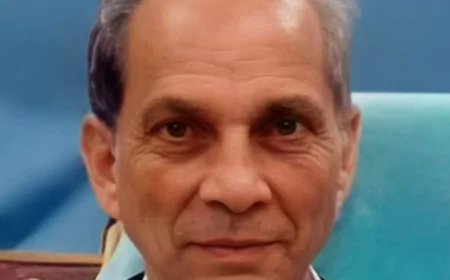
RAJIV NAYAN AGRAWAL
PATNA---------------------------When a nation sleeps peacefully, a soldier is awake at its borders, creating history. The Indian Army is not merely a military organization, but the protector of India's soul. History is not made of dates, but of the footsteps that walk the borders and the sacrifices whose voices are never heard. Indian Army Day is not just a day of remembrance, but a reaffirmation of that invisible covenant that is renewed every day between the soldier and the nation—where the soldier gives his today so that the country's tomorrow remains secure.


On January 15, 1949, when independent India entrusted the supreme command of its army to one of its own sons for the first time, it was not merely an administrative change, but a formal declaration of national pride. Under the leadership of Field Marshal K.M. Cariappa, the Indian Army proved that the army belongs to the constitution, not to power. Amidst the tragedy of partition, limited resources, and crises at the borders, the army, staying away from political noise, responded in the language of duty.
On January 15, 1949, Field Marshal K.M. Cariappa became the first Indian Commander-in-Chief of independent India. Indian Army Day is celebrated every year on January 15th to commemorate this historic day. This day symbolizes the end of British military rule and the beginning of a chapter of indigenous leadership, self-reliance, and self-respect.
The 1947–48 Kashmir War, the 1962 Indo-China War, the 1965 Indo-Pak War, the 1971 Bangladesh Liberation War (a golden chapter in history), the 1999 Kargil Victory, and anti-terrorism and anti-Naxalite operations.
“Nothing is greater than service, no religion is greater than duty.” From the snow-capped peaks of the Himalayas to the scorching sands of the desert and the forests battling terrorism, on every front, the blood of the Indian soldier raises the tricolor even higher. Every victory has not only been a military success but also a moral decision taken in favor of humanity.
The sacrifice of the Indian soldier lives on not in statistics, but in memories—in a mother's silence, a wife's patience, and a child's unfulfilled waiting.
The Indian Army does not only fight wars. It is the first responder in disasters such as earthquakes, floods, and cyclones. Through its global contributions to UN peacekeeping operations, its role as the backbone of internal security, and its pioneering work in development in border areas, the Army has set an example of humanitarian service—reaching where the government is slow to arrive.
The world's largest volunteer army, with its highest standards of combat training, modern technology, and increasing reliance on indigenous weapons, along with the growing and historic participation of women officers and an active role in "Make in India," the Indian Army has become a global standard of discipline, ethics, and courage.
The Indian Army's motto—"Service is the Supreme Duty"—is not just a slogan, but a resolve ingrained in the very breath of every soldier. The Army is not a protector of power, but of the Constitution—above politics, unwavering in the national interest.
Today's warfare is fought not only on borders but also in cyberspace, through hybrid warfare, drones, and technological fronts. Amidst these challenges, the Indian Army remains modern, disciplined, and steadfast in its values. The increasing participation of women, indigenous defense production, and young leadership are indicators of its preparedness for the future.
Respect for soldiers should not be limited to ceremonies. Their families, rehabilitation, and dignity—this is the collective responsibility of the nation. A strong army is built not only with weapons but also with a respectful society.
The Indian Army is the most disciplined and silent institution of democracy. It does not raise slogans; it sets examples. January 15th is not just Army Day, but also a day for civic consciousness, a day to reflect on whether we are worthy of the security that has been given to us selflessly.
Salute to the Indian Army—today, tomorrow, and for every night that we have slept peacefully.
Service is the Supreme Duty.
What's Your Reaction?
 Like
0
Like
0
 Dislike
0
Dislike
0
 Love
0
Love
0
 Funny
0
Funny
0
 Angry
0
Angry
0
 Sad
0
Sad
0
 Wow
0
Wow
0