























































FIVE DAY WOMEN’S THEATRE FESTIVAL-2026
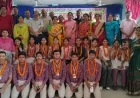
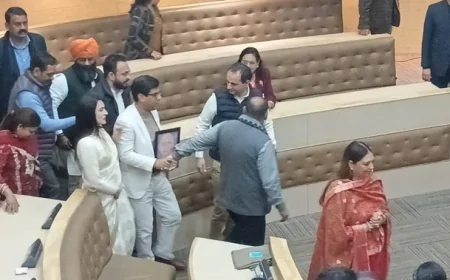
Just like last year, on the occasion of Bihar Diwas – 2026, a five-day Women's Theatre Festival was organized from March 22 to 26 under the joint aegis of the Department of Art and Culture, Government of Bihar, and the Bihar Sangeet Natak Akademi. The event was held in a highly dignified atmosphere at the local Premchand Rangshala. The program was formally inaugurated by the Honorable Minister of Art and Culture, Arun Shankar Prasad, by lighting the ceremonial lamp. Present on this occasion were Ruby, Director of the Directorate of Cultural Affairs; Krishna Kumar, Director of the Directorate of Museums; and Mahmood Alam, Secretary of the Bihar Sangeet Natak Akademi, along with Assistant Secretary Kirti Alok.

FIVE DAY WOMEN’S THEATRE FESTIVAL-2026
10-MAY-ENG 1


RAJIV NAYAN AGRAWAL
PATNA-------------------------Just like last year, on the occasion of Bihar Diwas – 2026, a five-day Women's Theatre Festival was organized from March 22 to 26 under the joint aegis of the Department of Art and Culture, Government of Bihar, and the Bihar Sangeet Natak Akademi. The event was held in a highly dignified atmosphere at the local Premchand Rangshala. The program was formally inaugurated by the Honorable Minister of Art and Culture, Arun Shankar Prasad, by lighting the ceremonial lamp. Present on this occasion were Ruby, Director of the Directorate of Cultural Affairs; Krishna Kumar, Director of the Directorate of Museums; and Mahmood Alam, Secretary of the Bihar Sangeet Natak Akademi, along with Assistant Secretary Kirti Alok.


In his address, Art and Culture Minister Arun Shankar Prasad stated that the 114th Bihar Diwas is a matter of great joy for all of us. Such events play a significant role in the preservation and revival of Bihar's rich cultural heritage. He remarked that over the coming five days, the audience would witness excellent theatrical performances showcasing the finest aspects of the dramatic arts through various stage presentations.
Expressing his heartfelt sentiments, he emphasized that just as Bihar is advancing rapidly on the path of development, it is equally essential to propel the state's art and culture forward with the same momentum. The government is continuously working to encourage artists. Through the 'Chief Minister's Artists' Pension Scheme,' efforts are being made to honor the state's elderly artists. Furthermore, the government remains committed to preserving the folk arts that are currently facing the threat of extinction.
He observed that as long as folk culture remains alive, the very soul of the land remains alive. He expressed his confidence that, under the guidance of the Chief Minister and the Prime Minister, Bihar would be established as a developed state.
The Theatre Festival commenced on its opening day with the staging of the play *Paro*—written by Nagarjun and directed by Sharda Singh—presented by the theatre troupe 'Prastuti'. On the second day, *Bidesiya*—written by Bhikhari Thakur and directed by Sadhana Srivastava for *Rang Srishti*—was staged. On the third day, *Fark Hai*—directed by Manjari Mani Tripathi for *Voice Into Theatre*—was presented. The fourth day featured *Charulata*—directed by Soma Chakraborty for *Prangan*—while the fifth and final day saw the staging of *Adhe Adhure*—directed by Subanti Banerjee for *Joganjali*.
On this occasion, prior to the theatrical performance each day, various theater groups presented *Nukkad Nataks* (street plays) in the outer precincts of the auditorium. These included *Adrishya Jaal* by *Struggler*, *Udaan Ek Babul Ki* by *Abhinay Art*, *Wo Jo Chup Hai* by *Anhad*, *Khuchchad* by the *Madhyam Foundation*, and *Dahej Ek Trasadi* by *Creation*.
A defining feature of the Women's Theater Festival was that every play was directed by a woman.
On the first day of the Women's Theater Festival, the play *Paro*—based on the novel of the same name by the renowned litterateur Nagarjun—was staged. Adapted for the stage by Vivek Kumar and directed by Sharda Singh, the play's musical arrangement was crafted by veteran theater director Sanjay Upadhyay.
The play presented a poignant portrayal of the social evils prevalent in the Mithila region during the first half of the 20th century—specifically child marriage, polygamy, and mismatched marriages. The story's protagonist, Paro—a mere thirteen-year-old girl from an impoverished Brahmin family—falls victim to these social ills and ultimately succumbs during childbirth. Stirring the emotions of the audience, the play inspired deep reflection on the regressive customs entrenched within society.
Through this play, the playwright Nagarjun raises a profound question: rather than marrying off one's daughter to an uneducated, uncultured, middle-aged, alcoholic stranger, what possible objection could there be to marrying her—even if to a distant relative (such as a cousin)—provided he is a decent, educated, and cultured individual who himself desires the marriage?
The performances of Ruby Khatoon in the lead role of Paro and Abhishek Anand as Birju were exceptionally powerful and impactful. Among the other performers, the acting of Vivek Kumar, Vineeta Singh, Sadhana, Sparsh Mishra, and Krishna was also commendable. The lighting design was conceived by Vinay Kumar, and the musical arrangement was handled by Rohit Chanda, elements that further enhanced the impact of the play. The stage was anchored by the artist Pallavi Biswas.
On the second day, the theater troupe 'Rang Srishti' (Patna) presented "Bidesiya"—the immortal masterpiece by the "Shakespeare of Bhojpuri," Bhikhari Thakur—under the direction of Sadhana Srivastava.
The play opens with a playful banter between Bidesi and his wife, Pyari. Driven by grand ambitions, Bidesi insists on leaving his village to seek his fortune in Calcutta. Pyari tearfully pleads with him to stay, but blinded by ambition, he disregards her love and sets out on his journey. For several years, there is neither a letter nor any news from him. ... In Calcutta, Bidesi falls in love with a courtesan named Dhaniya and takes her as his wife. Eventually, Pyari, too, arrives in Calcutta. Ultimately—having traversed a journey of pain, love, and separation—Pyari comes to accept Dhaniya not as a rival for her husband's affection, but as a partner in life. The stage was anchored by Ms. Ruby Khatoon.
On the third day, the theater troupe "Voice Into Theatre" presented a powerful staging of the play "Fark Hai" (There is a Difference), directed by Manjari Mani Tripathi.
The play "Fark Hai" is based on real-life events occurring within a school setting, highlighting the class distinctions and inequalities of opportunity prevalent in society... It effectively presents sensitive themes—such as human dignity and emotional trauma—from the perspective of children. The play poignantly portrays the mindset of upper-class children who view themselves as superior, juxtaposed against the struggles of children from slum areas and their spirited determination to rise through sheer confidence and talent. Children hailing from humble backgrounds—such as the character ‘Rani’—win everyone's hearts through the brilliance of their talent. This event not only brings about a shift in the teachers' mindset but also inspires the other children to engage in introspection.
The play concludes with a powerful appeal for solidarity, equality, and mutual understanding, compelling the audience to reflect upon the anomalies—such as discrimination and inequality—that often prevail within school environments.
On the fourth day, the theater troupe ‘Prangan’ staged *Charulata*—written by Rabindranath Tagore and directed by Soma Chakraborty. The production presented themes of female dignity, sensitivity, and self-determination with remarkable impact, captivating the entire audience.
The fifth and final day—the closing ceremony—concluded with a performance of the play *Adhe Adhure* (Half-Complete), presented by the theater troupe ‘Joganjali’. Written by the renowned playwright Mohan Rakesh and directed by the celebrated theater artist Subanti Banerjee, the production proved to be a fitting finale.
Ranked among the most significant realist plays in modern Hindi theater, the widely acclaimed *Adhe Adhure* powerfully depicts the disintegrating structure of a middle-class family, the growing bitterness within relationships, and the inherent sense of incompleteness experienced by the individual. The play's central protagonist, Savitri, seeks fulfillment in life while shouldering her family's financial and emotional responsibilities; however, circumstances repeatedly steer her toward a path of perpetual dissatisfaction and struggle.
The other family members, too, are portrayed grappling with their own respective complexities and tribulations. By the play's conclusion, it becomes evident that the "complete man" Savitri has been searching for does not, in reality, exist anywhere; every individual remains incomplete in their own unique way. Ultimately, Savitri returns to that very same fractured family—a place where everyone is compelled to live with their own sense of incompleteness.
This play brings to light a stark reality of modern life: one where individuals and their relationships remain far removed from any sense of wholeness—existing, instead, as merely "half-complete." The powerful direction, coupled with the satisfying performances of the cast, succeeded in making the intended impact upon the audience. The proceedings of today's program were anchored by Ms. Soni.
All in all, this five-day Women's Theatre Festival—presented courtesy of the Department of Art and Culture, Bihar, and the Bihar Sangeet Natak Akademi, Patna—proved to be an unqualified success. On one hand, the participation of female directors across all the plays served to underscore the theme of women's empowerment; on the other, thanks to their superior storylines, these theatrical productions performed the commendable task of conveying positive, inspiring, and exemplary messages to the audience through the medium of entertainment. Indeed, to assert this would be no exaggeration.
What's Your Reaction?
 Like
0
Like
0
 Dislike
0
Dislike
0
 Love
0
Love
0
 Funny
0
Funny
0
 Angry
0
Angry
0
 Sad
0
Sad
0
 Wow
0
Wow
0