
































































BJP TO BET ON WOMEN AND YOUTH IN UP AND BENGAL AS WELL: SANJAY SAXENA
The results of the Bihar assembly elections not only crowned Nitish Kumar as Chief Minister for the tenth time but also handed the Bharatiya Janata Party a formula that will now be tested in large states like Uttar Pradesh and West Bengal. The hand of half the population is clearly visible behind the NDA's historic victory of 202 seats. Women cast 71.78 percent of the votes, surpassing the 62.98 percent cast by men, and this figure is not just a number but a reflection of a social revolution. Senior BJP leaders are calling it a victory of 'Y', that is, Women-Youth centric politics, where caste equations were broken and development schemes polarized the votes. Now the question is whether this model will be able to overcome the challenges posed by the Yogi government in UP and Mamata Banerjee in Bengal? Political analysts believe that yes, if the right moves are made, from budget allocation to booth management. What happened on the soil of Bihar was no coincidence. According to the Election Commission data, a total of 67.13 percent voting took place, which is a record since 1951. But the real game was played by women. Under the Nitish government's 'Women Self-Employment Scheme', an installment of Rs 10,000 reached the accounts of 1.5 crore women, and this money was reflected in the long queues at the polling booths. On one hand, discussions about Lalu Prasad's old Muslim-Yadav (MY) equation were in the air, while on the other hand, half the population supported the NDA in such a way that the Grand Alliance was reduced to just 35 seats. The BJP alone became the largest party by winning 89 seats, and the Janata Dal United got 85.

BJP TO BET ON WOMEN AND YOUTH IN UP AND BENGAL AS WELL: SANJAY SAXENA
24-JAN-ENG 18


RAJIV NAYAN AGRAWAL
ARA----------------------------The results of the Bihar assembly elections not only crowned Nitish Kumar as Chief Minister for the tenth time but also handed the Bharatiya Janata Party a formula that will now be tested in large states like Uttar Pradesh and West Bengal. The hand of half the population is clearly visible behind the NDA's historic victory of 202 seats. Women cast 71.78 percent of the votes, surpassing the 62.98 percent cast by men, and this figure is not just a number but a reflection of a social revolution. Senior BJP leaders are calling it a victory of 'Y', that is, Women-Youth centric politics, where caste equations were broken and development schemes polarized the votes. Now the question is whether this model will be able to overcome the challenges posed by the Yogi government in UP and Mamata Banerjee in Bengal? Political analysts believe that yes, if the right moves are made, from budget allocation to booth management. What happened on the soil of Bihar was no coincidence. According to the Election Commission data, a total of 67.13 percent voting took place, which is a record since 1951. But the real game was played by women. Under the Nitish government's 'Women Self-Employment Scheme', an installment of Rs 10,000 reached the accounts of 1.5 crore women, and this money was reflected in the long queues at the polling booths. On one hand, discussions about Lalu Prasad's old Muslim-Yadav (MY) equation were in the air, while on the other hand, half the population supported the NDA in such a way that the Grand Alliance was reduced to just 35 seats. The BJP alone became the largest party by winning 89 seats, and the Janata Dal United got 85.


Experts say that women contributed not only in terms of numbers but also in quality. While there was talk of an anti-incumbency wave among male voters, women prioritized the tangible impact of the schemes. For example, 25-year-old folk singer Maithili Thakur of the BJP won the Alinagar seat in Darbhanga by 11,730 votes, becoming a symbol of the new energy of young women. A total of 88 women candidates contested the elections, of whom 28 emerged victorious, and the BJP set a record by winning 10 out of 13 seats. This victory is not just about seats, but about establishing a new vote bank where development and security have become paramount, transcending caste considerations. Now, all eyes are on Uttar Pradesh, where the Yogi Adityanath government has become synonymous with law and order during its eight and a half years in power. Inspired by the success in Bihar, the BJP is preparing to further strengthen the 'Y' formula here. Consider the 2025-26 budget presented in February 2025: this ₹8,08,636 crore 'election budget' focused on women and youth. ₹225 crore was allocated for the Chief Minister's Youth Self-Employment Scheme, which promises loans and training to unemployed youth. Similarly, ₹2,980 crore was allocated for a pension scheme for destitute women, providing monthly assistance to millions of women. The scheme to provide scooters to meritorious female students also grabbed headlines, and a roadmap for the economic empowerment of women is being prepared along the lines of schemes like Ladli Behna. Political analysts predict that a major announcement regarding employment could be made in the budget presented just before the 2027 assembly elections.
The Yogi government gave the gift of jobs to more than 60,000 young people by conducting the police recruitment examination after the Lok Sabha elections, which was conducted without any allegations of corruption. This trust could now be leveraged in the assembly elections. But UP politics will not stop at just schemes. Samajwadi Party president Akhilesh Yadav is busy strengthening his 'PDA' (Backward-Dalit-Minority) politics, which proved successful in the 2024 Lok Sabha elections. It weakened in the by-elections, but Akhilesh is ready to try it again. The 'Y' equation will be the only counter to the BJP. While the MY formula broke down in Bihar, the fragmentation of Yadav votes in UP could prove beneficial for the BJP. NDA's Yadav candidates won more seats than the Mahagathbandhan in Bihar, and a similar trend could be seen in UP. On top of that is the law and order issue. The Yogi government adopted a zero-tolerance policy on crimes against women, where encounters and strict action instilled a sense of security among women. In the last two years, swift justice has been delivered in hundreds of such cases, which could become the slogan of 'Save the Daughter, Punish the Criminal' in the election year. Political analysts suggest that if something like the Rs 10,000 self-employment scheme for women is included in the budget, the SP's PDA equation could collapse.
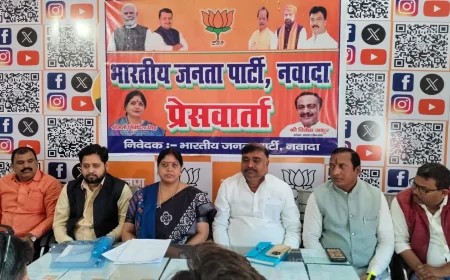
This formula will prove even more exciting in West Bengal politics. For the 2026 assembly elections, the BJP has based its strategy on the Bihar model. The party's target is 160 seats, and a 'quadrilateral' team has been formed to keep an eye on every booth: Union Minister Bhupendra Yadav, former Tripura CM Biplab Kumar Deb, co-in-charge Sunil Bansal, and IT head Amit Malviya. Sweets were distributed in Bengal immediately after the Bihar victory, and PM Modi hinted that this was a sign of 'breaking Mamata's magic'. Women's safety will be a major issue here. Cases like the RG Kar scam and the gang rape of a medical student in Durgapur are exposing the weaknesses of the Trinamool Congress. The BJP will focus on issues while avoiding personal attacks, as the strategy was changed in October 2025.
Bengal BJP chief Samik Bhattacharya claims that power will be in their hands in 2026. Emphasis will be placed on digital campaigns and booth strengthening to woo the youth, while schemes similar to those in Bihar will be implemented for women. Star. The tents pitched three years ago are now bearing fruit, and the Bihar experiment will unfold here in a different hue, taking into account Bengal's cultural diversity. Seeing all this, it seems the BJP has created a template from Bihar that will break down caste barriers and lay the foundation for development. While Yogi's "shoot them down" model is attracting women in Uttar Pradesh, in Bengal, the strategy to penetrate Mamata's stronghold will rely on collective leadership and PM Modi's development agenda. But the challenges are significant. The Samajwadi Party's PDA (Pichda, Dalit, Alpsankhyak - Backward Classes, Dalits, Minorities) alliance is still strong in UP, and the Trinamool Congress enjoys strong local support in Bengal. Nevertheless, the numbers speak for themselves: 71.78 percent female voter turnout in Bihar changed the game, and if even 60 percent of women vote in UP and Bengal, the political landscape of 2026 will be transformed. In this new era of politics, 'Y' will rule, where half the population and youthful energy will together create history. Overall, the Bihar wave will now touch all of India, and this BJP gamble will either prove to be a masterstroke or a valuable lesson. Only time will tell, but preparations are in full swing.
What's Your Reaction?
 Like
0
Like
0
 Dislike
0
Dislike
0
 Love
0
Love
0
 Funny
0
Funny
0
 Angry
0
Angry
0
 Sad
0
Sad
0
 Wow
0
Wow
0