







































































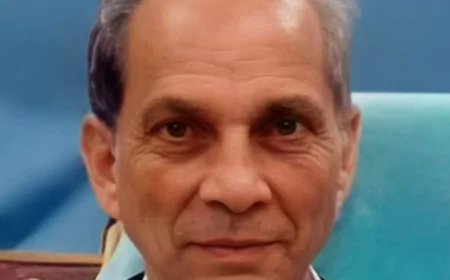



Scientist Questions Credibility of National IP Awards 2025; Alleges Neglect of India’s Innovation Potential
The controversy surrounding the National IP Awards 2025 opens broader questions about India’s innovation policy, transparency in award processes, and the bureaucratic roadblocks faced by individual inventors. The communication has been marked to several top authorities for action, and observers await an official response from the Patent Office or related ministries.

New Delhi (RNI): A controversy has surfaced over the National Intellectual Property (IP) Awards 2025, after young scientist and inventor Shailendra Kumar Birani raised serious questions regarding the award’s credibility, transparency, and the government’s long-standing handling of patent-linked innovation in India.
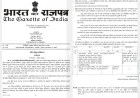
In a detailed communication addressed to the Office of the Controller General of Patents, Designs and Trademarks (Bouddhik Sampada Bhavan, Dwarka, New Delhi) and marked to top constitutional and government offices including the President of India, Supreme Court, Prime Minister, and several central ministries, Birani expressed dismay over discrepancies in the official announcement and the historical neglect of his globally recognized invention — the True AD-Syringe (Patent No. 202881).
Birani stated that he received an official email on October 18, 2025, informing him about the National IP Award 2025, with a deadline of October 30, 2025. However, upon verification, the linked government website reportedly mentioned October 2, 2025, as the final submission date — which had already passed. He described this as “confusing and unprofessional,” alleging that such procedural inconsistencies reflected the department’s unwillingness to genuinely recognize inventors.
The scientist asserted that the very concept of instituting a national award for patent holders originated from his official representations made between 2007 and 2009 to various government departments.
He cited letters sent through the Chief Minister of Madhya Pradesh, Scientific Adviser (M.P.), Madhya Pradesh Council of Science and Technology (MPCOST), and central bodies including TIFAC and NRDC.


According to Birani, the central government later launched a similar national patent award through TIFAC, which he called “a betrayal and misuse” of his original proposal. “This was the biggest deception in the name of promoting science,” he alleged, claiming it undermined India’s scientific future and discouraged innovators.
Birani’s invention, the True AD-Syringe, which aimed to revolutionize medical injection safety, reportedly received attention from global institutions such as the United Nations, WHO, International Red Cross Society (Geneva), Bill & Melinda Gates Foundation, Clinton Foundation, and several multinational companies.
He alleged that international partners had extended “advance orders worth billions of dollars,” and that the initiative could have made India a global manufacturing hub for safe medical devices. However, Birani claims bureaucratic indifference and the prolonged inaction of constitutional offices blocked the implementation, costing India “millions of lives and jobs.”
In his letter, Birani accused top offices, including the President of India, of sitting on crucial scientific files for years, thereby halting India’s progress in healthcare and innovation.
He warned that the suppression of life-saving technologies has left India vulnerable to recurring global epidemics, adding that “scientific negligence has already cost countless lives during AIDS, Ebola, and COVID-19.”
Referring to the low prize money of ₹1 lakh in the current National IP Award 2025 compared to the ₹10 lakh under earlier schemes, Birani called the award “symbolic and superficial.” He urged authorities to restore scientific integrity and ensure fair recognition for genuine inventors, asserting that “the issue is not about an award, but about India’s scientific independence and intellectual sovereignty.”
Shailendra Kumar Birani, recognized as the first individual patent holder from Madhya Pradesh, claims to have initiated the idea of a National Award for Patent Holders in India. His innovation, True AD-Syringe, was the first Indian-designed automatic disable syringe, developed to prevent reuse and cross-infection — a solution endorsed by multiple global health agencies.
Follow RNI News Channel on WhatsApp: https://whatsapp.com/channel/0029VaBPp7rK5cD6X
What's Your Reaction?
 Like
1
Like
1
 Dislike
0
Dislike
0
 Love
0
Love
0
 Funny
0
Funny
0
 Angry
0
Angry
0
 Sad
0
Sad
0
 Wow
0
Wow
0