
The Bharat Tiwari Incident Sparks Widespread Public Outrage Across North India
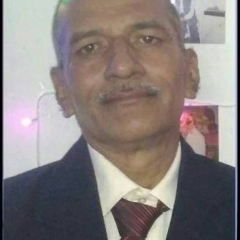

The case of Bharat Bhushan Tiwari, a young man who was recently killed in an alleged staged encounter in Bilauti village of Bihar's Bhojpur district, is rapidly acquiring political significance. Protests over the incident have expanded beyond the upper castes, with members of the Muslim, Yadav, Paswan, and several other communities also expressing their anger. The growing mobilization has drawn comparisons with the political atmosphere of 1978–79, when public resentment against the Janata Party following a series of similar incidents contributed to a major political shift.


During that period, former Prime Minister Indira Gandhi personally visited the affected areas, traveling even by elephant and boat to reach remote villages. The Congress subsequently made significant electoral gains in the Lok Sabha by-elections held in late 1979. Political observers believe that similar social and political equations are now emerging across nearly 120 Lok Sabha constituencies in Bihar and Uttar Pradesh. Discontent is also reported among sections of the population in Madhya Pradesh, Rajasthan, Haryana, and Jharkhand, while Punjab continues to witness unrest over the farmers' protest. The principal difference, according to this comparison, is that the opposition is now led by Rahul Gandhi instead of Indira Gandhi.
Questions surrounding police conduct in recent encounter cases in Bihar are no longer confined to opposition parties. Public dissatisfaction has widened, with social activists, civil society groups, and ordinary citizens raising concerns. Several ministers in the Samrat-led Bihar government, former Chief Minister Nitish Kumar, and Union Minister Chirag Paswan have reportedly questioned the government's handling of the Bharat Tiwari encounter. On the other hand, Union Minister Jitan Ram Manjhi and some leaders from Samrat's Kushwaha community have appeared to support the government's position. Political analysts believe that if the issue remains unresolved, it could have implications for the BJP ahead of the Uttar Pradesh Assembly elections next year.

In an effort to contain the controversy, the Bihar government constituted a judicial inquiry commission. However, the deceased's family and many members of the public have rejected the move as inadequate. Petitions seeking an independent investigation have been filed before both the Supreme Court and the High Court. The Bihar State Human Rights Commission has also taken cognizance of the matter and has summoned the Chief Secretary, the Director General of Police (DGP), and the Bhojpur Superintendent of Police (SP), directing them to submit a detailed factual inquiry report within four weeks. The failure to arrest the police personnel named in the FIR has further intensified public suspicion regarding the fairness of the investigation.
Public anger was evident during a massive Mahapanchayat held in Bilauti village on June 24. According to the organizers, attendance exceeded expectations, with participants arriving not only from Bihar but also from Uttar Pradesh, Haryana, Rajasthan, and several other North Indian states.
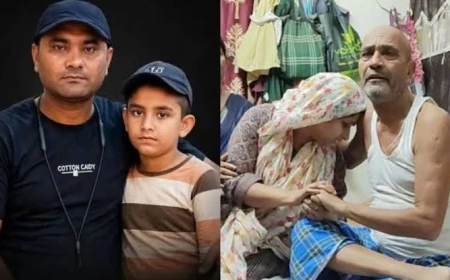
Meanwhile, the family of Bharat Tiwari has publicly expressed its lack of faith in both the police investigation and the judicial inquiry. His father, Kashinath Tiwari, declined the security cover offered by the police administration, questioning how he could trust the same system that, according to him, had failed to protect his son. He also criticized police officials for visiting the family late at night seven days after the encounter instead of meeting them openly during the day.
Raising questions about the role of the Superintendent of Police, Kashinath Tiwari alleged that such an operation could not have taken place without authorization from senior officers. He further claimed that he had spoken to his son only minutes before he was killed.
The deceased's younger brother, Chandan Tiwari, alleged that the current SP had threatened the family despite the ongoing inquiry, claiming they were warned to stop pursuing the matter or face consequences similar to Bharat's. Bharat Tiwari's mother, Asha Devi, said she no longer has faith in the current investigation and believes it will not deliver justice for her son. His sister-in-law, Suman Tiwari, has also questioned the impartiality of the entire investigation process.
As the legal proceedings continue and multiple inquiries remain underway, the Bharat Tiwari case has evolved beyond an individual criminal investigation into an issue generating significant political debate and public attention across North India.
What's Your Reaction?
 Like
0
Like
0
 Dislike
0
Dislike
0
 Love
0
Love
0
 Funny
0
Funny
0
 Wow
0
Wow
0
 Sad
0
Sad
0
 Angry
0
Angry
0



Comments (0)