
CM FACES CHALLENGE IN MAINTAINING NITISH’S LEGACY
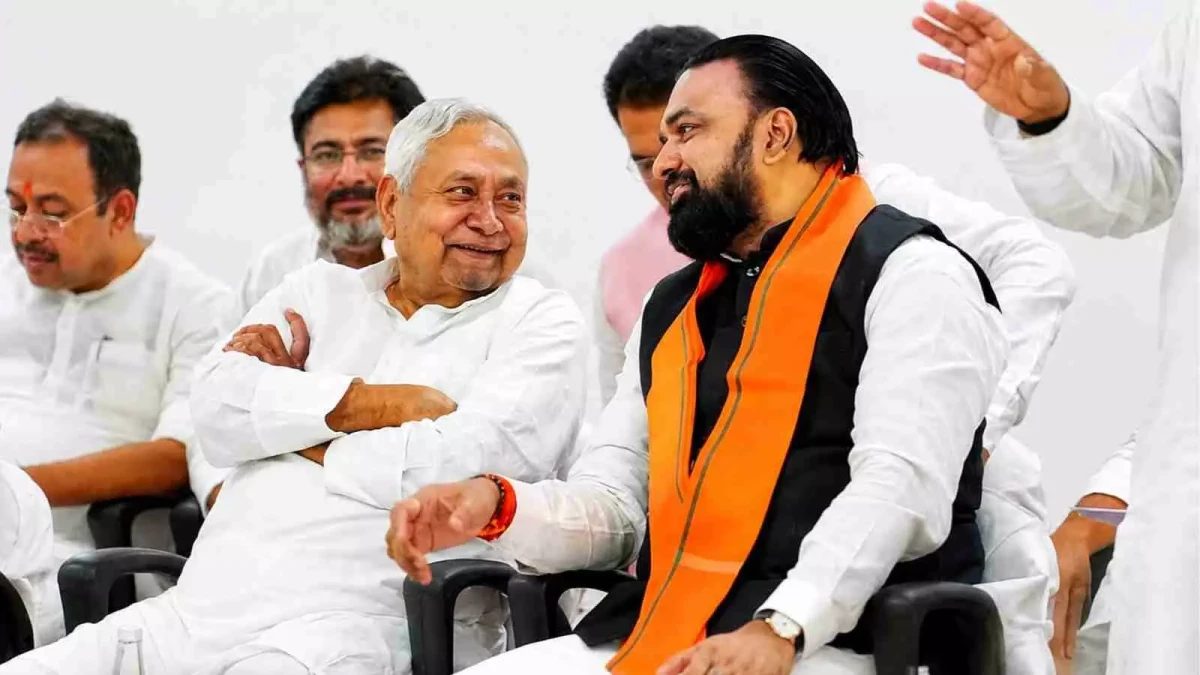
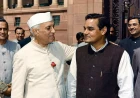
-Amidst discussions regarding a review of Bihar's liquor ban law and various economic arguments, the debate over Samrat Chaudhary's political stance and the state's social equations has intensified. Chief Minister Nitish Kumar and Deputy Chief Minister Samrat Chaudhary are seen conversing during a meeting in Patna. Political circles in Bihar are once again abuzz with talk regarding the liquor ban law. There is widespread discussion about reviewing this stringent law and its future. While the Janata Dal (United) continues to issue statements in support of the law, economic arguments and recommendations from the National Council of Applied Economic Research (NCAER) have given the debate a new dimension.

CM FACES CHALLENGE IN MAINTAINING NITISH’S LEGACY
12-AUG-ENG 4


RAJIV NAYAN AGRAWAL
PATNA-------------------------Amidst discussions regarding a review of Bihar's liquor ban law and various economic arguments, the debate over Samrat Chaudhary's political stance and the state's social equations has intensified. Chief Minister Nitish Kumar and Deputy Chief Minister Samrat Chaudhary are seen conversing during a meeting in Patna. Political circles in Bihar are once again abuzz with talk regarding the liquor ban law. There is widespread discussion about reviewing this stringent law and its future. While the Janata Dal (United) continues to issue statements in support of the law, economic arguments and recommendations from the National Council of Applied Economic Research (NCAER) have given the debate a new dimension. Amidst these circumstances, the biggest question arising is whether Chief Minister Samrat Chaudhary will adopt a stance contrary to Nitish Kumar's traditional and firm position on this matter, or if political compulsions will lead him to maintain the status quo. At the heart of this entire debate lies the NCAER recommendation, which suggests repealing the total liquor ban and reinstating excise duty for the Bihar government. It cannot be denied that, given the decline in Bihar's economic situation, this step could prove to be a significant financial lifeline. Statistics show that prior to the implementation of the liquor ban, Bihar derived approximately 14 percent of its total revenue from excise duty. Although it is argued that the liquor ban has not proven to be an entirely successful experiment, its social and political implications are so profound that repealing the law would not be an easy task for Chief Minister Samrat Chaudhary. The most significant political aspect of repealing the liquor ban is that it would place Chief Minister Samrat Chaudhary in direct opposition to Nitish Kumar. A specific segment within Bihar's political landscape has long held the view—albeit indirectly—that Samrat Chaudhary has played a pivotal role in efforts to oust Nitish Kumar from power or alter political equations. An immediate opportunity to express this simmering resentment or frustration arose during the recent Bankipur Assembly by-election, where a significant section of voters voiced their anger by backing 'Jan Suraaj' instead of the NDA. Political analysts believe that a substantial portion of the Kurmi and Extremely Backward Class (EBC) communities has already signaled its discontent by voting for Jan Suraaj. If, at this juncture, Chief Minister Samrat Chaudhary were to repeal Nitish Kumar’s ambitious liquor ban or introduce major amendments that weaken it, the vast segment of the electorate that admires Nitish Kumar—and views the ban as a historic step toward social reform—would directly turn against Chaudhary. Furthermore, a crucial element in this entire equation is the state's female population. Chief Minister Nitish Kumar demonstrated unwavering resolve and determination in implementing the liquor ban after receiving persistent complaints from women whose families were being tormented by alcoholics. It is worth noting that earlier in his tenure, Nitish Kumar had actually decided to open liquor shops even at the panchayat level; however, acknowledging the suffering of women, he implemented the ban on April 1, 2016, and subsequently—buoyed by massive public support—announced a total prohibition on the sale and consumption of all types of liquor, including foreign spirits, effective April 5, 2016. Since then, the state's women have consistently stood in support of this decision. Chief Minister Samrat Chaudhary would certainly not want to risk alienating this demographic and inviting a new crisis for his own political survival. Another compelling argument in favor of the liquor ban lies in its moral significance and its role in social reform; when Nitish Kumar implemented this law, it was hailed globally as an exemplary initiative for social transformation. It was a unique instance of a state grappling with an economic crisis voluntarily foregoing a major source of revenue in the interest of the nation and society. Data released by various organizations attest to a significant decline in domestic violence and interpersonal conflicts within families following the liquor ban. The portion of income previously squandered on alcohol is now being spent on children's education, nutrition, and the family's basic needs, thereby fostering a positive atmosphere in society. This large segment of the population—which has found peace, social harmony, and domestic well-being—would mobilize against the government if the ban were lifted. That is precisely why, despite various economic pressures and arguments, this law currently stands as a cornerstone of political and social equilibrium that is not easily disturbed.
What's Your Reaction?
 Like
0
Like
0
 Dislike
0
Dislike
0
 Love
0
Love
0
 Funny
0
Funny
0
 Wow
0
Wow
0
 Sad
0
Sad
0
 Angry
0
Angry
0








Comments (0)