
CM INSPECTS VKS MUSEUM, ANNOUCES REVITALISATION AND 80 FEET STATUE OF FREEDOM FIGHTER’S LEGACY TO NEW GENERATIONS
-On a significant Wednesday in September, Bihar Chief Minister Samrat Choudhary arrived in Jagdishpur, the historic town in Bhojpur district that remains forever linked with the name of Babu Veer Kunwar Singh, one of the most revered heroes of India’s First War of Independence in 1857. The Chief Minister’s visit to the Veer Kunwar Singh Smriti Museum and the adjoining fort complex was not a routine official stop. It combined solemn homage, detailed inspection, firm administrative directives, interaction with beneficiaries of welfare schemes, review of health services, and a series of far-reaching announcements aimed at transforming the site into a major centre of historical memory, research and tourism. The visit also reaffirmed the state government’s commitment to preserving Bihar’s freedom-struggle heritage while ensuring that the heroic saga of Kunwar Singh reaches the younger generation in a living, accessible and inspiring form.
CM INSPECTS VKS MUSEUM, ANNOUCES REVITALISATION AND 80 FEET STATUE OF FREEDOM FIGHTER’S LEGACY TO NEW GENERATIONS
24-SEP-ENG 12


RAJIV NAYAN AGRAWAL
ARA--------------------------On a significant Wednesday in September, Bihar Chief Minister Samrat Choudhary arrived in Jagdishpur, the historic town in Bhojpur district that remains forever linked with the name of Babu Veer Kunwar Singh, one of the most revered heroes of India’s First War of Independence in 1857. The Chief Minister’s visit to the Veer Kunwar Singh Smriti Museum and the adjoining fort complex was not a routine official stop. It combined solemn homage, detailed inspection, firm administrative directives, interaction with beneficiaries of welfare schemes, review of health services, and a series of far-reaching announcements aimed at transforming the site into a major centre of historical memory, research and tourism. The visit also reaffirmed the state government’s commitment to preserving Bihar’s freedom-struggle heritage while ensuring that the heroic saga of Kunwar Singh reaches the younger generation in a living, accessible and inspiring form.
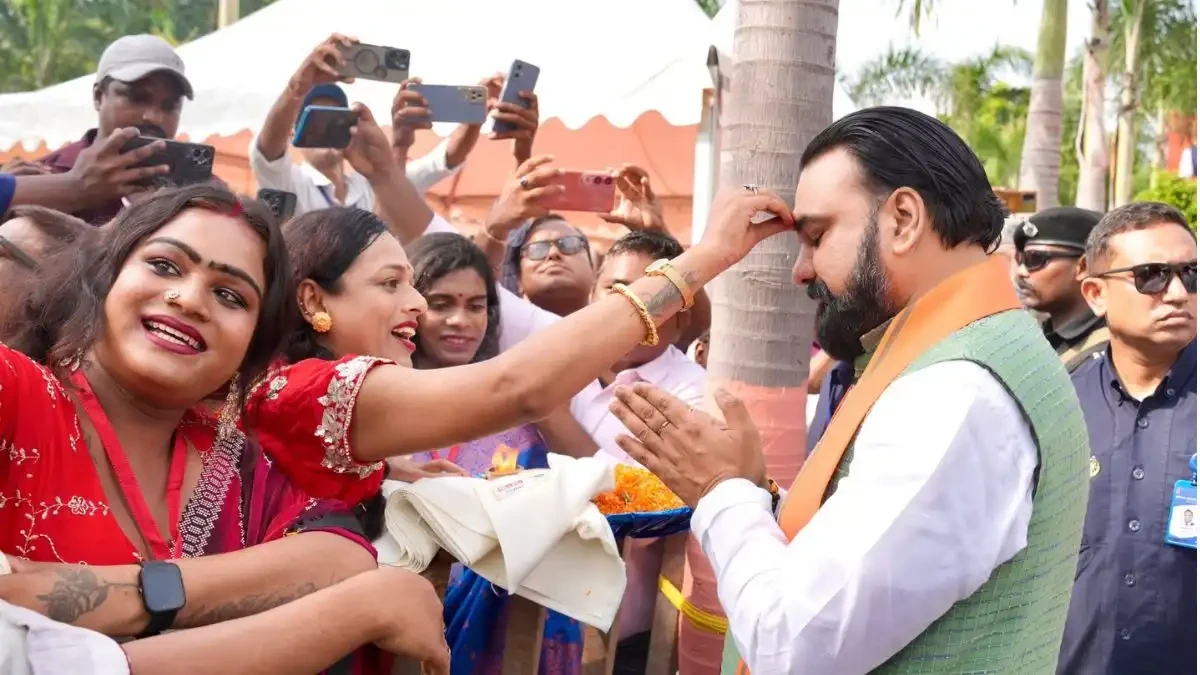
As the Chief Minister’s convoy entered the fort premises, the atmosphere was charged with a blend of reverence and anticipation. Special arrangements for security, cleanliness and beautification had already been completed. The complex had received a fresh coat of paint and thorough cleaning in preparation for the high-level visit. Members of the kinnar community accorded the Chief Minister a traditional welcome. They performed aarti, applied tilak on his forehead and greeted him with the sounding of conch shells. Choudhary acknowledged their greetings, exchanged a few words with the welcomers, and then proceeded to the heart of the complex — the statue of Babu Veer Kunwar Singh.
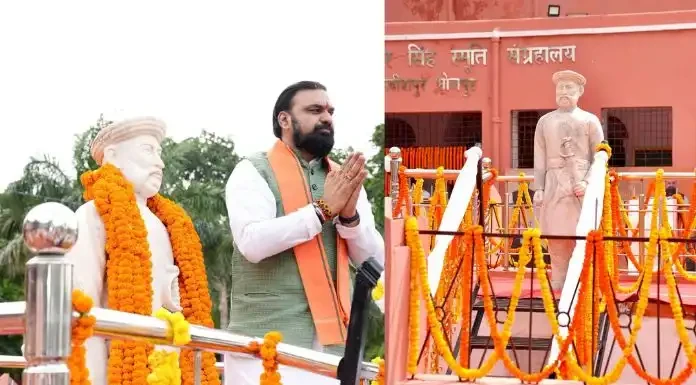
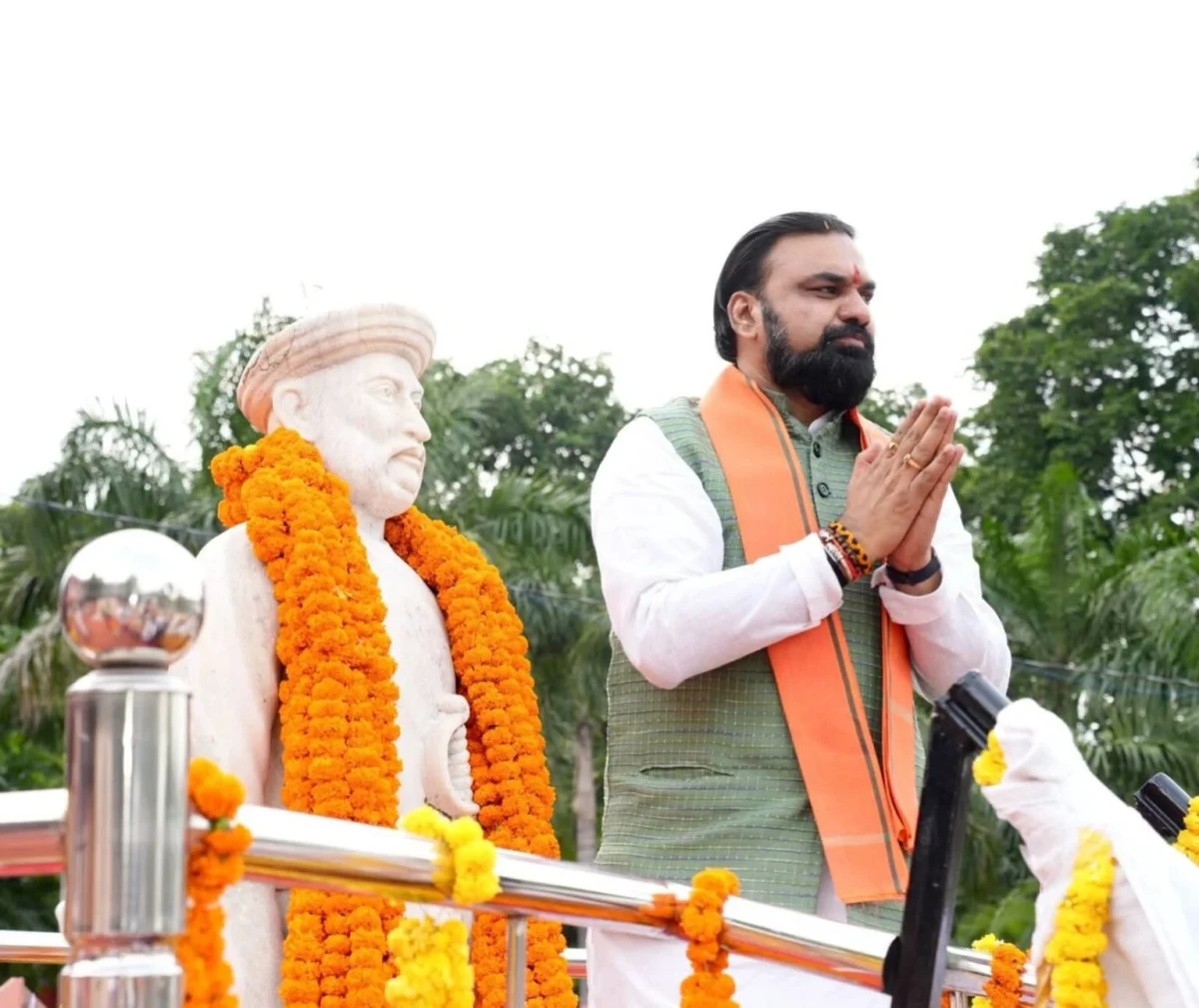
Standing before the statue, the Chief Minister offered a floral tribute and paid his respects to the legendary warrior. He recalled the extraordinary courage of a man who, even in his advanced years, rose against the might of the British Empire. Kunwar Singh, already around eighty years of age when the 1857 uprising erupted, led the resistance in Bihar with remarkable determination. His leadership, strategic skill and unyielding spirit turned Jagdishpur and the surrounding region into a formidable centre of revolt. The Chief Minister observed that Kunwar Singh’s life continues to serve as a powerful example of patriotism, bravery and sacrifice for every generation of Indians.
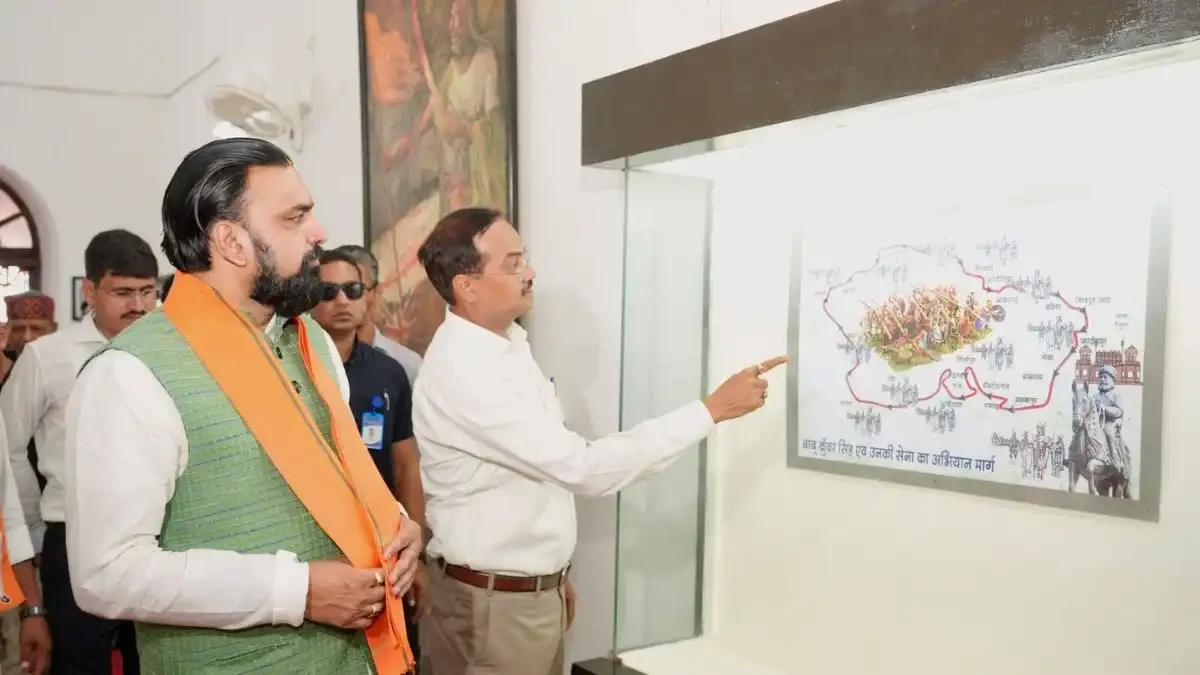
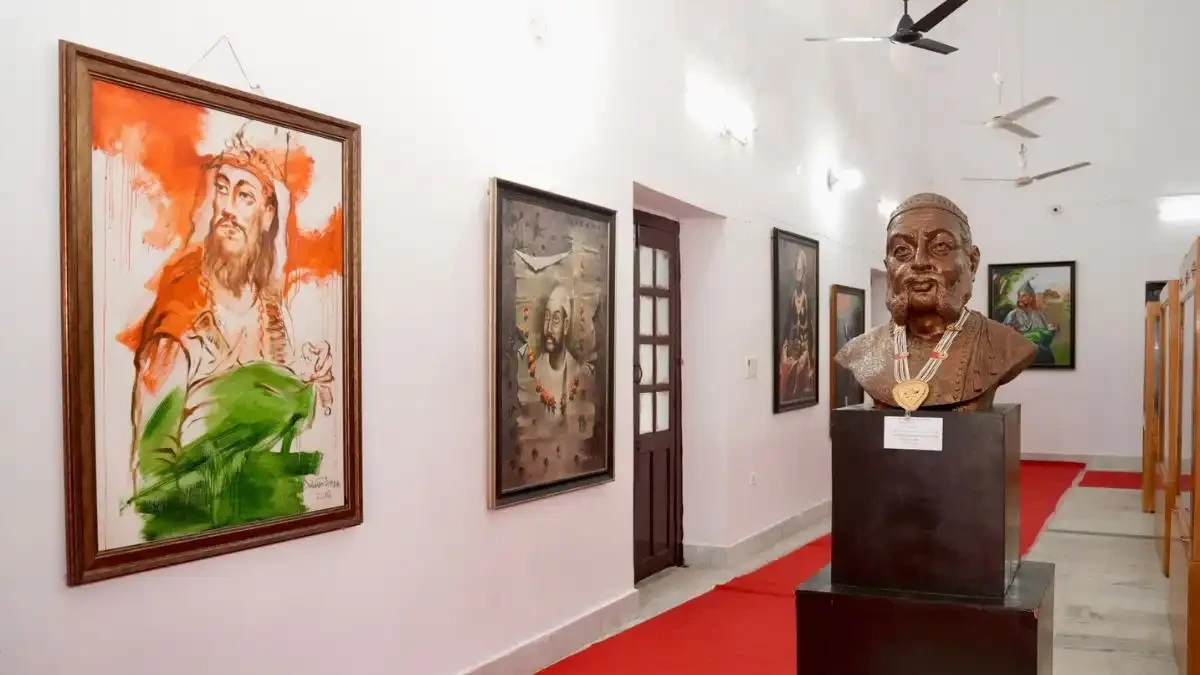
After the homage, Choudhary moved into the museum. He carefully examined the historical and archaeological materials on display — objects, documents, artefacts and exhibits that narrate the story of Kunwar Singh’s life, his struggles and his contribution to the freedom movement. Officials briefed him on the various sections of the museum. A short film based on the life and deeds of Babu Veer Kunwar Singh was also screened for the Chief Minister. He listened intently, asked questions and sought detailed information about the exhibits that capture the spirit of 1857 in Bihar.
The inspection soon turned into a series of clear and specific instructions. The Chief Minister declared that the Veer Kunwar Singh Smriti Museum would undergo a comprehensive revitalisation — a complete “kayaakalp.” The purpose, he said, was not merely cosmetic improvement but to ensure that the heroic narrative of Kunwar Singh reaches the new generation in a vivid and meaningful way. He directed officials to prepare an attractive and well-planned beautification and modernisation of the museum. At the same time, he insisted that the historical and archaeological evidence preserved inside must remain in its original form. There should be no tampering, no alteration and no compromise with the authenticity of the artefacts. The integrity of the collection, he stressed, was non-negotiable.
Choudhary further emphasised that the museum should not be developed only as a tourist destination. It must also become a serious resource for researchers and scholars studying the life of Kunwar Singh and the broader freedom struggle. He instructed that proper arrangements for the stay, boarding and study facilities of visiting researchers be created. The museum, in his vision, should serve both the general public and the academic community. He also ordered the proper beautification of the pond located within the museum premises, ensuring that the entire complex presents a coherent and dignified appearance.
One of the most striking announcements of the day concerned a new monumental statue. The Chief Minister declared that an 80-feet-high statue of Babu Veer Kunwar Singh would be installed in Jagdishpur. The site chosen for the statue is the area around Jhanjharia Talab, which itself is to undergo beautification. Once the pond and its surroundings are developed, the towering statue will rise as a permanent and visible reminder of Kunwar Singh’s valour. Officials indicated that the project is intended to strengthen Jagdishpur’s historical identity and to create a landmark that draws both local people and visitors from across the country. The combination of the revitalised museum, the fort complex and the new colossal statue is expected to turn the area into a major point of historical tourism.
Throughout the visit, the Chief Minister repeatedly underlined the importance of preserving historical sites. He told officials that effective steps must be taken to protect the heritage associated with Veer Kunwar Singh. The care of such places, he noted, is not solely the responsibility of the government; it is a shared duty of society as well. He called for better security, maintenance and presentation of the historical objects kept in the fort and the museum so that the contribution of Kunwar Singh can be communicated widely and accurately.
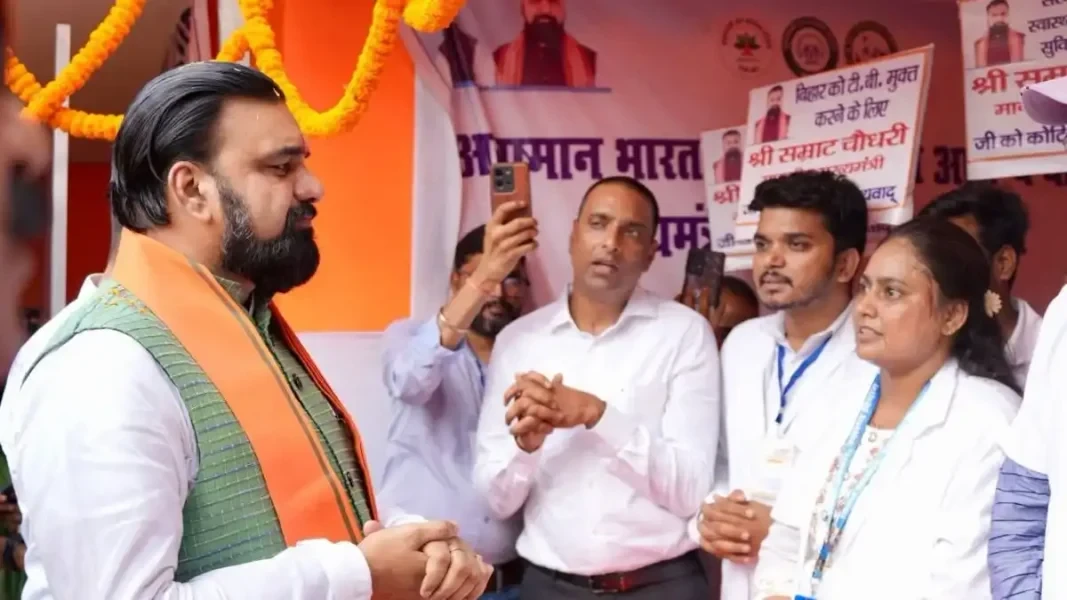
Parallel to the heritage-focused inspection, the Chief Minister reviewed the stalls set up by various government departments inside the museum complex. Stalls of the Education Department, Health Department, Social Welfare Department and the Department of Art and Culture were examined. He took detailed information about the schemes being implemented and the facilities being provided to citizens. During this interaction, landless beneficiaries were handed basgeet parchas — documents conferring ownership rights over homestead land. Recipients of the Chief Minister’s Artist Pension Scheme expressed their gratitude for the financial support they had begun to receive. The presence of these beneficiaries on the premises of a freedom-fighter’s memorial created a symbolic link between the sacrifices of the past and the welfare measures of the present.
Particular attention was paid to the health sector. At the Health Department stall, the Chief Minister sought information about the medical facilities available in the district and the services being delivered to patients. Health workers informed him that the number of patients being referred outside the district hospitals had declined considerably compared with earlier periods. As a result, the number of operations being performed within the district hospitals had risen almost three-fold. One woman doctor explained the hypertension-related surgeries being conducted at the Sadar Hospital. Another doctor added that the hospital was currently performing around fifty operations and aimed to reach a target of seventy. The scale of increase was described as roughly ten-fold in certain categories of procedures.
The Chief Minister responded with characteristic directness. He stressed that patients should not be subjected to unnecessary hardship by being referred elsewhere when treatment can be provided locally. When the Civil Surgeon confirmed that referrals had already decreased significantly, Choudhary issued a public warning in the presence of officials and others: unnecessary referrals must stop completely, otherwise the official concerned would face consequences. The exchange underscored the administration’s insistence on improving the quality and self-sufficiency of district-level healthcare.
The Chief Minister also inspected products manufactured by Jeevika didis — women members of the state’s self-help group network. He examined the items on display, appreciated the craftsmanship and the effort behind them, and praised the women for their enterprise. The presence of Jeevika products at a historical site quietly illustrated another dimension of contemporary Bihar: the growing economic agency of rural women.
The visit was attended by a large number of ministers, legislators and senior officials. Among those present were Planning and Development Minister Bhagwan Singh Kushwaha, Art and Culture Minister Pramod Kumar, Higher Education Minister Sanjay Singh Tiger, Labour Resources and Migrant Workers Welfare Minister and Bhojpur district in-charge Arun Shankar Prasad, several MLAs including Raghvendra Pratap Singh, Radha Charan Sah and Rakesh Ojha, MLC Jeevan Kumar, Chief Secretary Pratyaya Amrit, Director General of Police Preeta Verma, secretaries to the Chief Minister, the Secretary of the Art and Culture Department, Bhojpur District Magistrate Manesh Kumar Meena, Superintendent of Police Awadhesh Kumar Dixit, and other senior officers. The broad representation of the administrative and political leadership signalled the importance attached to the day’s programme.
Minister Bhagwan Singh Kushwaha, who is also the local MLA, later expanded on the significance of the developments. He stated that the promise made during the election campaign by former Chief Minister Nitish Kumar — to develop Kunwar Singh’s Hata and the museum area as a tourist destination — was now being translated into reality. “Jagdishpur will become sparkling,” he declared. Kushwaha emphasised that the development of the site was not merely a governmental announcement but a commitment made to the people, and that fulfilling such commitments was a priority of the present government. He pointed out that the historical importance of Veer Kunwar Singh’s struggle makes the project relevant not only for the people of Jagdishpur or Bhojpur but for Bihar and the entire country. Increased tourist footfall, he argued, would generate local employment and stimulate economic activity in transport, hospitality, food services and small businesses.
Kushwaha further noted that the Chief Minister’s visit had generated enthusiasm among the local population. Preparations for the inspection had been completed thoroughly, and the day was expected to be followed by foundation-stone laying and inauguration ceremonies in the near future. He contrasted the present government’s approach with that of opposition parties, asserting that the current administration stands by its word and delivers on the promises made to the public. The minister also observed that after Independence, Jagdishpur had rarely witnessed programmes of such scale and frequency under previous leaderships, whereas the recent past had seen multiple visits and focused attention from both the former and the present Chief Minister.
The historical context that frames these contemporary initiatives is worth recalling in some detail. Babu Veer Kunwar Singh was born into a prominent Rajput family of Jagdishpur. By 1857 he was already an elderly man, yet when the revolt against British rule spread across northern India, he assumed leadership of the resistance in Bihar. He organised local forces, scored notable successes against British troops, and kept the flame of rebellion alive in the region long after many other centres had been suppressed. His ability to mobilise support, his tactical acumen and his personal courage in the face of superior military power earned him a lasting place among the foremost leaders of 1857. Even after sustaining serious injury, he continued the fight. The area around Jagdishpur still bears the imprint of those months of determined resistance. The fort, the museum and the surrounding landscape therefore constitute more than local landmarks; they are tangible links to a decisive chapter in India’s struggle for freedom.
Against this background, the Chief Minister’s directives acquire deeper meaning. Revitalising the museum, protecting its original artefacts, creating facilities for scholars, beautifying the premises and erecting an 80-feet statue are all measures designed to ensure that the memory of Kunwar Singh does not remain confined to textbooks or occasional commemorations. The intention is to make the site a living centre of historical consciousness — a place where schoolchildren, college students, researchers, tourists and ordinary citizens can encounter the story of 1857 in an immersive and accurate manner. The parallel development of tourism infrastructure is expected to bring economic benefits while simultaneously reinforcing cultural pride.
The health-sector interaction during the same visit illustrated another facet of governance. By publicly insisting on the reduction of unnecessary referrals and by acknowledging the rise in local operations, the Chief Minister signalled that administrative accountability extends to the quality of everyday public services. The three-fold increase in operations and the corresponding drop in referrals were presented as evidence of improvement, yet the stern warning to the Civil Surgeon made clear that further progress was expected and that lapses would not be tolerated.
Similarly, the distribution of basgeet parchas to landless families and the interaction with artist-pension beneficiaries and Jeevika didis connected the heritage visit to the broader agenda of social and economic inclusion. Land ownership documents provide security and dignity to the poorest households. The artist pension scheme supports practitioners of traditional arts. Jeevika’s products demonstrate the productive capacity of organised rural women. By attending to these concerns on the same day that he inspected a freedom-fighter’s memorial, the Chief Minister presented an integrated picture of development — one that links the past with the present and heritage with livelihood.
Looking ahead, the transformation of the Jagdishpur fort-museum complex is expected to unfold in stages. Beautification of the museum and the pond, improvement of access roads, enhancement of lighting and visitor amenities, creation of research facilities, and the installation of the 80-feet statue will together reshape the physical and experiential character of the site. Once completed, the complex is likely to attract greater numbers of visitors from within Bihar and from other parts of India. Local employment in guiding, hospitality, transport and retail is anticipated to grow. More importantly, successive generations of young people will have a well-maintained and informative space in which to learn about one of Bihar’s greatest contributions to the national freedom struggle.
The Chief Minister’s visit also served as a reminder that the conservation of historical heritage requires continuous attention. Artefacts must be protected from deterioration and from any form of unauthorised alteration. Interpretation must remain accurate. Facilities must be maintained. The involvement of local communities, educational institutions and civil society will be essential if the site is to fulfil its potential as both a memorial and a living educational resource.
In the wider context of Bihar’s developmental journey, the events at Jagdishpur fit into a larger pattern of attention to infrastructure, welfare delivery, women’s economic participation and cultural preservation. The same government that is pushing major road connectivity projects elsewhere in the state is also investing in the careful recovery and presentation of historical memory. The same leadership that interacts with Jeevika didis and landless beneficiaries is also insisting on the integrity of museum collections and the creation of research facilities. The common thread is an insistence that development must be multi-dimensional — physical, economic, social and cultural.
As the Chief Minister concluded his inspection and left the complex, the directions he had issued began their journey through the administrative machinery. Detailed presentations on the revitalisation plan had already been shown to him; now the task of translating those plans into concrete works lay with the departments concerned. Minister Bhagwan Singh Kushwaha’s confident assertion that “Jagdishpur will become sparkling” captured the local expectation that the long-promised development of Kunwar Singh’s Hata and museum would finally materialise in a visible and lasting form.
The story of Babu Veer Kunwar Singh is one of courage against overwhelming odds, of leadership exercised in the twilight of life, and of a regional struggle that contributed to a national awakening. By deciding to revitalise the museum that preserves his memory, by ordering the protection of original historical evidence, by planning facilities for scholars, by announcing a monumental statue, and by linking the site to tourism and public education, the Bihar government has signalled its determination that this story will not fade. Instead, it will be told with greater clarity, dignity and reach to the generations that follow. The visit of Chief Minister Samrat Choudhary to Jagdishpur on that Wednesday marked an important step in that continuing effort — an effort to ensure that the valour of 1857 continues to inspire the Bihar and the India of today and tomorrow.
What's Your Reaction?
 Like
0
Like
0
 Dislike
0
Dislike
0
 Love
0
Love
0
 Funny
0
Funny
0
 Wow
0
Wow
0
 Sad
0
Sad
0
 Angry
0
Angry
0






Comments (0)