
ELEPHANT CONSERVATION CRUCIAL
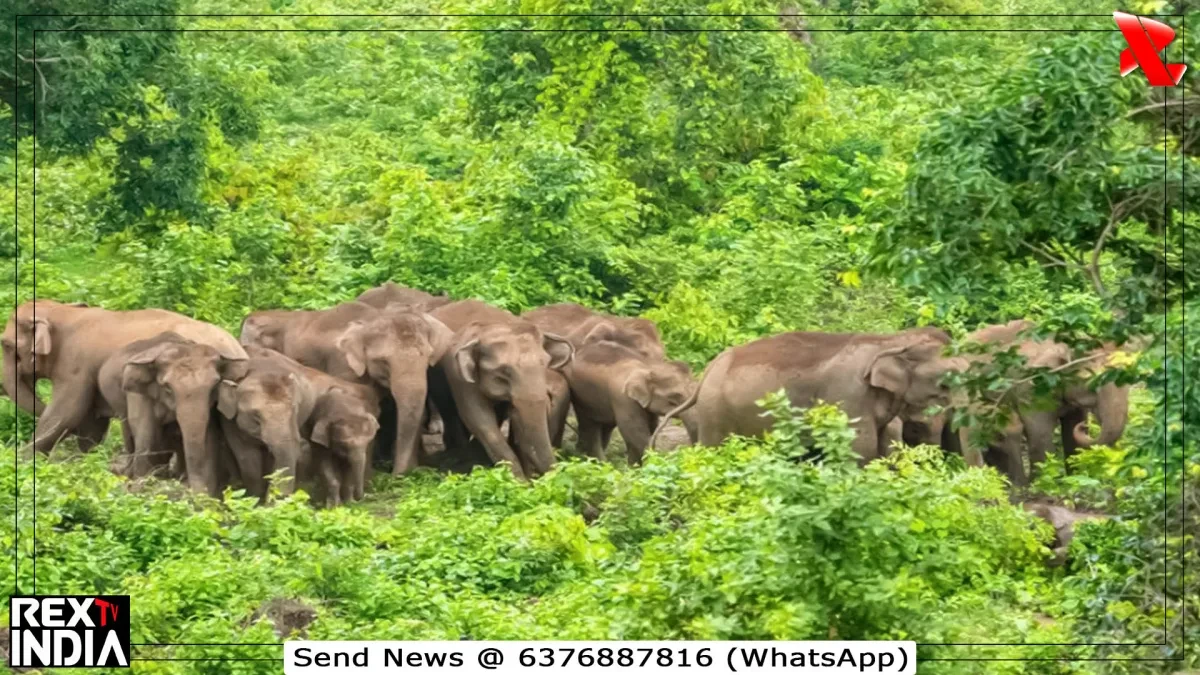
While the Indian government has pledged to conserve elephants, a recent report highlights the grim reality of challenges on the ground. According to an IANS report, the Wildlife Institute of India has identified forest fragmentation, mining, road and railway construction, and human-elephant conflict as major areas of concern. The report estimates the elephant population in India to be 22,514. Consequently, elephant conservation is no longer an issue limited merely to saving forests.

ELEPHANT CONSERVATION CRUCIAL
13-AUG-ENG 6


RAJIV NAYAN AGRAWAL
DELHI-------------------------While the Indian government has pledged to conserve elephants, a recent report highlights the grim reality of challenges on the ground. According to an IANS report, the Wildlife Institute of India has identified forest fragmentation, mining, road and railway construction, and human-elephant conflict as major areas of concern. The report estimates the elephant population in India to be 22,514. Consequently, elephant conservation is no longer an issue limited merely to saving forests. [1]
For the first time, the Wildlife Institute of India has assessed the elephant population through a DNA-based nationwide census. The report indicates that the actual population could range between 18,255 and 26,645. In the Western Ghats, the expansion of coffee and tea plantations, farm fencing, encroachment, and development projects have disrupted traditional elephant migratory paths. The fragmentation of forests hinders elephant movement, forcing them into areas where human interaction was previously minimal.
The situation is equally challenging in the East-Central region and the Northeast. Mining, highways, and other linear infrastructure projects are fragmenting natural elephant habitats in many areas. Additionally, the spread of invasive plant species and increasing human activity are exacerbating the problem. The report emphasizes that maintaining connectivity between elephant habitats is essential for their long-term survival. Effective elephant conservation requires linking remaining forest patches through safe corridors.
Electrocution and collisions on railway tracks are cited in the report as major causes of elephant mortality. Mining and highway construction are also impacting their habitats and movement patterns. Meanwhile, human-elephant conflicts are on the rise in many regions. Recently, images and videos showing attacks by humans on elephants—including calves—have also surfaced. Incidents involving the use of sharp-edged weapons, firecrackers, and fire raise concerns and pose serious questions regarding conservation measures.
According to experts, merely saving forests is insufficient. There is a need to strengthen safe corridors for elephants, mitigate risks associated with power lines and other linear infrastructure projects, and ensure better enforcement of laws. Involving local communities in the conservation process is also considered crucial. The report highlights the need for awareness campaigns in areas inhabited by elephants as well as in new territories. Additionally, it emphasizes the need to make compensation mechanisms more uniform and effective across different states.
On World Elephant Day, Union Forest Minister Bhupender Yadav stated that India is home to 33 elephant reserves and 150 scientifically validated elephant corridors across 14 states. He emphasized the importance of securing a shared future for both elephants and humans. According to him, conservation efforts are being bolstered by improved population monitoring methods and measures to reduce human-elephant conflict. Meanwhile, Union Minister of State Kirti Vardhan Singh noted that India hosts approximately 60 percent of the world's wild Asian elephant population.
Elephants are considered vital to the ecosystem as they facilitate the growth of new plants by dispersing seeds over long distances. Consequently, their conservation is directly linked to the protection of forests and biodiversity. The report clearly underscores the need for future policies to strike a balance between development and the needs of wildlife. Effective elephant conservation can only be achieved through forest restoration, safe corridors, enhanced security measures, and the active participation of local communities.
What's Your Reaction?
 Like
0
Like
0
 Dislike
0
Dislike
0
 Love
0
Love
0
 Funny
0
Funny
0
 Wow
0
Wow
0
 Sad
0
Sad
0
 Angry
0
Angry
0












Comments (0)