
FAVOUR FOR POWERS, EXPULSION FOR RAISING QUESTIONS: DEVANAND SINGH
-Politics in Bihar stands once again at a juncture where the lines between power, the organization, and political loyalty have begun to blur. The expulsion of Mokama MLA Anant Singh from the Janata Dal (United) (JD(U)) for six years, followed by his sharp statements, has raised several uncomfortable questions. Anant Singh claims that he played a role in saving the Nitish Kumar-led government during a trust vote in 2024. Today, he is reminding the leadership of that favor, asserting that there is no one left in the party to ensure justice. The question arises: in what direction is Bihar’s politics heading?

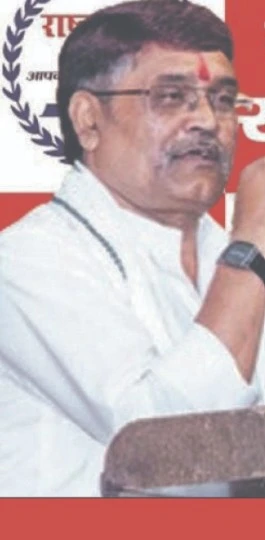
FAVOUR FOR POWERS, EXPULSION FOR RAISING QUESTIONS: DEVANAND SINGH
26-OCT-ENG 12


RAJIV NAYAN AGRAWAL
ARA---------------------------Politics in Bihar stands once again at a juncture where the lines between power, the organization, and political loyalty have begun to blur. The expulsion of Mokama MLA Anant Singh from the Janata Dal (United) (JD(U)) for six years, followed by his sharp statements, has raised several uncomfortable questions. Anant Singh claims that he played a role in saving the Nitish Kumar-led government during a trust vote in 2024. Today, he is reminding the leadership of that favor, asserting that there is no one left in the party to ensure justice. The question arises: in what direction is Bihar’s politics heading?
In politics, no form of support constitutes a permanent favor, nor can any leader’s contribution place them above party discipline. However, this principle applies equally to the leadership of political parties. If a party takes action against one of its MLAs, it must disclose the facts and rules upon which such action is based. Did Anant Singh truly work against the party’s official candidate? Have the allegations leveled against him been substantiated? If so, then The party must clarify its position. And if the matter is merely one of political disagreement, was expulsion the only course of action?
The most serious aspect of this entire episode is Anant Singh’s statement, in which he even alluded to having committed "betrayal" for the sake of the party. This term, in itself, raises several questions. Betrayal against whom, and in whose interest? Was this merely a remark made in the heat of political indignation, or are there underlying power dynamics that ought to be brought to public light? These questions should be answered based on facts, not speculation.
On the other hand, Anant Singh must also realize that in a democracy, supporting a government or a political party does not equate to doing a personal favor for anyone. Legislators are representatives of the people; their primary obligation is to the public, not to any individual leader. If political decisions are viewed through the lens of favors and retribution, the public interest will be sidelined, and the pursuit of power will become the sole focus of politics.
The JD(U) also faces the challenge of proving its impartiality. While party discipline is essential, it cannot mean that one is forbidden from questioning the leadership’s decisions. If action is taken for violating rules, those same rules must be applied consistently to all leaders. The credibility of political parties hinges on whether they apply the same standards to their influential leaders as they do to ordinary party workers.
The most significant question, directed at Nitish Kumar and the JD(U) leadership, is this: are decisions within the party based on principles, or are they driven by political expediency? If Anant Singh is in the wrong, his claims should be addressed with facts. If the party’s action is justified, the grounds for it should be made public. Simply issuing an expulsion order does not resolve the underlying political questions.
The people of Bihar do not want a brand of politics defined by the tallying of personal favors; they demand a politics of accountability. Whether it is leaders who stand by to "save" a government, or a leadership that takes disciplinary action in the name of the organization—both must account for their respective roles. After all, in a democracy, no leader is greater than the public, and no party is above being questioned.
The expulsion of Anant Singh may be a political maneuver, but the questions it raises cannot be dismissed. Bihar must determine whether, in politics, loyalty signifies service to the people—or if it is merely a game of standing by someone while in power, only to cast them aside when circumstances change.
What's Your Reaction?
 Like
0
 Dislike
0
 Love
0
 Funny
0
 Wow
0
 Sad
0
 Angry
0












Comments (0)