
DNA TESTING OF CATTLE
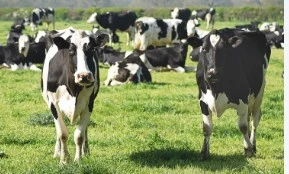
To boost milk production and accelerate the 'White Revolution' in Bihar, the state government has unveiled a new initiative in the animal husbandry sector. Under this government plan, cows and buffaloes will undergo DNA testing before they are purchased. Additionally, the animals' vaccination and health records will be verified to ensure that livestock farmers receive healthy, high-yield, and superior-breed animals.

DNA TESTING OF CATTLE
16-OCT-ENG 2


RAJIV NAYAN AGRAWAL
PATNA-----------------------------To boost milk production and accelerate the 'White Revolution' in Bihar, the state government has unveiled a new initiative in the animal husbandry sector. Under this government plan, cows and buffaloes will undergo DNA testing before they are purchased. Additionally, the animals' vaccination and health records will be verified to ensure that livestock farmers receive healthy, high-yield, and superior-breed animals.
The objective of this initiative is to strengthen the dairy sector, increase the income of livestock farmers, and boost milk production across the state.
According to reports, the Bihar government has set a target to procure 50,000 cows and buffaloes this year, following DNA testing. Furthermore, there is a plan to procure a total of 100,000 milch animals over the next three years.
The scheme will focus on specific breeds, including Cross-Jersey, Gir, and Sahiwal cows, as well as Murrah buffaloes—all of which are highly valued for dairy production.
The DNA testing will be conducted using a kit developed by the National Dairy Development Board (NDDB). The process is designed to assess the genetic potential and breed-related characteristics of the animals.
As per the reports, blood samples will be collected for testing, with results expected within approximately 21 days. In addition to the DNA analysis, the animals' health and vaccination records will also be scrutinized.
It should be noted, however, that DNA testing does not provide an absolute guarantee regarding the exact daily milk yield of an individual animal. Milk production is influenced not only by the breed of the animal but also by its diet, health, age, management, and overall care.
The scheme emphasizes the procurement of cows and buffaloes that possess high milk-yielding potential.
Cows: A target capacity of at least 15 liters of milk per day.
Buffaloes: A target capacity of at least 10 liters of milk per day.
These targets are expected to help livestock farmers achieve higher milk yields and, consequently, better income. To realize this, it is essential to focus not just on the purchase of the animals, but also on their proper maintenance and nutrition.
According to reports, the Bihar government plans to spend approximately ₹1,000 crore over three years under the 'Mukhyamantri Gau Dhan Vikas Rin Yojana' (Chief Minister's Cattle Wealth Development Loan Scheme). This initiative aims to assist farmers and milk producer cooperatives in purchasing milch (milk-producing) animals.
As per the provisions of the scheme: There is a provision to provide one milch animal to an individual farmer. A milk producer cooperative can procure a maximum of five animals, which may include three cows and two buffaloes. The scheme sets a target to ensure that 50 percent of the beneficiaries are women livestock farmers. The procurement of animals will be facilitated through bank loans, with support provided by COMPFED (Bihar State Milk Co-operative Federation). Beneficiaries must be under 40 years of age.
The report further states that the scheme aims to benefit approximately 800,000 livestock farmers associated with milk producer cooperatives.
Simply purchasing high-quality animals is not enough. Increasing milk production requires regular care, a balanced diet, timely vaccinations, and the early detection of any illnesses.
In this regard, there is a plan—implemented through COMPFED—to provide training to livestock farmers on rearing improved breeds and managing dairy operations. Additionally, a provision for livestock insurance has been proposed, which would offer financial security to farmers in the event of an animal's illness or other unforeseen losses. Initiatives such as improving the quality of milch animals, providing credit to livestock farmers, and promoting training in the dairy sector could help increase milk production in Bihar. Purchasing animals based on DNA testing and health records can also reduce the risk of acquiring the wrong breed or unsuitable livestock.
However, the actual outcomes of the scheme will depend on its implementation, the availability of animals, the distribution of credit, and the facilities provided to the livestock farmers.
Before relying on any information, please verify the details—such as the scheme announcement, financial provisions, eligibility criteria, and the DNA testing process—through official documents from the Bihar Government’s Department of Dairy, Fisheries, and Animal Resources, or the National Dairy Development Board (NDDB).
What's Your Reaction?
 Like
0
Like
0
 Dislike
0
Dislike
0
 Love
0
Love
0
 Funny
0
Funny
0
 Wow
0
Wow
0
 Sad
0
Sad
0
 Angry
0
Angry
0











Comments (0)