
A BALANCE OF EXPERIENCE AND YOUTHFUL ENERGY, PREPARING FOR 2029:LALIT GARG
-With the announcement of his new national team, BJP National President Nitin Navin has signaled that the party is moving beyond a mere reshuffle of posts; instead, it is reshaping the organization to meet the demands of the upcoming political era. The new team, announced on August 17, 2026, reflects sweeping changes across various organizational levels, including the appointment of 13 National Vice Presidents, 8 National General Secretaries, and 16 National Secretaries. Prime Minister Narendra Modi has described the new team as a blend of organizational experience, energy, and grassroots connectivity. To truly understand this team, one cannot simply view it through the lens of "who came and who left." It is far more important to grasp the underlying long-term organizational strategy, the understanding of social equations, and the political challenges of future elections. The key message of Nitin Navin’s new team is that youthful energy has not replaced experience; rather, fresh energy has been integrated with existing experience. It is this very balance that keeps a large political organization dynamic.

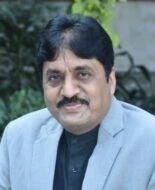
A BALANCE OF EXPERIENCE AND YOUTHFUL ENERGY, PREPARING FOR 2029:LALIT GARG
20-AUG-ENG 6


RAJIV NAYAN AGRAWAL
ARA---------------------------With the announcement of his new national team, BJP National President Nitin Navin has signaled that the party is moving beyond a mere reshuffle of posts; instead, it is reshaping the organization to meet the demands of the upcoming political era. The new team, announced on August 17, 2026, reflects sweeping changes across various organizational levels, including the appointment of 13 National Vice Presidents, 8 National General Secretaries, and 16 National Secretaries. Prime Minister Narendra Modi has described the new team as a blend of organizational experience, energy, and grassroots connectivity. To truly understand this team, one cannot simply view it through the lens of "who came and who left." It is far more important to grasp the underlying long-term organizational strategy, the understanding of social equations, and the political challenges of future elections. The key message of Nitin Navin’s new team is that youthful energy has not replaced experience; rather, fresh energy has been integrated with existing experience. It is this very balance that keeps a large political organization dynamic.
Ram Madhav’s return as a National Vice President is particularly significant in this context. His understanding of organizational matters, ideological discourse, and strategic politics could prove invaluable to the BJP. By entrusting significant responsibilities to senior leaders like Vasundhara Raje Scindia, D. Purandeswari, Baijayant Panda, and Tirath Singh Rawat, it is evident that Nitin Navin has not sidelined seniority or experience. This demonstrates an organizational mindset that seeks to leverage past experience to suit new circumstances. Meanwhile, assigning the role of National General Secretary to Smriti Irani signifies more than just the return of an individual. Her political persona is defined by assertive communication, a strong connection with women voters, and effective political outreach at the national level. Her return is crucial for the BJP from both a political messaging perspective and in terms of organizational utility. Entrusting the role of General Secretary to leaders with significant organizational experience—such as Vinod Tawde and Sunil Bansal—signals better coordination between the organization and election management.
The appointment of Piyush Goyal as National Treasurer is also noteworthy. This assignment indicates that the organization values administrative, financial, and professional competence alongside political experience. B.L. Santhosh continuing as the National General Secretary (Organization) ensures organizational continuity. In other words, Nitin Navin did not adopt a wholesale "out with the old, in with the new" policy; instead, he maintained continuity where necessary while creating ample space for change.
Another significant aspect of the new team is its social and regional representation. For the BJP, politics is no longer limited to merely winning elections; expanding the organization's acceptance and reach across diverse sections of society is equally important. The new team includes representation for women and various social communities, spanning regions from North India to the Northeast and South India. Reports indicate that women and representatives from minority communities have also been given significant roles.
Another important signal emerges here: the BJP is attempting to reach out to new voter groups rather than communicating solely with its traditional support base. The political aspirations of the youth, first-time voters, urban professionals, the tech-savvy demographic, and women influence election results today. Therefore, the organization needs faces that do not merely deliver political speeches but also understand the language of a changing society. This approach is clearly evident in the BJP's new team. Changes made, particularly within the Yuva Morcha (Youth Wing) and Mahila Morcha (Women's Wing), indicate that the organization aims to engage with future voters starting now. It would be a mistake to view Gen-Z merely as a "social media generation." This generation holds distinct expectations regarding employment, technology, entrepreneurship, transparency, nationalism, personal freedom, and opportunities. If the BJP can establish a genuine dialogue with this generation, the benefits could extend beyond upcoming elections to shape the politics of the 2030s and 2040s. However, the new team's ultimate political test will take place in Uttar Pradesh and other states heading to the polls. In a large state like Uttar Pradesh, the strength of the organization has a direct impact on national politics. With the upcoming elections in mind, the BJP faces the challenge not only of countering anti-incumbency sentiment but also of navigating shifting opposition alliances, caste dynamics, the aspirations of the youth, and local issues. Therefore, ensuring adequate representation for various states—including Uttar Pradesh—within the national team is a natural strategy from an electoral perspective. It is also worth noting that the new team's objective cannot be limited merely to the elections of 2026–27; the BJP’s vision certainly extends to the 2029 Lok Sabha elections and beyond. The goal of a ‘Viksit Bharat 2047’ (Developed India 2047) can only gain a solid political and social foundation if the party organization continuously integrates the new generation. Thus, Nitin Navin’s team can be viewed as both a preparation for 2029 and the laying of a political-organizational foundation for 2047.
Speculation regarding changes or expansion within the government led by Prime Minister Narendra Modi is also natural, particularly as the administration considers the political equations and administrative requirements of the states facing upcoming elections. Strategic priorities must be balanced; however, it would be premature to consider the appointment of any specific individual for the cabinet expansion as a certainty. While political circles may speculate about the future roles of experienced leaders like Anurag Thakur, the final decision rests with the Prime Minister and the BJP leadership. Narendra Modi’s political style involves revitalizing the organization and the government through the assignment of new responsibilities; thus, any significant future changes should be viewed as part of a broader strategy rather than a surprise. In reality, the key message conveyed by Nitin Navin’s new team is one of ‘recalibration’ rather than a complete ‘reset’—meaning the goal is not to overhaul the organization entirely, but to realign its direction and pace with the evolving political landscape. The team reflects an effort to bring together a diverse mix of elements: the experience of senior leaders, the energy of the youth, the growing role of women, regional representation, social diversity, and professional competence. The inclusion of a large number of new faces among the 65 office-bearers highlights the pace of generational transition within the organization.
The real challenge now lies not merely in filling positions, but in delivering results. Nitin Navin’s new team will be evaluated based on several criteria: how deeply the organization connects with the grassroots, the strength of communication between the leadership and party workers, the extent to which the public's genuine issues are understood beyond the noise of social media, and the ability to win the trust of new social segments, including the youth and women. Overall, this team embodies a brand of BJP politics that leverages experience as a legacy, youth energy as the future, and social diversity as a vehicle for expansion. If Nitin Navin can channel the team's capabilities toward a shared organizational goal, this transformation will extend beyond a mere reshuffle of office-bearers; it could reshape the party’s operational style, public outreach, and electoral strategy. Upcoming elections will serve as the initial test for this experiment, with the 2029 elections acting as the ultimate assessment. For now, it is evident that the BJP has sought to steer its organization in a new direction, and the responsibility of translating that direction into public trust now rests on the shoulders of Nitin Navin and his new team.
What's Your Reaction?
 Like
0
Like
0
 Dislike
0
Dislike
0
 Love
0
Love
0
 Funny
0
Funny
0
 Wow
0
Wow
0
 Sad
0
Sad
0
 Angry
0
Angry
0







Comments (0)