
VEGETARIANISM IS FOUNDATION OF A HEALTHY AND BALANCED WORLD:LALIT GARG
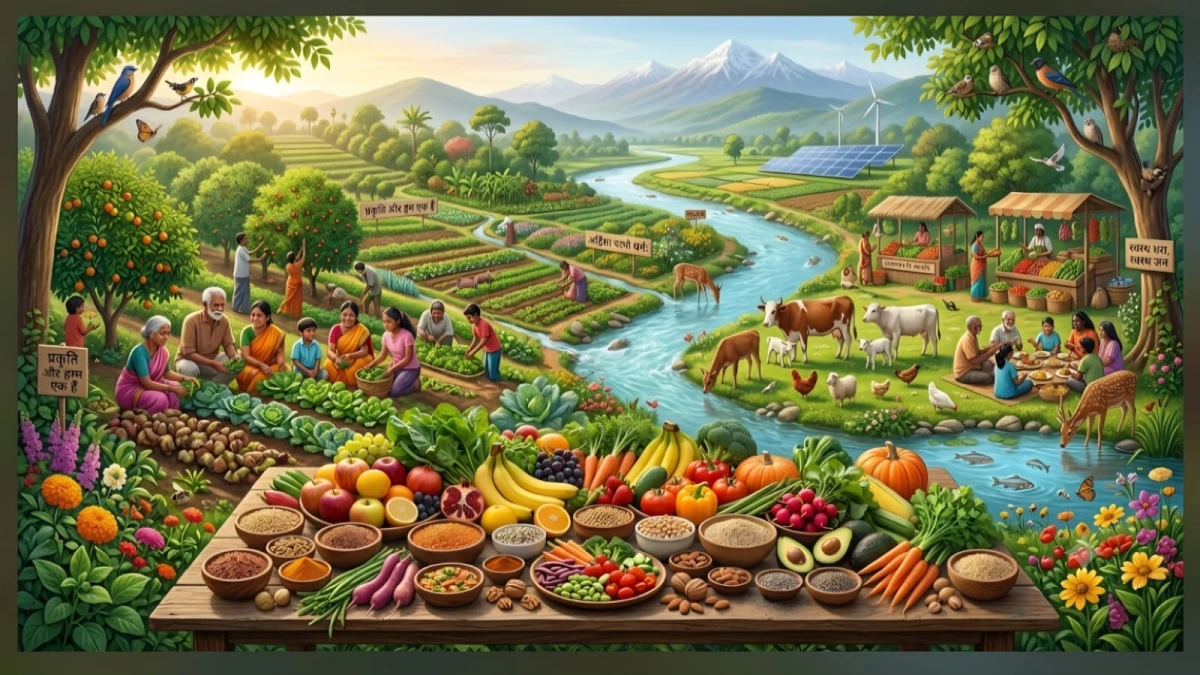
-Amidst rising diseases, stressful lives, and environmental crises, humanity is feeling the need to rethink its dietary habits. Calls for dietary changes to ensure a better quality of life and good health are being heard across many parts of the world today. In this context, vegetarianism is emerging not merely as a dietary practice, but as a comprehensive philosophy encompassing compassion, non-violence, health, environmental conservation, and a balanced lifestyle. World Vegetarian Day, observed annually on October 1, serves as an opportunity to raise awareness about this way of life. The observance began in 1977 through the initiative of the North American Vegetarian Society and received the support of the International Vegetarian Union in 1978. Its objective is to foster awareness regarding the health, environmental, ethical, and humanitarian aspects of vegetarianism. Today, there is a need to view vegetarianism not as a practice confined to narrow religious or dietary identities, but as a healthy and balanced lifestyle. Food influences not only the human body but also one's thoughts and behavior. "As the food, so the mindset; and as the mindset, so the life"—this has been a significant tenet of Indian thought. Viewed from this perspective, vegetarianism can serve as a means to achieve balance for both body and mind. Fruits, vegetables, pulses, grains, nuts, seeds, and other plant-based foods, when consumed in the right balance, can form a vital part of a healthy diet. However, nutritional balance is essential in any dietary regimen, and food choices should be tailored to an individual's age, health, and specific needs.

VEGETARIANISM IS FOUNDATION OF A HEALTHY AND BALANCED WORLD:LALIT GARG
1-OCT-ENG 19


RAJIV NAYAN AGRAWAL
ARA---------------------------Amidst rising diseases, stressful lives, and environmental crises, humanity is feeling the need to rethink its dietary habits. Calls for dietary changes to ensure a better quality of life and good health are being heard across many parts of the world today. In this context, vegetarianism is emerging not merely as a dietary practice, but as a comprehensive philosophy encompassing compassion, non-violence, health, environmental conservation, and a balanced lifestyle. World Vegetarian Day, observed annually on October 1, serves as an opportunity to raise awareness about this way of life. The observance began in 1977 through the initiative of the North American Vegetarian Society and received the support of the International Vegetarian Union in 1978. Its objective is to foster awareness regarding the health, environmental, ethical, and humanitarian aspects of vegetarianism. Today, there is a need to view vegetarianism not as a practice confined to narrow religious or dietary identities, but as a healthy and balanced lifestyle. Food influences not only the human body but also one's thoughts and behavior. "As the food, so the mindset; and as the mindset, so the life"—this has been a significant tenet of Indian thought. Viewed from this perspective, vegetarianism can serve as a means to achieve balance for both body and mind. Fruits, vegetables, pulses, grains, nuts, seeds, and other plant-based foods, when consumed in the right balance, can form a vital part of a healthy diet. However, nutritional balance is essential in any dietary regimen, and food choices should be tailored to an individual's age, health, and specific needs.
According to Mahatma Gandhi, food is not merely a matter of taste but also of self-restraint. He regarded the control of one's palate as an integral part of spiritual discipline. Indeed, the purpose of food should not be simply to satisfy the tongue, but to maintain physical health and foster a disciplined life. Today, as the culture of taste and consumerism rapidly influences our dietary habits, vegetarianism offers us an opportunity to return to restraint, simplicity, and discernment. Vegetarianism is linked not only to health but also to compassion and non-violence. In India's cultural consciousness, the principle of *Ahimsa Paramo Dharmah* (non-violence is the supreme duty) has guided life for centuries. Lord Mahavira established non-violence as the highest foundation of righteousness, acknowledging the equality of life in every living being. Gautama Buddha, Mahatma Gandhi, and numerous other saints and sages also upheld compassion and non-violence as fundamental human values. Jain philosophy, in particular, regards friendship and compassion towards all living beings as the very foundation of life. Thus, vegetarianism represents a shift not merely in what is on our plate, but in our perspective; it compels us to consider whether the cost of our meal is being paid with the life of another living being.
An important aspect of vegetarianism One aspect is linked to the environment. Animal husbandry and industrial meat production require vast quantities of land, water, fodder, and energy. Livestock-related activities also raise environmental concerns regarding greenhouse gas emissions, water usage, and pressure on land resources. At a time when the world is grappling with climate change, water scarcity, land degradation, and a biodiversity crisis, it has become essential to consider sustainable and balanced food systems. In this context, the growing trend towards plant-based diets is becoming part of the environmental discourse. Vegetarianism implies more than just abstaining from meat; it signifies a mindful approach to food.
Interest in plant-based diets has risen across many countries. Even in societies that once viewed meat consumption as a symbol of modernity and prosperity, issues concerning health, the environment, and animal welfare are being re-evaluated. Numerous scientists, writers, philosophers, and social thinkers have championed vegetarianism in their own lives. The lives and philosophies of figures such as Leonardo da Vinci, Leo Tolstoy, George Bernard Shaw, and Mahatma Gandhi have been deeply connected to the concepts of vegetarianism and compassion. This shift demonstrates that global perspectives on food are not static; they are constantly influenced by experience, science, and changing circumstances. This subject holds particular significance for India, given that vegetarianism is deeply rooted in our agricultural culture, spiritual traditions, and philosophy of non-violence (*ahimsa*). For centuries, lentils, grains, vegetables, fruits, milk, curd, ghee, nuts, and various plant-based foods have been integral to the Indian diet. Ayurveda, too, has emphasized aligning one's diet with the body, nature, and lifestyle. Thus, for India, vegetarianism is not merely a new trend but an opportunity to revitalize a traditional way of life through the lens of modern scientific understanding. A matter of particular concern is that, in the name of modernity and fashion, dietary trends are emerging among the new generation that prioritize taste and ostentation over health and compassion. Instead of presenting vegetarianism to the youth merely as a matter of tradition or religious observance, it needs to be explained through the lenses of science, health, the environment, and human values. If young people come to understand that the food on their plate is linked not only to their own health but also to the health of the planet and their attitude towards the living world, then vegetarianism can become a choice for a conscious lifestyle rather than a burden. Jainism represents one of the oldest and most profound foundations of this consciousness regarding vegetarianism. The Jain philosophy’s message of "Live and Let Live" is not merely a religious precept but a deeply compassionate perspective on life. Today, as the world grapples with violence, war, stress, and intolerance, it is essential to connect the spirit of non-violence in our diet with our broader conduct in life.
Vegetarianism can also be linked to economic balance. In an agrarian economy, a rising demand for plant-based foods can boost local agriculture and horticulture, as well as the production of pulses, grains, fruits, vegetables, and nutritious foods. Furthermore, it can have a positive impact on issues such as food security, water conservation, and sustainable agriculture. However, these challenges cannot be resolved by vegetarianism alone; they also require scientific farming, improved food distribution, water management, and balanced public policies. As India moves towards the goal of a 'Viksit Bharat 2047' (Developed India 2047), development cannot be defined solely by economic prosperity. Healthy citizens, balanced families, a clean environment, a compassionate society, and an ethical life are also vital benchmarks of development. Vegetarianism can play a significant role as a way of life that integrates all these dimensions. Therefore, World Vegetarian Day should not merely be a one-day event but an opportunity for introspection regarding food and life.
The need today is not to impose one's dietary habits on others, but to create a positive atmosphere of awareness where individuals can make informed food choices based on health, environmental concerns, compassion, and ethics. Education about balanced nutrition in schools, healthy eating habits within families, awareness among the youth regarding nutrition and the environment, and a spirit of compassion for living beings in society—all these elements combined can transform vegetarianism into a widespread public consciousness. World Vegetarian Day reminds us that what is on our plate is not merely a matter of personal preference but is deeply connected to our health, nature, and empathy. If compassion enters our diet, it will extend to our behavior; if we practice restraint in life, our sense of responsibility towards resources will grow; and if non-violence permeates everything from our diet to our conduct, the prospects for peace in society will be strengthened. Thus, vegetarianism is not just about changing one's diet; it is a step towards making our outlook on life more compassionate, balanced, and humane. This is the true message of World Vegetarian Day and a crucial need of the times.
What's Your Reaction?
 Like
0
 Dislike
0
 Love
0
 Funny
0
 Wow
0
 Sad
0
 Angry
0













Comments (0)