
NAVRATRI: A SACRED CALL TO PROTECT THE COW—GO-SAMMAN AHWAN ABHIYAN AND THE PATH TO COLLECTIVE ACTION
-Navratri, the nine sacred nights dedicated to the Divine Mother in her myriad forms, is a time of intense spiritual energy, purification, and renewal. Across India and among Hindu communities worldwide, devotees observe fasts, perform elaborate pujas, and seek the blessings of Durga, Lakshmi, and Saraswati. Yet beyond personal devotion and festive celebration lies a deeper dharma that the season invites us to uphold: the protection and reverence of the cow, Gau Mata. The message of the Go Samman Ahwan Abhiyan (Cow Respect Call Campaign) during Navratri is clear and urgent. It is a call for every conscious individual to turn this festival into a powerful movement for gau-hit—the welfare of the cow—through personal resolve, collective planning, and sustained practical action. “We will eat the bread of our own home and save the cow.” This simple yet profound resolve captures the spirit of the campaign: self-reliance in daily life paired with active protection of the animal that has sustained Indian civilization for millennia.

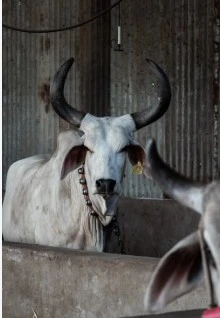
NAVRATRI: A SACRED CALL TO PROTECT THE COW—GO-SAMMAN AHWAN ABHIYAN AND THE PATH TO COLLECTIVE ACTION
10-OCT-ENG 3


RAJIV NAYAN AGRAWAL
ARA--------------------------Navratri, the nine sacred nights dedicated to the Divine Mother in her myriad forms, is a time of intense spiritual energy, purification, and renewal. Across India and among Hindu communities worldwide, devotees observe fasts, perform elaborate pujas, and seek the blessings of Durga, Lakshmi, and Saraswati. Yet beyond personal devotion and festive celebration lies a deeper dharma that the season invites us to uphold: the protection and reverence of the cow, Gau Mata. The message of the Go Samman Ahwan Abhiyan (Cow Respect Call Campaign) during Navratri is clear and urgent. It is a call for every conscious individual to turn this festival into a powerful movement for gau-hit—the welfare of the cow—through personal resolve, collective planning, and sustained practical action. “We will eat the bread of our own home and save the cow.” This simple yet profound resolve captures the spirit of the campaign: self-reliance in daily life paired with active protection of the animal that has sustained Indian civilization for millennia.
The Cultural and Spiritual Foundation
In the Sanatan tradition, the cow is not merely livestock. She is Kamadhenu, the wish-fulfilling mother; she is Gau Mata, whose milk, ghee, dung, and urine form the basis of traditional agriculture, medicine (Ayurveda), and ritual purity. The Vedas, Puranas, and epics repeatedly exalt the cow as sacred. Lord Krishna, the divine cowherd, embodies this relationship. During Navratri, when the Goddess is worshipped as the protector of dharma and the destroyer of evil, the protection of the cow becomes a living expression of that same dharma. Neglecting or allowing the slaughter and suffering of cows while celebrating the Goddess creates a spiritual contradiction. The Go Samman Ahwan Abhiyan therefore positions Navratri as the ideal moment to awaken collective responsibility. It asks every participant to move beyond ritual observance into concrete seva (service) and sankalp (resolve).
The campaign’s central invitation is practical and inclusive: “All of us must specially undertake the work of the Go Samman Ahwan Abhiyan during the Navratri festival. What is to be done, how is it to be done and how to get it done—every noble person resolved for the welfare of the cow should share their definite work plan. Both principle and practice are to be served. In this unique work for the welfare of the people, we fortunate ones shall become instruments and create a new history. With this resolve we shall move forward—neither stopping nor tiring. We shall eat the bread of our home and save the cow.”
Principles That Guide the Work
Any lasting movement requires clear principles. The first principle is ahimsa extended specifically to the cow. Non-violence is not passive; it demands active protection. The second is self-reliance. “Eating the bread of one’s own home” symbolizes rejecting dependence on systems that profit from cow slaughter or the displacement of indigenous cattle. Supporting local dairy, organic farming that uses cow dung and urine as fertilizers, and home-based food systems strengthens both the family and the cow economy. The third principle is collective responsibility. No single individual or organization can solve the crisis of stray cattle, illegal slaughter, and the decline of indigenous breeds. The campaign therefore calls for every resolved person to prepare and share a concrete plan of action. Transparency and mutual inspiration replace isolated effort. The fourth principle is continuity. The resolve is to move forward without stopping or tiring. Navratri provides the spark; the work must continue through the year.
These principles are not abstract. They translate directly into daily choices and organized efforts: choosing milk from local, ethical sources; supporting gaushalas (cow shelters); advocating against illegal transport and slaughter; promoting indigenous breeds such as Gir, Sahiwal, Tharparkar, and Hallikar; and educating the younger generation about the ecological and cultural value of the cow.
What Must Be Done: Concrete Areas of Action
The campaign identifies several interconnected fields of work.
- Rescue and Shelter: Stray and abandoned cattle face starvation, traffic accidents, and plastic ingestion. Establishing or strengthening gaushalas, creating community feeding points, and organizing rescue teams during festivals when abandonment sometimes increases are immediate priorities.
- Promotion of Indigenous Breeds and Natural Farming: Cross-bred cattle often require intensive feed and veterinary inputs, while indigenous breeds are hardy, disease-resistant, and suited to local climates. Encouraging farmers to maintain indigenous cows and to use panchagavya (five products of the cow) in agriculture restores soil health and reduces chemical dependence.
- Economic Viability: Protection is sustainable only when the cow is economically valued alive. This includes value addition of milk products, dung-based biogas and fertilizers, urine-based medicines and pesticides, and cow-based micro-enterprises that provide livelihoods.
- Legal and Advocacy Work: Strengthening enforcement against illegal slaughter and smuggling, supporting cow protection laws where they exist, and creating public awareness about the scale of the problem form an essential pillar.
- Cultural and Educational Outreach: Navratri itself offers a ready platform. Temples, cultural organizations, schools, and social media can be used to highlight the cow’s place in tradition and ecology. Simple messages—why the cow is sacred, how plastic harms her, why local milk is better—can shift attitudes.
- Personal Lifestyle Alignment: Every household can begin by examining its own consumption. Preferring milk and ghee from known ethical sources, avoiding products linked to industrial dairy that treats cows as mere production units, and supporting local gaushalas through donations of fodder or funds are accessible starting points.
How to Do It and How to Get It Done: Building a Work Plan
The campaign insists that both principle and practice must be served. Inspiration without a plan remains sentiment; a plan without principle becomes mechanical. Therefore every participant is asked to prepare a definite work plan and share it.
A practical personal or group plan might include the following elements:
- Assessment: Map the local situation. How many stray cattle are there in the neighborhood or village? Which gaushalas exist and what are their needs? Are there local farmers still maintaining indigenous cows?
- Immediate Actions for Navratri: Organize a gau-puja or gau-seva day during the nine nights. Collect fodder, arrange medical camps for cattle, or host awareness programs in temples and community halls. Use the festive atmosphere to launch a local chapter of the campaign.
- Medium-term Commitments: Form a small team that meets regularly. Assign responsibilities—fodder collection, medical care, legal follow-up, education. Set measurable targets: number of cattle to be supported, quantity of fodder to be arranged monthly, number of households to be contacted about ethical dairy.
- Resource Mobilization: Identify sources of support—local philanthropists, temple trusts, agricultural universities, and online platforms. Transparent accounting builds trust.
- Knowledge Sharing: Document what works. Share successful models of gaushala management, natural farming techniques, and community feeding programs. The campaign’s call to “share your definite work plan” creates a living library of practical wisdom.
- Alliance Building: Connect with existing cow-protection organizations, organic farming networks, and cultural bodies. Avoid duplication; amplify collective impact.
Getting others involved requires both inspiration and structure. Personal example is powerful. When neighbors see a family consistently supporting local cows or organizing feeding drives, curiosity and participation follow. Clear, time-bound invitations—join us this Navratri for a gau-seva camp, or contribute one day’s fodder every month—lower the barrier to entry. Social media, when used responsibly, can amplify local efforts without reducing them to mere online activism.
Creating New History: The Larger Vision
The campaign’s language is ambitious: “In this unique work for the welfare of the people, we fortunate ones shall become instruments and create a new history.” History is not only made by dramatic events; it is shaped by the quiet accumulation of consistent choices. If during this Navratri thousands of individuals and groups prepare and implement concrete plans, the cumulative effect can be transformative. Villages that once saw cows as burdens can rediscover them as assets. Urban communities can reduce the tragedy of stray cattle. A generation that grows up understanding the ecological and cultural value of the cow will be less likely to treat her as disposable.
The resolve “neither stopping nor tiring” acknowledges that the work is long-term. Festival energy provides the initial momentum; discipline sustains it. There will be setbacks—funding shortages, bureaucratic hurdles, public indifference. The campaign’s answer is perseverance rooted in sankalp. Each time a cow is fed, a gaushala is strengthened, a farmer is supported in maintaining an indigenous breed, or a young person learns the deeper meaning of Gau Mata, a small piece of that new history is written.
A Call to Every Resolved Heart
Navratri is not only a time of personal spiritual elevation; it is an invitation to align individual devotion with collective dharma. The Go Samman Ahwan Abhiyan places before us a clear task: protect the cow with the same sincerity with which we worship the Goddess. Prepare a definite plan. Share it. Act on it. Support others who act. Eat the bread of your own home—support local, ethical systems—and thereby help save the cow.
The work is not glamorous. It involves arranging fodder under the sun, cleaning shelters, persuading officials, educating children, and sometimes facing indifference. Yet it is precisely this grounded service that turns principle into living reality. When enough people take up the work without stopping or tiring, the result will be more than the sum of individual efforts. It will be a renewed culture of reverence, self-reliance, and ecological wisdom.
Let this Navratri mark the beginning—or the strengthening—of that collective resolve. May every sankalp offered before the Divine Mother include the welfare of Gau Mata. May principle and practice walk together. And may we, by becoming instruments of this unique work for the people’s welfare, indeed create a new history—one in which the cow is protected, the soil is healed, and the civilization that has always honored both continues to flourish.
In the spirit of the campaign: We shall move forward. We shall neither stop nor tire. We shall eat the bread of our home and save the cow.
What's Your Reaction?
 Like
0
Like
0
 Dislike
0
Dislike
0
 Love
0
Love
0
 Funny
0
Funny
0
 Wow
0
Wow
0
 Sad
0
Sad
0
 Angry
0
Angry
0








Comments (0)