
WHY IS MUNICIPAL ADMINISTRATION AFRAID OF TELLING THE TRUTH
The beauty of democracy lies in its transparency. Governments elected by the people, and the administration that operates under them, are accountable to the public. To realize this fundamental principle, the Right to Information (RTI) Act was enacted in the country.

WHY IS MUNICIPAL ADMINISTRATION AFRAID OF TELLING THE TRUTH
22-OCT-ENG 6


RAJIV NAYAN AGRAWAL
ARA--------------------------The beauty of democracy lies in its transparency. Governments elected by the people, and the administration that operates under them, are accountable to the public. To realize this fundamental principle, the Right to Information (RTI) Act was enacted in the country.
The primary objective of this Act was to bring transparency to government operations, curb corruption, and ensure accountability in the functioning of officials and employees—so that the common citizen could understand how the system, sustained by their hard-earned money, actually functions.
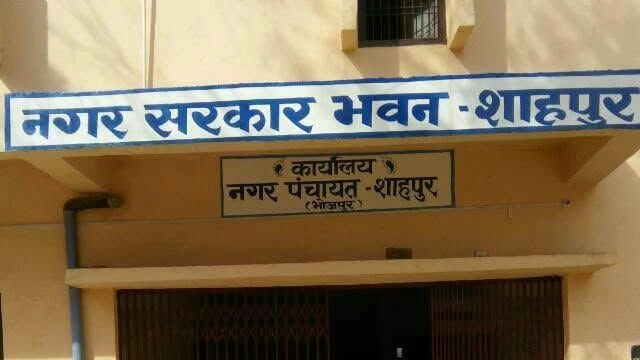
Yet, ironically, officials at the Shahpur Nagar Panchayat in Bhojpur district have made a mockery of this revolutionary law. It appears as though these officials have taken a vow that, come what may, no accurate information will be provided to any citizen under the RTI Act. When those tasked with upholding the law begin to flout it, the common man is left feeling cheated.
Exasperated by this irresponsible attitude, many residents of Shahpur have stopped filing RTI applications altogether. Locals have repeatedly complained—through the media and other public forums—that the Nagar Panchayat consistently avoids providing the information requested under the RTI Act.
When our team investigated this serious complaint, the truth that emerged was truly shocking. It was discovered that while a register is maintained within the Nagar Panchayat’s RTI wing—merely as a formality—applications submitted by the public are either buried under piles of files or end up in the trash bin. It has emerged from within the department itself that, with the exception of a few select or "special" cases, most applications never progress beyond the desk of the head clerk (*bada babu*).
Currently, residents of the town have filed various RTI applications seeking information regarding sanitation systems, corruption in road construction, irregularities in the approval of building plans, and other development-related activities. The concerned parties have repeatedly issued reminders—both in writing and verbally—to the officials, but to no avail; the authorities remain completely unmoved.
Meanwhile, former Chairman Vijay Kumar Singh stated that there is a widespread belief among the public that municipal officials are deliberately suppressing and concealing information to hide their own misconduct, administrative lapses, and the alleged large-scale misuse of public funds. They are well aware that if these files were to be opened, their entire way of functioning would come under serious scrutiny.
Furthermore, local social activist Ranjeet Kumar Gupta, also known as 'Azad Gupta', remarked that the Shahpur Nagar Panchayat seems to consider it beneath its dignity to respond to an RTI application within the mandated 30-day period. Why, one must ask, is the municipal administration so afraid of revealing the truth to the public?
According to advocate Sant Kumar, an expert on RTI law, the RTI Act mandates that requested information must be provided to an applicant within a 30-day period. If, for any reason, the information cannot be provided within this timeframe, the applicant must be duly informed. Following this, the applicant has the right to file a 'first appeal'.
However, the Shahpur Nagar Panchayat appears to follow its own peculiar set of rules. If you do not receive the requested information within 30 days, you cannot proceed directly to a 'second appeal'; instead, you are required to file a 'first appeal' with the very same municipal office that failed to provide the information in the first place. In other words, your application is held up at the *Nagar Panchayat* (local municipal body) for sixty days as part of a deliberate strategy. This long and exhausting process appears to have been intentionally designed to ensure that an ordinary citizen does not even dare to raise their voice against corruption.
Under the Right to Information (RTI) Act, 2005, every citizen of India has the fundamental right to seek information from any government or semi-government department in the country. To do so, a citizen must submit an application in a prescribed format to the relevant department. It is the legal responsibility of the department to provide a clear response within thirty days.
If no response is received from the department within this thirty-day period, or if the applicant is not satisfied with the information provided, they may file an appeal directly with the First Appellate Authority. If, even then, the First Appellate Authority fails to provide a satisfactory response within thirty days—or if the applicant remains dissatisfied—they may seek justice by presenting their case before the State Information Commission or the Central Information Commission, as applicable.
What's Your Reaction?
 Like
0
 Dislike
0
 Love
0
 Funny
0
 Wow
0
 Sad
0
 Angry
0












Comments (0)