
AARTI GAVE BIRTH TO TRIPLETS, WHEN HER HUSBAND IS IN JAIL SINCE 2015
Neeraj Bawana is a well-known gangster in Delhi and its surrounding areas. Recently, he was released from Tihar Jail on a five-hour custody parole to meet his ailing wife and newborn twins. Under tight security provided by the Delhi Police, he met his family and was returned to jail as soon as the allotted time expired.

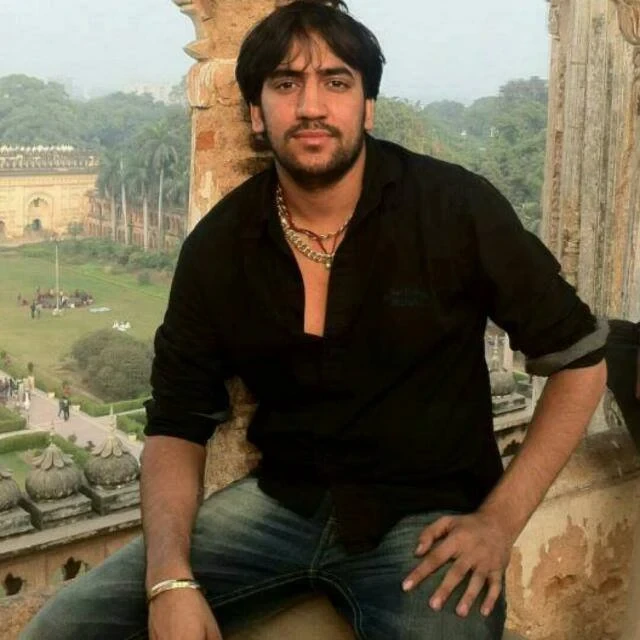
AARTI GAVE BIRTH TO TRIPLETS, WHEN HER HUSBAND IS IN JAIL SINCE 2015
28-AUG-ENG 1


RAJIV NAYAN AGRAWAL
DELHI-----------------------Neeraj Bawana is a well-known gangster in Delhi and its surrounding areas. Recently, he was released from Tihar Jail on a five-hour custody parole to meet his ailing wife and newborn twins. Under tight security provided by the Delhi Police, he met his family and was returned to jail as soon as the allotted time expired.
Delhi's notorious gangster Neeraj Bawana, alias Neeraj Sehrawat, stepped out of Tihar Jail for a few hours on August 26, 2026. The Delhi High Court had granted him six hours of custody parole, scheduled from 11:00 AM to 5:00 PM. Under heavy police security, he was taken to his home in Hari Nagar and a hospital in Moti Nagar, where his wife and newborn children were present.
Neeraj Bawana has been incarcerated since 2015 and faces numerous serious charges, including murder. The court classifies him as a high-risk undertrial prisoner; nevertheless, this parole was granted on humanitarian grounds.
What had happened? His wife, Aarti, gave birth to triplets on August 14, 2026, following an emergency surgery after a gestation period of approximately 27 weeks. One of the three infants passed away within hours of birth, while the other two remained admitted to the NICU at Moti Nagar Hospital—one on a ventilator and the other on CPAP support. His wife had already been discharged and was at home.
Neeraj Bawana petitioned the court, stating that his presence was required to care for his wife and children, and sought interim bail. The trial court had initially rejected the request due to his status as a high-risk prisoner and the threat of gang rivalries. However, Justice Manoj Jain of the Delhi High Court granted six hours of custody parole and sought a detailed report from the police. The next hearing was scheduled for September 2. During his parole, Neeraj Bawana was permitted to meet only his wife and children and to speak with doctors; meeting anyone else was prohibited. The Jail Superintendent was ordered to make comprehensive security arrangements. A Delhi Police team accompanied him, and the route from Tihar to Hari Nagar and subsequently to the hospital was secured.
Neeraj Bawana is considered a prominent gangster in the Delhi-NCR region. He is known as Neeraj Bawana due to his roots in Bawana village; his real name is Neeraj Sehrawat. Starting with petty theft, his name became linked to numerous cases involving murder, extortion, and land grabbing. He reportedly has many henchmen in his gang and has faced allegations of running the gang even while incarcerated.
His rivalry with the Lawrence Bishnoi gang and other criminal groups is well-known, and the Delhi Police constantly monitors his movements. When released on parole, the security provided was akin to that of a Chief Minister; he was accompanied by numerous police personnel, routes were vetted, and security was heightened around both the hospital and his home.
Reports of his secret marriage to his wife, Aarti, had surfaced previously. His family life continued despite his imprisonment, and children were born during this time. Many question how an incarcerated individual can marry and father children; however, the law does provide for parole or other facilities in certain cases. Discussions often arise regarding the disparity in treatment between impoverished prisoners and high-profile gangsters.
Neeraj Bawana had been granted parole previously as well. In 2025, he was granted a six-hour parole due to his wife's illness—she was in the ICU suffering from a nerve blockage in her brain—and was escorted under heavy security. In June 2026, he was granted a two-day parole during his wife's high-risk pregnancy.
This time, he was released to celebrate becoming a father following the birth of his children. However, security was so tight that even journalists could only observe from a distance. Neeraj Bawana remained reticent and spoke very little. Despite his image as a gangster, he was granted the opportunity to meet his family.
The Delhi Police state that such cases carry significant risk, as the threat of gang wars persists. Consequently, a prisoner on custody parole remains under police escort rather than moving about freely; their movements are restricted to locations like their home or a hospital, and they are returned to jail immediately upon the expiration of the allotted time.
Neeraj Bawana is reportedly implicated in over 28 cases. He is the prime accused in the 2015 jail van murder case, where two inmates were killed inside the vehicle while it was transporting them from Rohini Court to Tihar Jail. He has been incarcerated ever since, with multiple bail pleas having been rejected.
On this occasion, the court adopted a humanitarian approach, acknowledging the children's critical condition and deeming the father's presence essential to assist his wife. However, full bail was not granted; instead, he was given a reprieve of only a few hours. Further decisions will be made following the submission of the police report.
There is public discourse suggesting that prominent gangsters easily secure parole, a privilege not typically afforded to ordinary prisoners. While the law applies equally to everyone, the court makes decisions based on specific circumstances, occasionally granting relief on grounds of family needs or health issues.
Neeraj Bawana's gang is reportedly active in Delhi's outskirts, including Narela, Kashmere Gate, and areas bordering Uttar Pradesh. The police regularly take action against his associates, with arrests having been made in recent months as well.
Videos and photographs of his release on parole circulated widely on social media. Some reports noted his attire—he was dressed in black—and described him walking quietly within a security cordon to meet his wife and see his children before returning to Tihar Jail once the time was up.
This incident reflects the reality of Delhi's criminal underworld: even while incarcerated, ties to family remain intact. The courts make decisions based on humanitarian grounds, yet security remains a paramount concern. The story behind Neeraj Bawana's turn to crime is a long one; hailing from an ordinary family, he entered the criminal world and became involved in cases at a young age. He made a name for himself, formed a gang, and engaged in escalating rivalries, eventually landing on the police's radar. He has been continuously incarcerated since 2015.
His wife, Aarti, lives in a rented house and had been raising their children on her own. Taking this into account, the court granted him parole, allowing him to consult doctors and meet his family. The Delhi High Court's order was explicit: he could visit only designated locations, was prohibited from contacting gang members or outsiders, and had to remain under constant police escort, with prison officials held accountable for his custody.
Stories of this nature frequently capture public attention; the intersection of gangsters, parole, family dynamics, and the legal system holds a certain fascination. Neeraj Bawana has long been a prominent figure in Delhi's underworld, often compared to notorious names like Lawrence Bishnoi. After his parole ended, he returned to Tihar Jail. The well-being of his children will continue to be monitored, and the police report will be reviewed at the next court hearing, where a decision regarding interim bail will also be made.
The details of the event—when, where, how, and why it occurred—are clear: it took place in Delhi on August 26, 2026, under a High Court order and police protection, allowing him to meet his wife and newborn children on humanitarian grounds. Neeraj Bawana’s life is deeply intertwined with his wife, Aarti, and their children; while the court acknowledged the family's needs, it did not grant him complete freedom, ensuring he remained in custody throughout the outing.
Such incidents serve as a reminder that the law applies equally to everyone, yet relief is granted based on specific circumstances. Whether dealing with gangsters or ordinary prisoners, the courts demonstrate sensitivity regarding family and health matters while ensuring security protocols are maintained. This instance of parole for Neeraj Bawana has become another case study in Delhi's criminal justice system—characterized by heavy security, a limited timeframe, and a family reunion. Nothing more.
What's Your Reaction?
 Like
0
 Dislike
0
 Love
0
 Funny
0
 Wow
0
 Sad
0
 Angry
0










Comments (0)