
AFTER MADHUBANI, IT IS PIDIYA’ TURN
Although the Bhojpuri language is still waiting for inclusion in the Eighth Schedule of the Constitution, Bhojpuri culture has achieved a significant milestone. Bhojpur's traditional Pidiya painting has been granted the Geographical Indication (GI) tag. This recognition signifies more than just the validation of an art style; it represents a triumph for Bhojpuri identity, folk traditions, and the decades-long struggle of the artists who kept this heritage alive.

AFTER MADHUBANI, IT IS PIDIYA’ TURN
15-JUNE-ENG 20


RAJIV NAYAN AGRAWAL
ARA--------------------------Although the Bhojpuri language is still waiting for inclusion in the Eighth Schedule of the Constitution, Bhojpuri culture has achieved a significant milestone. Bhojpur's traditional Pidiya painting has been granted the Geographical Indication (GI) tag. This recognition signifies more than just the validation of an art style; it represents a triumph for Bhojpuri identity, folk traditions, and the decades-long struggle of the artists who kept this heritage alive.
Through the concerted efforts of NABARD and the Government of Bihar, three traditional products and art forms from the state have received the GI tag. In addition to Bhojpur's Pidiya painting, these include Nalanda's 'Bawan Buti' and Gaya's 'Patharkatti' stone craft. However, the Pidiya painting from the Bhojpuri region has garnered the most attention, as this marks the first time an art style rooted in Bhojpuri cultural tradition has achieved such national recognition.
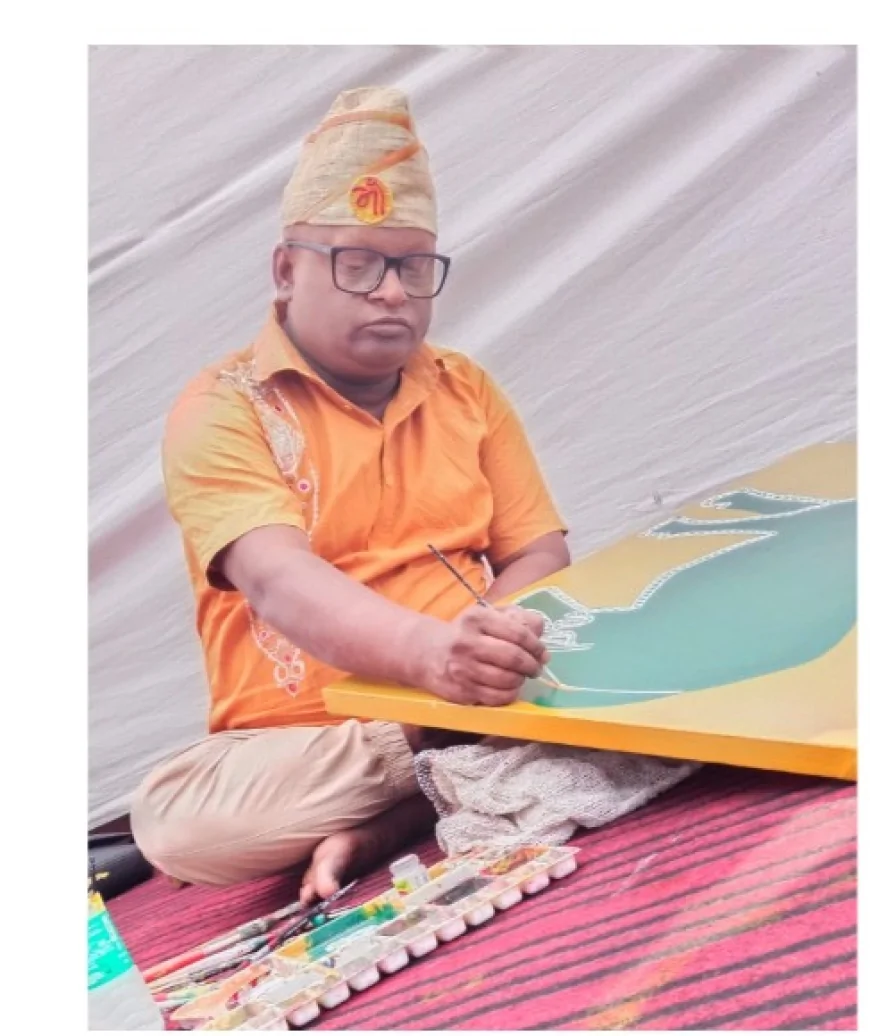
According to experts, the cultural organization 'Sarjana Nyas' from Ara played a pivotal role in securing the GI tag for Pidiya painting. About a year ago, the organization provided paintings, documents, historical references, and essential information related to the Pidiya style, thereby strengthening the GI registration process. Sarjana Nyas is the organization founded by world-record-holding painter Sanjeev Sinha. For nearly 30 years, Sinha has been continuously working on Bhojpuri painting and its distinctive folk styles. Through his art, he has showcased the folk songs, folklore, wedding rituals, festivals, agricultural culture, and rural life of the Bhojpuri community to audiences both within the country and abroad.
In the Bhojpur region, Pidiya paintings have been created by women for centuries. This painting tradition is part of a festival where sisters create artwork on walls over a period of 15 days, praying for their brothers' longevity. It is not merely a painting but a document of folk memory, offering glimpses of family, relationships, nature, agriculture, folk deities, and social life. Once created on the earthen walls of villages, this art form is now poised to reach global markets and international platforms.
Until now, Madhubani painting has been virtually synonymous with the art of Bihar. With the acquisition of the GI (Geographical Indication) tag, *Peediya* painting and the *Patharkatti* stone craft of Gaya are set to carve out a new identity at both national and international levels.
Nalanda’s *Bawan Buti* is a distinctive handloom textile art featuring 52 types of woven Buddhist and cultural motifs.
Meanwhile, Gaya’s *Patharkatti* stone craft is renowned across the country for its intricate carvings and sculptures fashioned from black granite.
Experts believe that the GI tag will create new opportunities for artists associated with *Peediya* painting—particularly rural women and folk artists. This will not only ensure the preservation of the art form but also boost the artists' income and expand their access to markets.
What's Your Reaction?
 Like
0
 Dislike
0
 Love
0
 Funny
0
 Wow
0
 Sad
0
 Angry
0









Comments (0)