
SC CONTROVERSY:WHO WILL PASS THE TEST OF YOUTH TRUST?-DEVANAND SINGH
The controversy surrounding the 14th Combined Civil Services Preliminary Examination conducted by the Jharkhand Public Service Commission (JPSC) has evolved beyond a mere recruitment exam issue. It has become a test of the youth's trust, the credibility of government institutions, and political accountability. When thousands of aspirants take an exam after years of hard work, any question raised about the results concerns not just marks or cut-offs, but their future and their faith in the system.


SC CONTROVERSY:WHO WILL PASS THE TEST OF YOUTH TRUST?-DEVANAND SINGH
4-AUG-ENG 17


RAJIV NAYAN AGRAWAL
ARA---------------------------The controversy surrounding the 14th Combined Civil Services Preliminary Examination conducted by the Jharkhand Public Service Commission (JPSC) has evolved beyond a mere recruitment exam issue. It has become a test of the youth's trust, the credibility of government institutions, and political accountability. When thousands of aspirants take an exam after years of hard work, any question raised about the results concerns not just marks or cut-offs, but their future and their faith in the system.
Following the declaration of results, students have raised serious questions regarding the non-disclosure of cut-off marks, the merit list process, and alleged OMR sheets that went viral on social media. While the veracity of these allegations is a matter for investigation—and drawing conclusions without an inquiry would be inappropriate—it is equally true that had the recruitment process been entirely transparent, such widespread mistrust might not have arisen in the first place.
Taking the matter seriously, the government has handed the investigation over to the CID, constituted an SIT, and made several arrests. This indicates that, prima facie, facts have emerged that cannot be ignored. However, mere arrests are not enough. The public The confidence of candidates will be restored only if the investigation is impartial, time-bound, and completely transparent, and if action is taken equally against the guilty, regardless of their position or influence.
On the other hand, the role of the opposition is also open to question. If the opposition is genuinely concerned about the future of the youth, it should demand concrete reforms and propose solutions rather than merely turning this issue into a political opportunity. Turning every controversy into a means to attack the government does not amount to fulfilling democratic obligations. The opposition also bears the responsibility of providing a clear roadmap for alternative systems and institutional reforms.
The ruling party, too, must engage in introspection. Recurring controversies surrounding recruitment examinations indicate that simply ordering an inquiry is not a permanent solution. The entire process—from the selection of examination agencies to the security of question papers, evaluation, availability of OMR sheets, and the publication of cut-offs and merit lists—must be made more transparent, both technically and administratively. Every candidate must be assured that their hard work will be evaluated solely on the basis of merit.
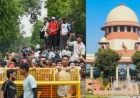
Student protests should also be conducted within the bounds of democratic decorum. Peaceful protest is their constitutional right, but jumping to conclusions before the investigation is complete does not align with the principles of justice. The objective of the movement should be systemic reform, not merely confrontation.
In a young state like Jharkhand, government jobs are linked to the hopes of lakhs of families. Therefore, any question raised regarding the credibility of a constitutional body like the JPSC casts a shadow over the entire administrative machinery. The solution to this controversy lies not merely in whether or not to cancel an exam, but in creating a recruitment system that leaves no room for doubt in the minds of candidates.
Ultimately, this is a time for systemic reform rather than politics. Only if the government ensures a transparent investigation, the opposition offers constructive cooperation, and the commission implements comprehensive reforms in its functioning, can the shattered confidence of the youth be restored. The greatest strength of a democracy lies in the trust of its youth; if that trust wavers, the victory of either the government or the opposition loses its meaning.
What's Your Reaction?
 Like
0
Like
0
 Dislike
0
Dislike
0
 Love
0
Love
0
 Funny
0
Funny
0
 Wow
0
Wow
0
 Sad
0
Sad
0
 Angry
0
Angry
0






Comments (0)