
JP BRITH ANNIVERSARY—OCTOBER 11, 2026:LALIT GARG
In the history of India, there are certain personalities who transcend the limitations of their times to become eternal sources of ideas, ideals, and inspiration for future generations. 'Loknayak' Jayaprakash Narayan was one such great leader of the masses; he chose the path of public service over ascending the pinnacles of power. He challenged foreign rule during the freedom movement, and later, in independent India—when governance appeared to be veering towards authoritarianism, corruption, and the erosion of democratic values—he sounded the clarion call for public awakening against these trends. His life stands as a testament to the truth that the real power of politics lies not in office, prestige, or authority, but in moral courage, public trust, and an unwavering commitment to principles. Today, as Indian politics is marked by a lust for power, a culture of mutual recrimination, and a tendency to oppose merely for the sake of opposition, Jayaprakash Narayan's birth anniversary offers us an opportunity for introspection. Merely recalling his ideas is not enough; translating them into current political conduct is the need of the hour. Jayaprakash Narayan’s life journey is an extraordinary saga of struggle, sacrifice, and ideological evolution. During the freedom movement, he fought against British rule, endured the hardships of imprisonment, and became an inspiration for revolutionary youth by making a daring escape from Hazaribagh Jail. After independence, he had numerous opportunities to acquire power and high office, yet he chose the path of social transformation over power politics. After being associated with socialist ideology, he joined Vinoba Bhave’s Bhoodan movement and became a staunch advocate of *Gram Swaraj* (village self-rule), social equality, and moral regeneration. He believed that merely changing the government does not resolve societal problems; rather, a transformation in the character of the individual, society, and the system itself is essential. The most brilliant facet of Jayaprakash Narayan’s personality was his detachment from the pursuit of power. Rather than seeking to capture power, he aimed to make authority accountable to the people. His political philosophy was grounded in the belief that democracy entails more than merely holding elections and forming a government based on a majority. True democracy is realized only when citizens receive justice, governance is transparent, power remains answerable to the public interest, and the voice of the common man is respected. He viewed politics not as a ladder for personal ambition, but as a medium for public welfare. Consequently, the movement for a change of power under his leadership was not limited to merely replacing the government; it sparked a broad debate regarding the morality of the political system. The 'Total Revolution' movement, which he launched in Bihar in 1974, became a defining chapter in the history of Indian democracy. He gave a unified national voice to the youth who were rising up against corruption, inflation, unemployment, and the flaws in the education system. His struggle against the curbs on democratic rights and civil liberties became even more significant after the imposition of the Emergency on June 25, 1975. Although he was personally arrested, his ideas and his commitment to democracy remained alive in the public consciousness. He played a pivotal role in the Janata Party's victory in 1977 and the formation of the first non-Congress government at the Centre. He demonstrated that even the most formidable power could be challenged by organized people's strength and moral leadership. However, his dream was not merely to oust a government, but to cultivate a political culture where power became synonymous with service.

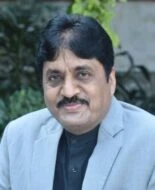
JP BRITH ANNIVERSARY—OCTOBER 11, 2026:LALIT GARG
11-OCT-ENG 11


RAJIV NAYAN AGRAWAL
ARA-----------------------------In the history of India, there are certain personalities who transcend the limitations of their times to become eternal sources of ideas, ideals, and inspiration for future generations. 'Loknayak' Jayaprakash Narayan was one such great leader of the masses; he chose the path of public service over ascending the pinnacles of power. He challenged foreign rule during the freedom movement, and later, in independent India—when governance appeared to be veering towards authoritarianism, corruption, and the erosion of democratic values—he sounded the clarion call for public awakening against these trends. His life stands as a testament to the truth that the real power of politics lies not in office, prestige, or authority, but in moral courage, public trust, and an unwavering commitment to principles. Today, as Indian politics is marked by a lust for power, a culture of mutual recrimination, and a tendency to oppose merely for the sake of opposition, Jayaprakash Narayan's birth anniversary offers us an opportunity for introspection. Merely recalling his ideas is not enough; translating them into current political conduct is the need of the hour. Jayaprakash Narayan’s life journey is an extraordinary saga of struggle, sacrifice, and ideological evolution. During the freedom movement, he fought against British rule, endured the hardships of imprisonment, and became an inspiration for revolutionary youth by making a daring escape from Hazaribagh Jail. After independence, he had numerous opportunities to acquire power and high office, yet he chose the path of social transformation over power politics. After being associated with socialist ideology, he joined Vinoba Bhave’s Bhoodan movement and became a staunch advocate of *Gram Swaraj* (village self-rule), social equality, and moral regeneration. He believed that merely changing the government does not resolve societal problems; rather, a transformation in the character of the individual, society, and the system itself is essential. The most brilliant facet of Jayaprakash Narayan’s personality was his detachment from the pursuit of power. Rather than seeking to capture power, he aimed to make authority accountable to the people. His political philosophy was grounded in the belief that democracy entails more than merely holding elections and forming a government based on a majority. True democracy is realized only when citizens receive justice, governance is transparent, power remains answerable to the public interest, and the voice of the common man is respected. He viewed politics not as a ladder for personal ambition, but as a medium for public welfare. Consequently, the movement for a change of power under his leadership was not limited to merely replacing the government; it sparked a broad debate regarding the morality of the political system. The 'Total Revolution' movement, which he launched in Bihar in 1974, became a defining chapter in the history of Indian democracy. He gave a unified national voice to the youth who were rising up against corruption, inflation, unemployment, and the flaws in the education system. His struggle against the curbs on democratic rights and civil liberties became even more significant after the imposition of the Emergency on June 25, 1975. Although he was personally arrested, his ideas and his commitment to democracy remained alive in the public consciousness. He played a pivotal role in the Janata Party's victory in 1977 and the formation of the first non-Congress government at the Centre. He demonstrated that even the most formidable power could be challenged by organized people's strength and moral leadership. However, his dream was not merely to oust a government, but to cultivate a political culture where power became synonymous with service.
The philosophy of 'Total Revolution' stands as the most significant testament to his visionary outlook. He linked political change with comprehensive social reconstruction. His 'Total Revolution' encompassed seven dimensions: political, economic, social, cultural, intellectual, educational, and spiritual. Its objective was not merely to alter the structure of governance, but to transform human thought, behavior, and values. They understood that corruption does not thrive solely in government offices; its roots also lie in the greedy mindset of the individual. Social inequality cannot be eradicated merely by enacting laws; it requires the cultivation of equality and sensitivity within the collective consciousness of society. Similarly, the purpose of education is not just to secure employment but to mold citizens who are discerning, responsible, and of good character. Viewed in this light, the concept of 'Total Revolution' remains relevant today. Its primary message is that systemic change must begin with the self-transformation of the individual. Unless political leadership embraces honesty, transparency, and accountability in its conduct, campaigns against corruption cannot yield the desired results. The second message is that in a democracy, the roles of both the ruling party and the opposition must be constructive. The government bears the responsibility of ensuring development, good governance, and public welfare, while the opposition's duty is not only to highlight the government's errors but also to present better policies and credible alternatives. Mere opposition cannot serve as proof of an active opposition; it must articulate the alternative frameworks it proposes for the nation's economy, education, healthcare, employment, agriculture, and social harmony.
In the current political landscape, the greatest challenge facing the opposition is to avoid limiting its role merely to the aspiration of capturing power. If the opposition's entire discourse revolves around allegations, personal attacks, and politics If opposition is reduced merely to political antagonism, it weakens public trust rather than strengthening it. In a democracy, the possibility of a change in power is essential, but it is equally important that a credible alternative be available to the public. Jayaprakash Narayan challenged the ruling establishment of his time because he felt a need to reform the system. Issues such as corruption, civil rights, democratic propriety, and the public interest lay at the heart of his movement. Today, political parties that invoke his name and slogans should also measure their own conduct against these very values. This expectation applies not only to the opposition but also to ruling parties and the entire political class. Another significant message from 'Loknayak' concerns the decentralization of power and public participation. He envisioned a democracy that was not confined to Parliament and legislative assemblies but was actively present in *Gram Sabhas* (village councils), local bodies, and the lives of ordinary citizens. In an era of expanded technology, communication, and administrative resources, the potential for enhancing public participation is greater than ever before. Instead of merely treating the youth as part of election crowds or using them for political slogans, they should be engaged in processes of policy formulation, social reform, and nation-building. This is how the spirit of 'Total Revolution' can be translated into practice.
I also share a personal connection with the ideals of Jayaprakash Narayan. Although I never met him in person, my late father, Shri Ramswaroopji Garg, was a devoted follower and a prominent activist in the JP movement in Rajasthan. My mother, Satyabhamaji Garg, used to oversee arrangements for his meals and other needs during his visits to Rajasthan. Her life and thoughts bore the deep imprint of her dedication to Jayaprakash Narayan and his ideals. This family environment inspired me to understand that true reverence for a great personality is demonstrated by embodying their ideas in one's own life. When a climate of protest arose in the country over the well-known book *Agnipariksha* by my spiritual guru, Acharya Shri Tulsi, Jayaprakash Narayan played a pivotal role in fostering dialogue and harmony. His intervention and call to action helped de-escalate tension and establish peace. This episode highlights an aspect of his personality that prioritized dialogue, tolerance, and social harmony above all else, even amidst ideological differences. The truest tribute to Jayaprakash Narayan on his birth anniversary would be to transform the concept of 'Total Revolution' from a mere historical movement into a resolve to rebuild contemporary India. Today, the country needs a political culture characterized by accountability in governance, a clear alternative vision from the opposition, constructive energy among the youth, and respect for ethics in public life.
What's Your Reaction?
 Like
0
Like
0
 Dislike
0
Dislike
0
 Love
0
Love
0
 Funny
0
Funny
0
 Wow
0
Wow
0
 Sad
0
Sad
0
 Angry
0
Angry
0







Comments (0)