
HORMUZ CRISIS AND CHINA’S FAR-REACHING MOVE:DEVANAND SINGH
The Hormuz crisis has once again shaken the global energy market. The ongoing tension in the Strait of Hormuz is not only affecting oil prices but is also changing the strategic equations


HORMUZ CRISIS AND CHINA’S FAR-REACHING MOVE:DEVANAND SINGH
7-SEP-ENG 8


RAJIV NAYAN AGRAWAL
ARA---------------------------The Hormuz crisis has once again shaken the global energy market. The ongoing tension in the Strait of Hormuz is not only affecting oil prices but is also changing the strategic equations.
The more the flames of war are increasing in West Asia, the more insecure the world's energy security is becoming. Tension in the Strait of Hormuz has once again raised the question of how long the global economy can maintain its energy dependence on select sea routes. Even minor disruption in the movement of oil and LPG increases price volatility in the market and its impact ultimately reaches the pockets of the common consumer.
But an interesting aspect in this entire crisis is that while the conflict between America and Iran is focusing the world's attention on Hormuz, China is busy strengthening its strategic ground. Beijing's goal is not just to meet today's energy needs, but to create alternative trade and transportation routes for decades to come that can keep it relatively safe from the vagaries of sea routes.
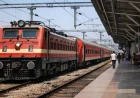
The China-Kyrgyzstan-Uzbekistan railway project should be seen in this context. The completion of the first tunnel in the Kyrgyzstan section is certainly a technical achievement, but the geopolitical message behind it is much more important. China is expanding its reach in Central Asia through rail networks and wants to further strengthen the region's trade and strategic influence.
It is important to understand that China's strength lies not only in its industrial capacity, but also in its ability to make long-term plans and implement them consistently. As the world grapples with an immediate crisis, China often appears to be laying the groundwork for situations beyond. The same policy is visible from Belt and Road to Rail Corridor.
The Hormuz crisis has given new utility to this strategy. If sea routes are disrupted by war, political conflict or security crisis, the importance of alternative land links increases. For China, this corridor opening towards the west through Central Asia can become not only a route for freight transportation, but also a medium for future economic and strategic access.
However, to say that with the construction of this railway the work of Hormuz will be completely completed would be to simplify the reality. Shifting the huge global movement of oil and LPG from sea to rail is not easy. Many challenges will remain such as capacity, cost, distance, security and infrastructure. But making strategic choices is a great power in itself. In times of crisis, the one who has more options, his bargaining power is also greater.
This is a serious message for India too. India's energy needs are continuously increasing and West Asia is extremely important for its energy security. In such a situation, excessive dependence on any one sea route or any one area can create risks in the future. India will also have to continue to focus on alternative energy sources, strategic oil reserves, pipeline networks and better connectivity with Central Asia.
Today's geopolitical conflict is not being fought only with missiles and warships. Railway lines, ports, pipelines, energy agreements and trade corridors have also become weapons of modern power struggle.
Projecting military power in West Asia may be important for the US, but China is sending the message that long-term influence is achieved not just by winning wars but also by creating alternative paths.
Hormuz is the center of concern for the world today. But China probably has its sights set beyond that. It is preparing for a world where reliance on a single route for energy and trade will be seen as weakness.
The noise of war may be louder today, but the real stake of the future will be in the hands of those countries who are preparing new routes for roads, railways, energy and trade amidst the crisis. China's current initiatives need to be seen in the mirror of this long-term strategy.
What's Your Reaction?
 Like
0
Like
0
 Dislike
0
Dislike
0
 Love
0
Love
0
 Funny
0
Funny
0
 Wow
0
Wow
0
 Sad
0
Sad
0
 Angry
0
Angry
0










Comments (0)