
GOMHA PUNI:MORE THAN A FESTIVAL:HIMMAT LAL MAHATO
Gomha Puni marks the full moon day (*Purnima*) that concludes the month of *Sawan*. For the tribal community, it is not merely a date on the calendar but a tradition deeply intertwined with agriculture, nature, livestock, and communal life—one that reflects an entire philosophy of existence. Yet, the question arises today: is Gomha Puni surviving in its true form, or is it gradually being overlaid by the influences of other cultures, market forces, and religious practices?

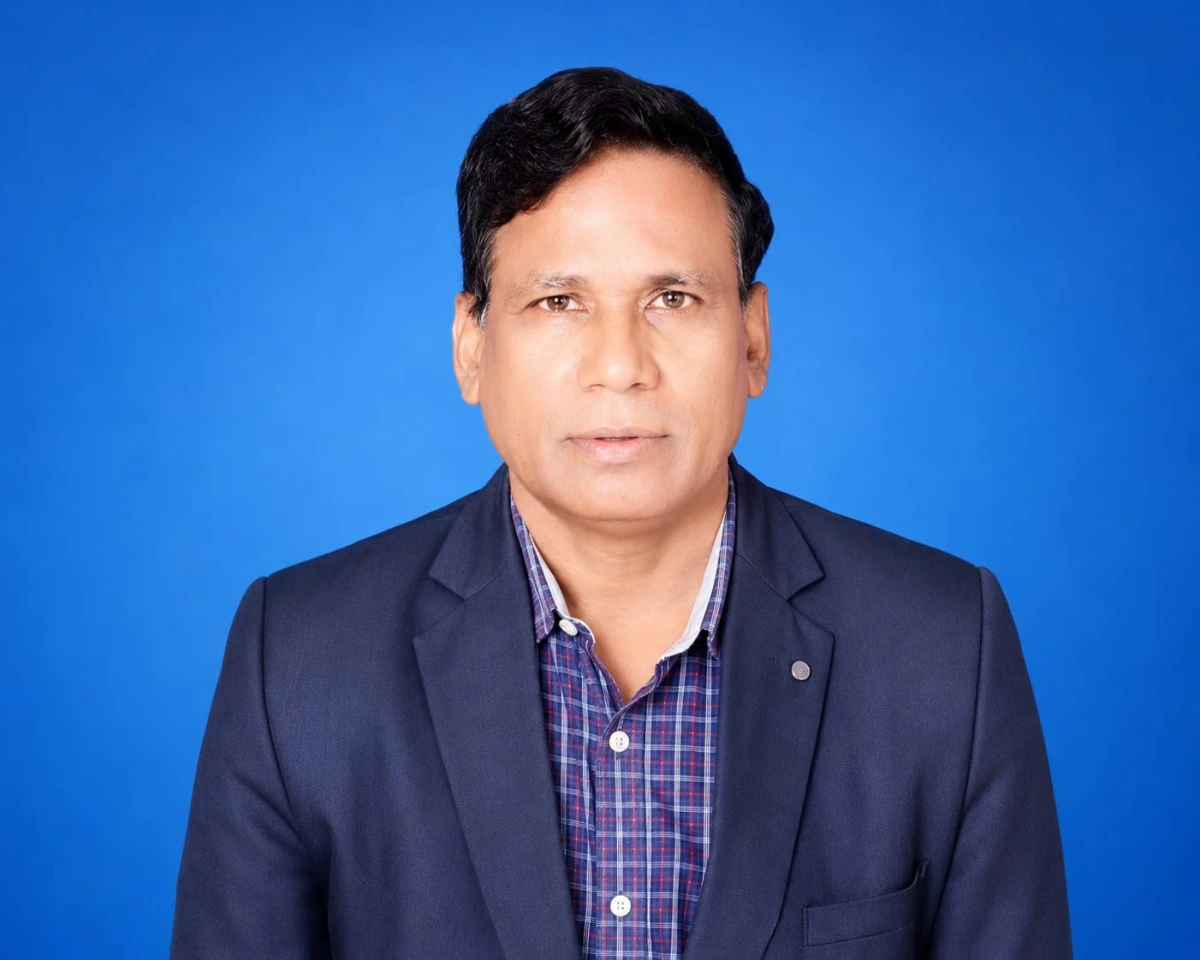
GOMHA PUNI:MORE THAN A FESTIVAL:HIMMAT LAL MAHATO
29-AUG-ENG 10


RAJIV NAYAN AGRAWAL
ARA-------------------------Gomha Puni marks the full moon day (*Purnima*) that concludes the month of *Sawan*. For the tribal community, it is not merely a date on the calendar but a tradition deeply intertwined with agriculture, nature, livestock, and communal life—one that reflects an entire philosophy of existence. Yet, the question arises today: is Gomha Puni surviving in its true form, or is it gradually being overlaid by the influences of other cultures, market forces, and religious practices?
Traditionally, by the time Gomha Puni arrived, the work of transplanting paddy seedlings in the fields was largely complete, and the crops were beginning to grow. However, shifting weather patterns, erratic rainfall, and climate change are now disrupting this traditional agricultural cycle. The seasons, once understood through the farmer's experience and nature's own signals, now seem helpless against unpredictable weather conditions.
Gomha Puni held a special place in childhood memories. The village and homes would undergo a thorough cleaning, and the atmosphere would be filled with enthusiasm. There was a palpable sense of communal energy—a spirit that is slowly fading today. This act of cleaning was not just about tidying up the house; it was a communal practice rooted in a sense of responsibility toward nature and the surrounding environment.
The most beautiful aspect of this festival is revealed in the treatment of livestock. After grazing in the fields and forests all day, the cattle would return home to have their hooves and horns washed and their bodies anointed with oil; they were then fed a special feed prepared from *Mahua* and various grains. This scene illustrates that in tribal life, animals were not merely objects of utility; they were partners in agriculture, family life, and the overall social order.
Viewed through a modern lens, this bond between humans and animals might appear to be nothing more than a ritual; in reality, however, it embodies a concept of coexistence where humans do not perceive themselves as separate from nature. This lies at the very core of the tribal philosophy of life.
Yet, within this cultural landscape, a different scene is also beginning to emerge. The influence of Raksha Bandhan has grown alongside Gomha Puni, with the market playing a significant role in this shift. Rituals once observed through simple threads and local traditions have now become part of the consumerist culture and the market-driven trade of *rakhis*. Consequently, the distinct identity of Gomha Puni is fading for the new generation, while Raksha Bandhan is becoming increasingly familiar.
The issue here is not about celebrating Raksha Bandhan or adopting another festival; rather, the question is whether a community should embrace external cultural symbols at the cost of its own foundational cultural memories. While cultural exchange is natural, a one-sided exchange that leaves indigenous traditions behind cannot simply be dismissed as ordinary change. Even UNESCO’s concept of Intangible Cultural Heritage emphasizes the preservation of such traditions.
The growing trend of offering water to the *Shivling* on the day of Gomha Puni is another example of this shift. While this practice may appear in some tribal families due to the religious significance associated with the month of *Sawan* and the full moon (*Purnima*), regarding it as a core, universal belief of tribal society would not do justice to history. External religious influences have impacted many local traditions, and in several places, indigenous symbols are being supplanted by others.
Similarly, the practice among some Christian tribal families of erecting a cross in place of the traditional *Bhakh Khunta* (sacred ritual post) exemplifies this broad cultural transformation. The spirit of prayer remains unchanged, yet the symbol has shifted. The question remains: will the historical memory associated with the symbol also gradually fade away?
The challenge facing tribal society today is not about contending with any specific religion; the real challenge lies in preserving cultural autonomy and historical memory. Whether it is Hinduization, Christianization, or market forces—whenever an external influence displaces local symbols, festivals, and beliefs, the community's collective memory is inevitably weakened.
The irony is that such cultural displacement often goes unnoticed. First, new symbols and beliefs are established in the mind as superior; then, the old symbol begins to seem irrelevant, and eventually, abandoning it feels natural. The displacement is complete when the displaced person is no longer even aware of the displacement.
That is why it would be a mistake to view Gomha Puni merely as an old tribal festival. It is an occasion to ask how tribal society will preserve its identity amidst development and modernity. Preserving one's traditions does not mean returning to the past; it means understanding one's roots and deciding what to accept and what to cherish amidst change.
Gomha Puni encompasses fields, crops, livestock, Mahua, village cleanliness, and communal life. Above all, it embodies the relationship between humanity and nature—a bond that modern civilization is steadily losing.
If Gomha Puni—along with its memories, symbols, and philosophy of life—is lost, it will not just be the end of a festival; a living page of tribal history will be erased
What's Your Reaction?
 Like
0
Like
0
 Dislike
0
Dislike
0
 Love
0
Love
0
 Funny
0
Funny
0
 Wow
0
Wow
0
 Sad
0
Sad
0
 Angry
0
Angry
0










Comments (0)