
ENDING COW SALUGHTER FOR TURE FREEDOM
India’s struggle for independence in 1947 marked a political milestone, yet many believe true freedom remains incomplete until the nation fully protects its most revered symbol—the cow. The sacred campaign to end cow slaughter across Bharat is presented not merely as a religious demand but as a historic opportunity to complete the unfinished work of independence. By stopping the killing of cows on Indian soil, citizens can secure genuine liberty for the land, elevate Gau Mata to the status of national mother, and etch their names into the pages of history.

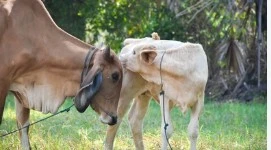
ENDING COW SALUGHTER FOR TURE FREEDOM
6-SEP-ENG 12


RAJIV NAYAN AGRAWAL
ARA-----------------------------India’s struggle for independence in 1947 marked a political milestone, yet many believe true freedom remains incomplete until the nation fully protects its most revered symbol—the cow. The sacred campaign to end cow slaughter across Bharat is presented not merely as a religious demand but as a historic opportunity to complete the unfinished work of independence. By stopping the killing of cows on Indian soil, citizens can secure genuine liberty for the land, elevate Gau Mata to the status of national mother, and etch their names into the pages of history.
In Indian tradition, the cow has long been regarded as Gau Mata—the mother who nourishes without asking. Ancient scriptures, folk wisdom, and rural life have treated her as the embodiment of non-violence, abundance, and ecological balance. Milk, dung, and urine have sustained households, fertilised fields, and formed the basis of traditional medicine. Protecting the cow, therefore, is seen as protecting the cultural and spiritual foundation of the nation itself. When this protection is neglected, the argument goes, the country’s moral and civilisational independence is compromised.
The present moment is described as a rare chance for ordinary people to play a decisive historical role. Just as freedom fighters once sacrificed comfort for political sovereignty, today’s generation is called upon to act so that cow slaughter ends permanently. Participation in this sacred campaign is framed as becoming a “nimitta”—an instrument—through which Gau Mata is elevated to Rashtra Mata, the national mother. Such an elevation would, according to the vision, restore dignity to the land and bring lasting pride to both individuals and their ancestors.
Becoming part of this effort does not require extraordinary status. It begins with personal resolve: refusing to support industries that profit from cow slaughter, educating family and community about the cultural and economic value of indigenous cattle, supporting gaushalas that care for abandoned or rescued animals, and advocating for stronger legal and administrative measures that protect cows nationwide. Each act of conscience, however small, contributes to a larger transformation. When enough citizens choose this path, the collective will of the people can shift policy and social practice.
The campaign also speaks to intergenerational duty. By working to end cow slaughter, individuals are invited to immortalise the names of their forefathers who lived by the same values of reverence and restraint. In doing so, they experience personal pride intertwined with national glory. The land of India, freed from the violence of cow slaughter, would then stand as a living example of compassion and cultural self-respect—true independence in both spirit and practice.
This is not a call limited to any single region or community. It is an invitation extended to every citizen who feels the weight of history and the possibility of contributing to a lasting legacy. The opportunity is open: to help stop cow slaughter, to help make Gau Mata the national mother, and to ensure that one’s own name, together with the names of one’s ancestors, is remembered with honour.
In answering this call, Indians can complete what political freedom began—securing a civilisation that protects its most gentle and giving creature, and thereby claims a deeper, more enduring form of independence.
What's Your Reaction?
 Like
0
 Dislike
0
 Love
0
 Funny
0
 Wow
0
 Sad
0
 Angry
0







Comments (0)