
DANDIYA NITE IN ARA:A DECADE OF CULTURAL FUSION AS GUJARATI FOLD TRADITIONS ILLUMINATE NAVRATRI CELEBRATIONS IN BHOJPUR
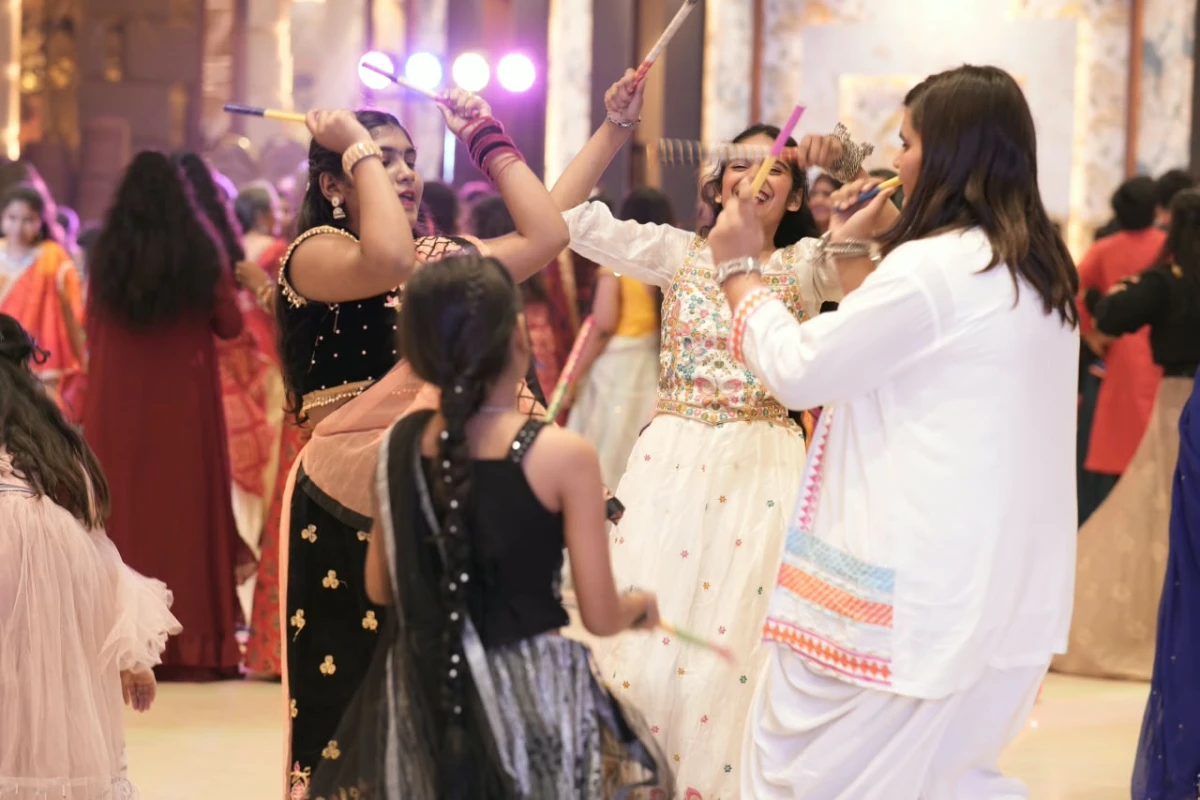
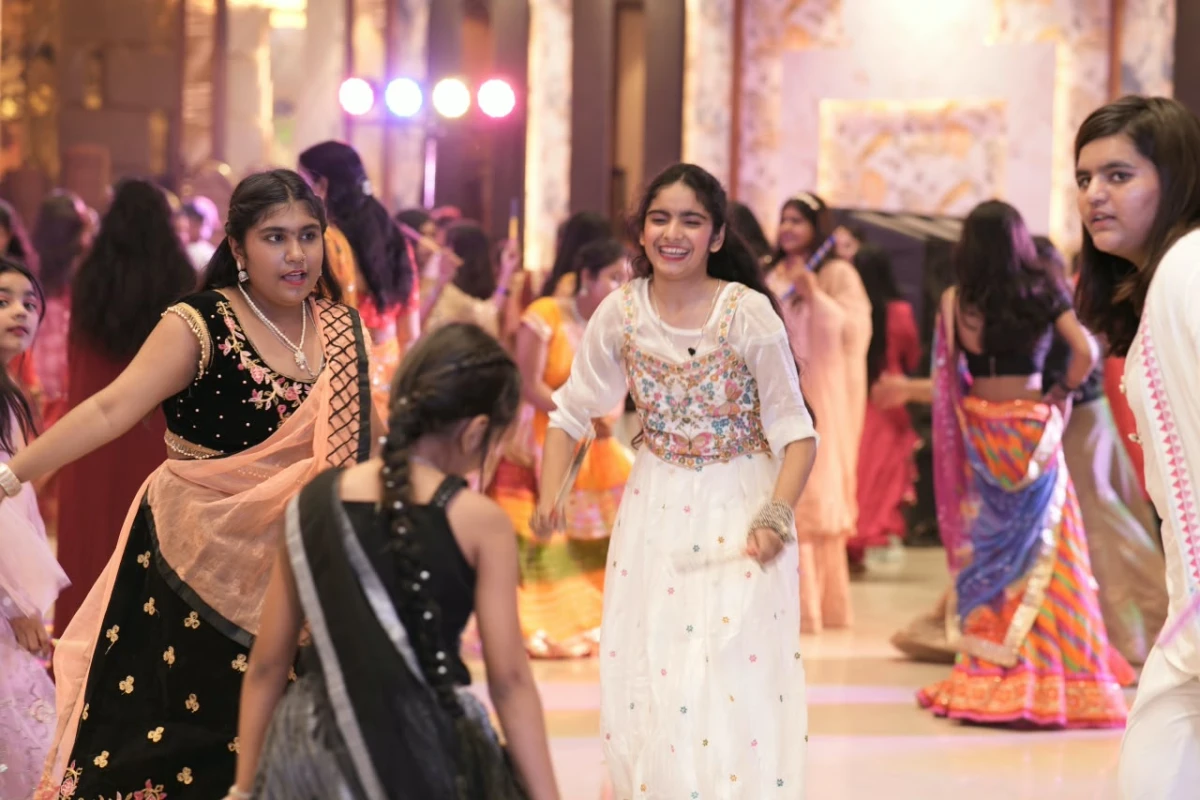
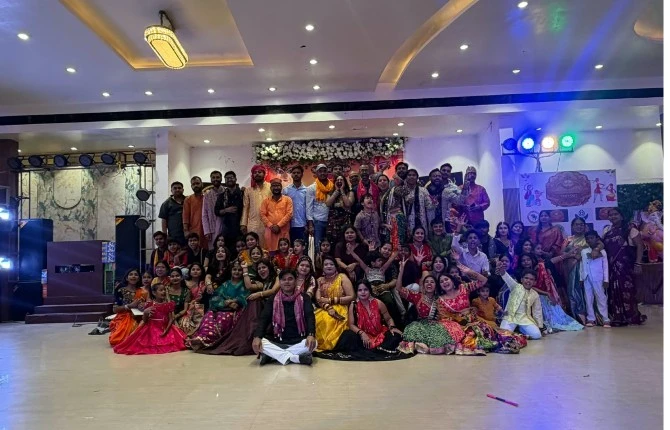
-In the heart of Bihar’s Bhojpur district, the ancient rhythms of Navratri have found a vibrant new expression. What began a decade ago as an experimental cultural initiative has matured into a cherished annual tradition that draws families across social and political divides. The Ashlilta Mukt Bhojpuri Association (AMBA) recently marked its tenth consecutive year of organising a ‘Dandiya Nite’ in Ara, transforming the Gujarati folk dance form of garba and dandiya into a living part of the town’s festive calendar. Over 150 men, women, boys, girls and their family members participated with infectious enthusiasm, turning an evening of devotion to Maa Durga into a colourful celebration of community, culture and shared joy.

DANDIYA NITE IN ARA:A DECADE OF CULTURAL FUSION AS GUJARATI FOLD TRADITIONS ILLUMINATE NAVRATRI CELEBRATIONS IN BHOJPUR
13-OCT-ENG 10


RAJIV NAYAN AGRAWAL
ARA------------------------In the heart of Bihar’s Bhojpur district, the ancient rhythms of Navratri have found a vibrant new expression. What began a decade ago as an experimental cultural initiative has matured into a cherished annual tradition that draws families across social and political divides. The Ashlilta Mukt Bhojpuri Association (AMBA) recently marked its tenth consecutive year of organising a ‘Dandiya Nite’ in Ara, transforming the Gujarati folk dance form of garba and dandiya into a living part of the town’s festive calendar. Over 150 men, women, boys, girls and their family members participated with infectious enthusiasm, turning an evening of devotion to Maa Durga into a colourful celebration of community, culture and shared joy.
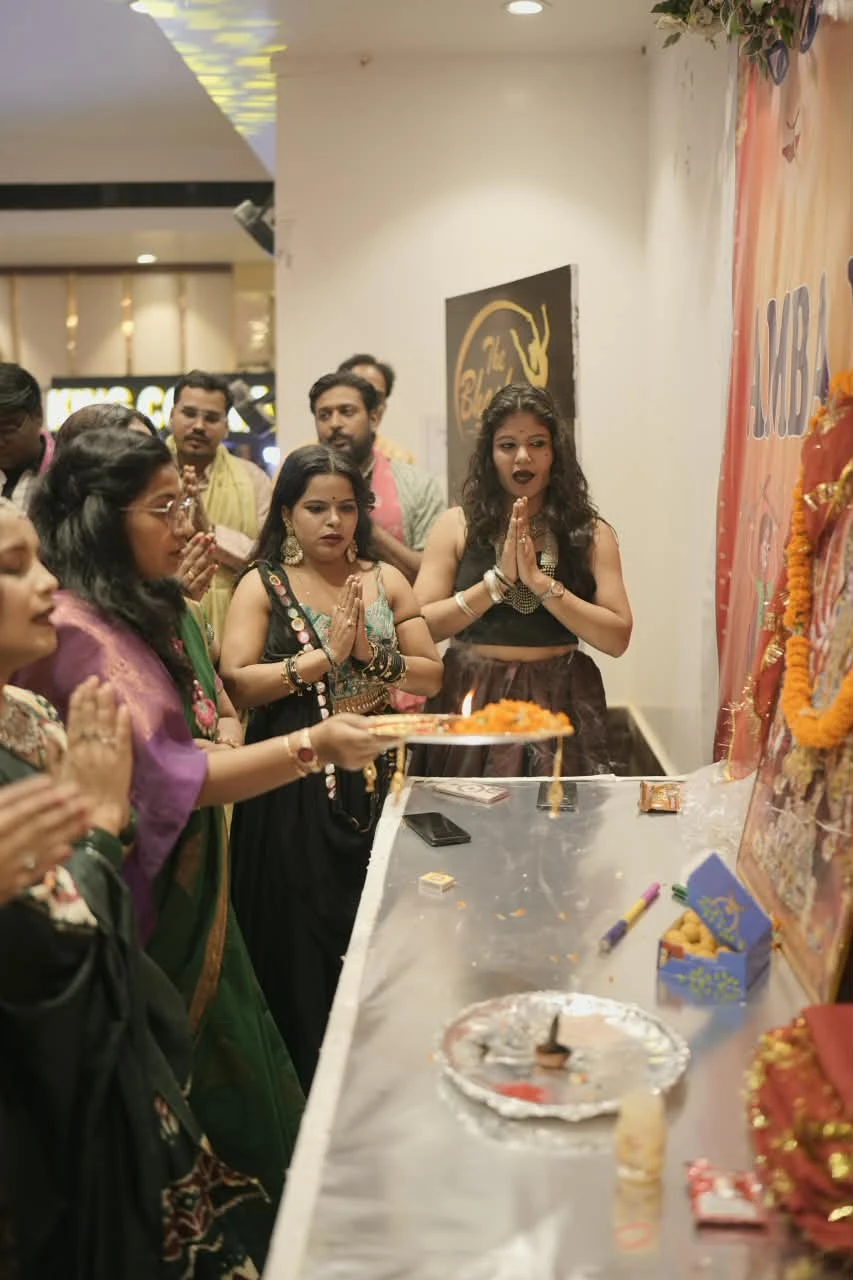
Navratri, the nine-night festival dedicated to the worship of the Divine Mother in her various forms, has long been observed in Ara with traditional aartis, fasting and community gatherings. In recent years, however, the energetic circular dances and rhythmic stick-play of Gujarat have woven themselves into the local fabric. The AMBA event stands as the clearest evidence of this quiet cultural exchange. Organised for the tenth year in a row, the dandiya night opened with the sacred aarti of Maa Durga, grounding the festivities firmly in the religious spirit of the season before the music and movement took over.
Participants came not only from different localities within Ara but also from beyond the boundaries of Bhojpur district. The atmosphere was one of genuine family participation. Organisers noted that people invested their own resources—often hundreds of rupees—on costumes, jewellery and preparation, reflecting both pride and personal commitment. The result was a gathering that felt less like a formal programme and more like a collective celebration of identity and togetherness.
At the centre of the visual spectacle was the traditional Gujarati attire that has become increasingly available in the town’s markets. Shopkeepers at Babu Bazaar have responded to rising demand by stocking and hiring out chaniya-choli (the flowing ghaghra-style dress for women) and kedia (the dhoti-and-frock combination for men). These garments, along with matching accessories and the wooden sticks known as dandiyas, can be hired for as little as Rs 100. More elaborate options range from Rs 150 to Rs 800 for chaniya-choli and kedia sets, while lehengas and sherwanis are available between Rs 400 and Rs 2,000. A recent addition that has captured the imagination of evening participants is the LED-studded chaniya-choli, priced between Rs 500 and Rs 700. Battery-powered lights sewn into the waist of the garment create a glowing effect that enhances the visual drama of the circular dances under night lights.
One gift-shop owner who has been supplying bridal, casual and garba attire since 2004 observed a clear growth in local interest. “I have seen Ara residents growing fond of it,” he remarked, noting that most orders now come from organisations seeking bulk hire for group events. After each use the clothes are dry-washed; any damage results in the deduction of security money. The steady demand for complete garba sets—dress, accessories and dandiyas—illustrates how a once-regional tradition has taken root in a Bhojpuri-speaking town.
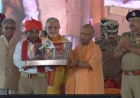
The formal inauguration of the evening carried its own ritual weight. Anu Priya Kumari, the Zila Kala and Sanskriti Officer, lit the ceremonial candle and offered puja to Maa Durga, officially opening the programme. The chief guest received the traditional ‘Mata Ki Chunari’ as a blessing from the Mother Goddess—an act that blended administrative recognition with spiritual symbolism. The presence of a district cultural officer underscored the event’s growing legitimacy within the official cultural calendar of the region.
O.P. Pandey, a founder member of AMBA, reflected on the journey of the past ten years with quiet satisfaction. What began as an effort to bring families together has, in his words, “borne fruit.” This year’s participation cut across caste and party lines, creating a rare space of social cohesion in a town often marked by political and community divisions. The association succeeded in sustaining the event for a full decade through the consistent support and cooperation of the people of Ara. In an additional gesture of inclusivity, a free dandiya workshop was organised on the occasion. First-time participants received basic training, lowering the barrier to entry and ensuring that enthusiasm was not limited by prior experience.
The list of those who contributed to the success of the evening is long and reflects the collective nature of the endeavour: Manglesh Tiwari, Abhishek Dwivedi, Rahul Singh Sarkar, Namaste Jee, Anjali Singh, Priyanshu Bhaskar Pathak, Apurva, Manisha, Sneha, Abhishek, Vivek, Manoj Srivastava and Vishal, among others. Their efforts transformed organisational logistics into a memorable cultural experience for everyone present.
Beyond the music, the costumes and the dance steps lies a deeper cultural story. Garba and dandiya originated in Gujarat as expressions of devotion to the Goddess during Navratri. The circular formation of the dance symbolises the cyclical nature of life and the unbroken circle of community. When these forms travel eastward to a Bihari town, they do not merely entertain; they create new social possibilities. In Ara, the dances have become a vehicle for family bonding, inter-community interaction and the gentle assertion of a shared cultural space that transcends traditional fault lines.
The economic ripple effects are equally noteworthy. Local shops have developed a seasonal niche in costume rental, generating modest but consistent income during the festive period. The availability of affordable traditional wear has democratised participation; one need not own an expensive outfit to join the circle. The introduction of LED-lit garments further demonstrates how local enterprise adapts traditional forms to contemporary tastes and evening event conditions.
For the participants themselves, the evening offered more than spectacle. Many families attended together, turning the dandiya night into a multi-generational experience. Children received their first training in the steps, while older participants revisited a form they had grown to love over successive years. The free workshop ensured that newcomers felt welcomed rather than excluded. In a social climate where public gatherings can sometimes become exclusive or politically charged, the AMBA event modelled a different possibility: a festive space open to all who wished to celebrate.
The tenth consecutive year carries symbolic weight. Sustaining any cultural programme for a decade requires more than enthusiasm; it demands organisational continuity, community trust and the ability to adapt without losing core purpose. AMBA’s achievement suggests that the appetite for such inclusive, family-oriented celebrations remains strong in Ara. The willingness of participants to invest their own money in costumes and preparation further indicates that the event is no longer seen as an external imposition but as something belonging to the town itself.
As the final aarti concluded and the last circles of dancers dispersed, the evening left behind more than memories of music and colour. It reinforced the idea that cultural forms can travel, take root and evolve in unexpected soil. A Gujarati folk tradition has become, for at least one night each year, a Bhojpuri celebration of Maa Durga. In doing so, it has created a modest but meaningful space where families gather, differences recede and the Goddess is honoured through rhythm, movement and collective joy.
The story of AMBA’s dandiya nights is ultimately a story of quiet cultural resilience and social possibility. In a rapidly changing India, such local initiatives remind us that tradition is not static. It is reinterpreted, shared and made new by the communities that adopt it. For the people of Ara, the tenth dandiya nite was both a celebration of the past decade and a promise of many more evenings of music, devotion and togetherness still to come.
What's Your Reaction?
 Like
0
Like
0
 Dislike
0
Dislike
0
 Love
0
Love
0
 Funny
0
Funny
0
 Wow
0
Wow
0
 Sad
0
Sad
0
 Angry
0
Angry
0





Comments (0)