
ARA WITNESSED AN 11-DAY CELEBRATION OF JAIN SPIRITUALITY: SRI JINENDRA DHARMA ANAND YATRA A GRAND CONFLUENCE OF SELF-PURIFICATION, DEVOTION, RENUNCIATION AND JAIN HERITAGE
Ara, the historic city of Bhojpur district in Bihar, renowned for its rich cultural traditions and Jain religious heritage, hosted an extraordinary 11-day spiritual celebration titled Shri Jinendra Dharma Anand Yatra. The event envisioned as a sacred journey of self-purification, spiritual awakening, devotion and inner transformation, bringing together Jain devotees, religious scholars and seekers of peace.

ARA WITNESSED AN 11-DAY CELEBRATION OF JAIN SPIRITUALITY: SRI JINENDRA DHARMA ANAND YATRA
A GRAND CONFLUENCE OF SELF-PURIFICATION, DEVOTION, RENUNCIATION AND JAIN HERITAGE


21-OCT-ENG 7
RAJIV NAYAN AGRAWAL
ARA--------------------------Ara, the historic city of Bhojpur district in Bihar, renowned for its rich cultural traditions and Jain religious heritage, hosted an extraordinary 11-day spiritual celebration titled Shri Jinendra Dharma Anand Yatra. The event envisioned as a sacred journey of self-purification, spiritual awakening, devotion and inner transformation, bringing together Jain devotees, religious scholars and seekers of peace.
The programme highlighted the timeless principles of Jainism, particularly ahimsa (non-violence), tyaga (renunciation), tapa (austerity), atma-jnana (self-knowledge) and aradhana (spiritual worship). It offered devotees an opportunity to move beyond the material concerns of everyday life and rediscover the deeper purpose of human existence through prayer, discipline and contemplation.
The central message of the Shri Jinendra Dharma Anand Yatra was the purification of the soul. Jain philosophy teaches that every living being possesses the potential to attain spiritual liberation by overcoming attachment, anger, pride, deceit and greed. The path to this transformation lies in right faith, right knowledge and right conduct.
The 11-day celebration provided a spiritually enriching atmosphere in which devotees participated in religious rituals, listened to discourses and reflected upon the eternal teachings of the Jain Tirthankaras. Through these practices, the festival inspired a deeper understanding of the relationship between individual conduct and spiritual progress.
The occasion also carried a broader social message. In an age marked by increasing materialism, competition and restlessness, the Jain ideals of restraint, compassion and non-violence remain profoundly relevant. The yatra reminded people that lasting happiness did not arise merely from material possessions but from inner peace, ethical living and harmony with all forms of life.
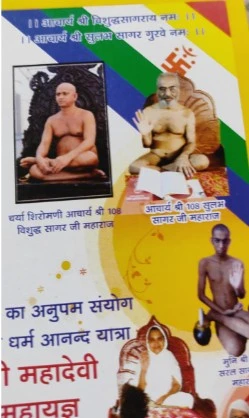
The religious celebration was associated with the blessings of Param Pujya Pattacharya Shri 108 Vishuddh Sagar Ji Maharaj and the spiritual presence of revered Jain ascetics. The poster announced the event also refers to the auspicious association of Aryika Shri 105 Vishisht Prabha Mata Ji.
The guidance of spiritual preceptors traditionally occupied a central place in Jain religious life. Through their disciplined way of living, teachings and personal example, Jain monks and nuns encourage devotees to cultivate detachment, self-control and a compassionate outlook towards all living beings.
Their presence lends the occasion a deeper spiritual significance, encouraging participants to examine their own conduct and strengthen their commitment to the principles of Jain dharma.
The programme also referred to a 108-kundiya religious observance, indicating the importance attached to collective spiritual practice and ritual devotion. Such religious gatherings provided a shared space for prayer, reflection and the renewal of faith among members of the community.
Ara occupies an important place in the cultural landscape of Bihar. Its religious institutions, historic traditions and community festivals have helped preserve the region's diverse spiritual heritage. For the Jain community, religious celebrations such as this offer an opportunity to bring together generations through shared faith and cultural participation.
The Shri Jinendra Dharma Anand Yatra was intended not merely as a sequence of religious ceremonies but as a collective expression of devotion and spiritual commitment. By bringing devotees together, the event helped strengthen community bonds and encourage younger generations to learn about Jain philosophy, religious traditions and ethical values.
Such gatherings also demonstrate how faith can serve as a bridge between tradition and contemporary life. The preservation of religious customs becomes especially meaningful when their underlying principles are understood and practised in everyday conduct.
The announcement of the event used a beautiful spiritual metaphor, comparing the purification of the soul to the confluence of sacred rivers. The image of the Himalayas giving rise to the Ganga, with devotion symbolically represented by the Yamuna and austerity, renunciation and self-restraint by the Saraswati, conveys the transformative power of spiritual discipline.
In this imagery, the soul becomes pure through the combined influence of devotion, knowledge and disciplined living. The darkness of ignorance gradually gives way to the light of wisdom, enabling an individual to develop a clearer understanding of the self and the responsibilities of human life.
This message is particularly significant in Jain philosophy, which places great emphasis on personal effort and moral responsibility. Spiritual progress is not simply a matter of outward observance; it requires a sincere transformation of thought, speech and action.
The festival thus exhorted devotees to look inward, identify their weaknesses and make a conscious effort to cultivate virtues that lead to a more peaceful and meaningful life.
One of the most important messages of the yatra is the enduring relevance of ahimsa. Jainism extends the principle of non-violence beyond physical actions to include words, thoughts and attitudes. It encouraged respect for every living being and promotes a way of life based on compassion and responsibility.
Similarly, tyaga and sanyam—renunciation and self-restraint—remind individuals of the need to exercise control over desires and attachments. These principles do not necessarily require everyone to withdraw from worldly responsibilities. Rather, they encourage people to fulfil their duties with honesty, moderation and an awareness of the consequences of their actions.
The spiritual observances planned during the 11-day celebration served as an opportunity for devotees to renew their commitments to truthfulness, simplicity, forgiveness and mutual respect.
The festival's significance extended beyond the boundaries of a single religious community. Its emphasis on peace, compassion and responsible living offers universal lessons for society at large.
The Shri Jinendra Dharma Anand Yatra presented as a major annual religious occasion for the Digambar Jain community of Ara. Devotees participated with their families and become part of the spiritual atmosphere created by the religious ceremonies and devotional activities.
The programme's underlying appealed to turn religious participation into a source of personal and collective improvement. The true value of a spiritual celebration lies not only in the rituals performed during its observance but also in the values that participants carry into their lives afterwards.
If the message of non-violence inspires greater tolerance, if renunciation encourages moderation, and if self-knowledge leads to humility and compassion, the influence of the celebration will extend well beyond its scheduled days.
The 11-day yatra thus represented an invitation to embark upon an inner journey—from attachment towards awareness, from worldly distraction towards spiritual reflection, and from self-centredness towards compassion for all living beings.
Shri Jinendra Dharma Anand Yatra’s central message is simple yet profound: the journey towards the Divine begins with the purification of the self.
By bringing together devotion, knowledge, austerity and community participation, the celebration illuminated the path of spiritual awakening and reaffirm the enduring relevance of Jain values in the modern world.
What's Your Reaction?
 Like
0
 Dislike
0
 Love
0
 Funny
0
 Wow
0
 Sad
0
 Angry
0












Comments (0)