
NETAJI DECLARED PROVISIONAL GOVERNMENT OF INDIA
Four years before India attained independence, Subhas Chandra Bose formed a provisional government for India, with himself as its head. Several nations even extended recognition to this government. On October 21, 1943, Netaji Subhas announced the formation of this provisional government in Singapore. The British began to fear Netaji Subhas—the architect of the Azad Hind Fauj (Indian National Army)—leading to conspiracies being hatched against him from all sides. He had devised a comprehensive plan for India's independence while on foreign soil.

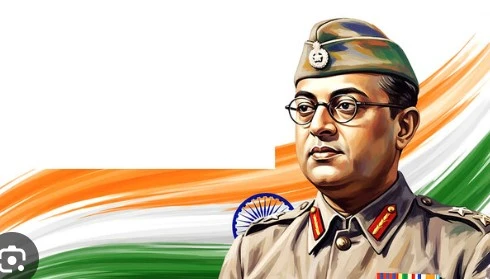
NETAJI DECLARED PROVISIONAL GOVERNMENT OF INDIA
22-OCT-ENG 2


RAJIV NAYAN AGRAWAL
ARA---------------------Four years before India attained independence, Subhas Chandra Bose formed a provisional government for India, with himself as its head. Several nations even extended recognition to this government. On October 21, 1943, Netaji Subhas announced the formation of this provisional government in Singapore. The British began to fear Netaji Subhas—the architect of the Azad Hind Fauj (Indian National Army)—leading to conspiracies being hatched against him from all sides. He had devised a comprehensive plan for India's independence while on foreign soil.
The Azad Hind Fauj was originally established in 1915 by Raja Mahendra Pratap Singh, Rash Behari Bose, and Niranjan Singh Gill, under the name 'Azad Hind Ki Sena'. When the command was later handed over to Netaji Subhas Chandra Bose, it was renamed the 'Azad Hind Fauj'. The force was highly organized, comprising approximately 45,000 soldiers, and included a dedicated women's battalion. Furthermore, the Azad Hind Fauj even operated its own bank and issued its own currency and postage stamps.
Netaji Subhas Chandra Bose informed Field Marshal Hisaichi Terauchi, commander of Japan's Southern Expeditionary Army, of his plan to launch an offensive against the British colonial government in India, with the ultimate goal of liberating the country from British rule. Netaji insisted that the Azad Hind Fauj should lead the operations, as it was essential for Indian soldiers to be at the forefront. Following the Japanese occupation of Singapore, approximately 60,000 Indians joined the Azad Hind Fauj, ready to fight against the British government. It is also noted that conditions in Japanese prisons at the time were dire; consequently, many preferred to join the fight rather than endure imprisonment.
When Netaji announced the provisional government of independent India in Singapore on October 21, 1943, it received recognition from more than ten countries. It included Japan, Germany, Italy, Croatia, Thailand, the Philippines, and Burma. Subhas Chandra Bose himself was the head of this government. He also retained the portfolios for foreign affairs and war. Such was the situation that a wealthy individual from Burma donated his entire private army to Netaji’s forces.
What's Your Reaction?
 Like
0
 Dislike
0
 Love
0
 Funny
0
 Wow
0
 Sad
0
 Angry
0













Comments (0)