
RAJKAMAL BOOK FESTIVAL KICKS OFF IN PATNA
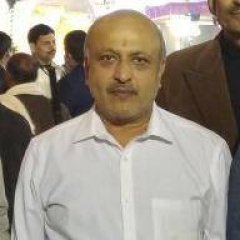
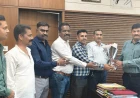
The five-day 'Patna Book Festival'—organized by Rajkamal Prakashan—was inaugurated at the Bharatiya Nritya Kala Mandir, located on Fraser Road. The festival is scheduled to run until April 7. The event was formally opened by veteran poet Alokdhanwa. Several literary figures, including Tripurari Sharan, Ranendra, Hrishikesh Sulabh, Tarun Kumar, and Anvita Pradhan, were present on the occasion.
RAJKAMAL BOOK FESTIVAL KICKS OFF IN PATNA
5-APRIL-ENG 11


RAJIV NAYAN AGRAWAL
PATNA------------------------The five-day 'Patna Book Festival'—organized by Rajkamal Prakashan—was inaugurated at the Bharatiya Nritya Kala Mandir, located on Fraser Road. The festival is scheduled to run until April 7. The event was formally opened by veteran poet Alokdhanwa. Several literary figures, including Tripurari Sharan, Ranendra, Hrishikesh Sulabh, Tarun Kumar, and Anvita Pradhan, were present on the occasion.
The program commenced with the session titled 'Punarnava: Kriti-Prasang' (Revival: Literary Context), during which new editions of four significant 20th-century novels were released: Manmohan Pathak’s *Gagan Ghata Ghaharani*, Satinath Bhaduri’s *Dhoday Charitmanas*, Himanshu Srivastava’s *Nadi Phir Bah Chali*, and Chandrakishore Jaiswal’s *Palataniya*. These literary works had remained unavailable to readers for a considerable period.
During the session, Ranendra, Hrishikesh Sulabh, Santosh Dixit, and Pushyamitra discussed the distinctive features of these novels. Describing them as part of Bihar's literary heritage, Santosh Dixit underscored their historical significance. He also shed light on the evolution of the novel as a literary genre, its serialization, and its growing popularity among the middle class.
Ranendra lauded *Gagan Ghata Ghaharani* for its authentic portrayal of tribal life and its unique linguistic style. Hrishikesh Sulabh highlighted the depth of lived experience reflected in Himanshu Srivastava’s writing, as well as Satinath Bhaduri’s mastery of characterization.
Describing the structure and language of *Dhoday Charitmanas* as exceptional, Pushyamitra noted that the novel presents the social realities of its era in a truly unique manner. In the context of *Palataniya*, he drew attention to the socio-economic changes that swept through rural society in the aftermath of the Mandal Commission. In the second session, titled ‘The World is Created Anew Every Day: A Poetry Recitation,’ Anchit, Upanshu, Karmanand Arya, Gunjan Upadhyay Pathak, Chandrabind Singh, Natasha, Prabhat Praneet, Prashant Viplavi, Farid Khan, Rajesh Kamal, and Shahanshah Alam presented their poems. During this session, Anchit’s collection *Aadhi Pankti* (Half a Line) and Natasha’s *Chhooti Hui Cheezen* (Forgotten Things) were formally released. The session was moderated by Amarendra Nath Tripathi.
The final session featured the launch of renowned linguist G.N. Devy’s book, *Mahabharata: The Epic and the Nation*. Senior poet Arun Kamal was also present on this occasion. Arun Kamal remarked that G.N. Devy’s visit to Patna constitutes a significant cultural event.
Following the book launch, G.N. Devy, in his address, stated: "We are India because we are the *Mahabharata*." The *Mahabharata* is an epic that has endowed every individual in India with a unique lens through which to view their past. Across the diverse societies of India, we encounter a multitude of *Mahabharatas*. This epic is not merely a single text, but rather a vast universe of myth, history, and philosophy—one open to infinite interpretations.
On Saturday, April 4th—during the first session of the *Kitaab Utsav* (Book Festival) program—Javed Anwar’s book, *Sampradayikta aur Jativad ke Vishanu: Bharatiya Bhashaon ki Lokoktiyan, Kahavaten aur Muhavare* (The Viruses of Communalism and Casteism: Proverbs, Sayings, and Idioms in Indian Languages), will be released. The second session will feature a panel discussion centered on the topic, ‘The Necessity of Newspapers in the Digital Age.’ This will be followed by a discussion focused on Premkumar Mani’s thought-provoking work, *Bharat: Ek Vichar Parampara* (India: A Tradition of Thought). In the subsequent session, journalist Manjeet Thakur’s book, *Bahe So Ganga: Dark Zone Mein Badalta Uttar Bharat* (Flowing Like the Ganga: North India Transforming into a Dark Zone), will be launched.
The fifth session of the program will be dedicated to a discussion on Hrishikesh Sulabh’s latest novel, *Jhoothi Gali*. This will be followed by a conversation regarding Pushyamitra’s new book, *Gandhi Ka Saintalis* (Gandhi’s Forty-Seven). The sixth session will feature a discussion on the subject, ‘Contemporary Short Stories: Questions and Concerns.’ During this time, Jyoti Chawla’s short story collection, *Chabi, Ghar aur Andhera*, will be formally released. The next session will focus on the ‘Year of the Woman in the Hindi Novel,’ being celebrated by Rajkamal Prakashan. Meanwhile, the final session will feature a reading from a book centered on Vishwanath Tripathi.
What's Your Reaction?
 Like
0
Like
0
 Dislike
0
Dislike
0
 Love
0
Love
0
 Funny
0
Funny
0
 Wow
0
Wow
0
 Sad
0
Sad
0
 Angry
0
Angry
0






Comments (0)