
THE ASCENT OF SPORTS IS A HALLMARK OF A DEVELOPED INDIA:LALIT GARG
National Sports Day is not merely an occasion to pay tribute to a legendary athlete; it is a day to awaken the nation's sporting consciousness and elevate the realm of sports to new heights. Observed on August 29th, this day marks the birth anniversary of the hockey icon Major Dhyan Chand. Sports are not just a display of a nation's strength; they also mirror its self-confidence, discipline, collective spirit, and global prestige. As India marches forward with the resolve to become a developed nation by the centenary of its independence in 2047, integrating sports into the mainstream of national development has become an imperative. Healthy citizens, disciplined youth, world-class athletes, and a society enriched by a sporting culture—these are the cornerstones of a developed India.

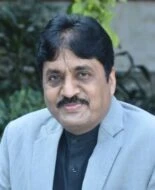
THE ASCENT OF SPORTS IS A HALLMARK OF A DEVELOPED INDIA:LALIT GARG
29-AUG-ENG 8


RAJIV NAYAN AGRAWAL
ARA------------------------National Sports Day is not merely an occasion to pay tribute to a legendary athlete; it is a day to awaken the nation's sporting consciousness and elevate the realm of sports to new heights. Observed on August 29th, this day marks the birth anniversary of the hockey icon Major Dhyan Chand. Sports are not just a display of a nation's strength; they also mirror its self-confidence, discipline, collective spirit, and global prestige. As India marches forward with the resolve to become a developed nation by the centenary of its independence in 2047, integrating sports into the mainstream of national development has become an imperative. Healthy citizens, disciplined youth, world-class athletes, and a society enriched by a sporting culture—these are the cornerstones of a developed India.
Born on August 29, 1905, Major Dhyan Chand was a wizard of Indian hockey who, with his stick, did not merely score goals but etched India's identity onto the global sporting map. His contribution to the Indian hockey team's golden triumphs at the 1928, 1932, and 1936 Olympics was historic. His game embodied a remarkable blend of skill, patriotism, discipline, and dedication. Celebrating National Sports Day in his honor is, in essence, a tribute to a sporting philosophy that values hard work over raw talent and national pride over individual achievement. Dhyan Chand’s legacy conveys a message to today’s athletes: the ultimate goal of sport is not just winning medals, but earning honor for the country. Undoubtedly, sports are no longer merely a form of entertainment; they are a source of national strength. There was a time when sports were not viewed seriously in India as a career or employment option. Today, circumstances have changed rapidly. Moving beyond cricket, Indian athletes are making their mark globally in disciplines such as athletics, badminton, wrestling, boxing, shooting, weightlifting, hockey, table tennis, archery, chess, and many others. By winning an Olympic gold medal in athletics, Neeraj Chopra demonstrated to Indian youth that India could emerge as a world-beater in track and field events as well. P.V. Sindhu set a benchmark for the new generation by winning consecutive Olympic medals in badminton. Athletes such as Manu Bhaker, D. Gukesh, Mirabai Chanu, Nikhat Zareen, Lovlina Borgohain, Avani Lekhara, Harmanpreet Singh, and many others have showcased the vast scope of Indian talent across various disciplines. This shift signifies not merely the success of individual athletes but a transformation in the nation's sporting culture.
India won seven medals at the Tokyo 2020 Olympics and secured six at Paris 2024. While the medal tally may not yet match that of established sporting nations, the breadth and competitiveness of Indian sports have grown steadily. The performance of Indian athletes at the Paralympic Games has been particularly inspiring; they have shattered the myth that physical limitations dictate the boundaries of success. India's true achievement extends beyond mere medal counts. Today, young athletes from small cities, towns, and villages are representing the country in international competitions—a significant shift towards the democratization of sports. Prime Minister Narendra Modi has positioned sports as a vital instrument for national development and youth empowerment. Initiatives like 'Khelo India' have accelerated talent identification and the development of sports infrastructure in schools, universities, and at the grassroots level. Targeted support is provided to potential Olympic medalists through the TOPS (Target Olympic Podium Scheme). The Khelo India Youth Games and University Games have provided a competitive platform for young athletes. The increasing focus on training, nutrition, overseas exposure, modern equipment, scientific support, and financial assistance indicates that sports policy is no longer confined to merely organizing competitions. Efforts are underway to create a holistic sports ecosystem that nurtures talent from the initial discovery stage all the way to molding world-class athletes. When we celebrate the centenary of our independence in 2047, the vision of a 'Developed India' will not be complete merely with high GDP, modern roads, state-of-the-art technology, and world-class cities. The true meaning of a developed India will lie in healthy citizens, energetic youth, a mentally resilient society, and a nation standing confidently on the global stage. Sports play a pivotal role in achieving this goal. Sports can keep the youth away from substance abuse, sedentary lifestyles, and aimlessness. They instill qualities such as punctuality, goal-setting, the ability to accept defeat and try again, and leadership. Sports fields are akin to a democracy—here, performance, discipline, and merit are the deciding factors. Today, there is a need to promote fitness and an active lifestyle in the country because economic growth becomes meaningful only when its energy translates into healthy human capital. A fit India alone can form the foundation of a productive and powerful India.
Another great strength of sports is their ability to foster dialogue across borders. On the field, rival nations face each other, yet after the game, the very same athletes come to understand each other's experiences, cultures, and human emotions. Olympics and international competitions serve as mediums for dialogue and harmony between nations. India's sporting achievements strengthen its 'soft power.' When Indian athletes hoist the Tricolour on the global stage and the national anthem resonates, it evokes a shared sense of pride and unity among millions of Indians. Sports have projected India to the world as a young, confident, and talented nation .has played a significant role in showcasing [achievements]. Despite these accomplishments, India still has a long way to go to become a sporting superpower. Quality playing fields, trained coaches, sports science centers, nutritional facilities, and modern equipment must be made accessible even in remote villages. Instead of limiting sports to just a few popular disciplines, a wide range of Olympic and traditional Indian sports must be promoted. It is essential to increase playtime in schools, identify talented children at an early age, and provide them with equal opportunities for both education and sports. Special opportunities and a safe environment must also be ensured for female athletes, differently-abled athletes, and talented individuals from economically disadvantaged backgrounds. The most crucial shift must occur in our mindset. In sports, a loss is not a failure but a preparation for the next victory. If this spirit permeates education and life itself, India's youth power can yield extraordinary results.
Sports do not merely yield medals; they also generate employment and drive the economy. New opportunities are emerging in various sectors such as stadiums, sports equipment, sports technology, the fitness industry, broadcasting, tourism, coaching, sports medicine, and data analytics. The potential for sports-based startups and technological innovations in India is also growing rapidly. In other words, investment in sports is not just expenditure on athletes but an investment in future human capital and the new economy. Therefore, National Sports Day offers us an opportunity to make a significant pledge: that every child plays, every youth stays fit, and every talent gets the chance to flourish. We must cultivate a sports culture where parents do not view sports as a waste of time, schools do not treat it as a mere extracurricular activity, and society does not reserve respect for athletes only after they win a medal.
If a developed India by 2047 aspires to be among the world's leading economies, it must also become a leading nation in sports. Economic strength and sporting prowess complement each other. Youth who learn to aim for targets on the playing field possess the capability to achieve ambitious goals in life as well. Thus, National Sports Day is not merely a day to pay tribute to Dhyan Chand; it is a day to awaken India's youth power, integrate sports into daily life, and transform sports into a national mission for building a developed India. Today, there is a need to transform Dhyan Chand’s sporting genius, Neeraj’s determination, Sindhu’s perseverance, Manu Bhaker’s self-confidence, and the dreams of thousands of our budding athletes into a national resolve. The India of 2047 should not merely be economically prosperous but also physically healthy, mentally strong, disciplined in character, and a global champion in the sporting arena—this is the most meaningful message of National Sports Day.
What's Your Reaction?
 Like
0
Like
0
 Dislike
0
Dislike
0
 Love
0
Love
0
 Funny
0
Funny
0
 Wow
0
Wow
0
 Sad
0
Sad
0
 Angry
0
Angry
0










Comments (0)