
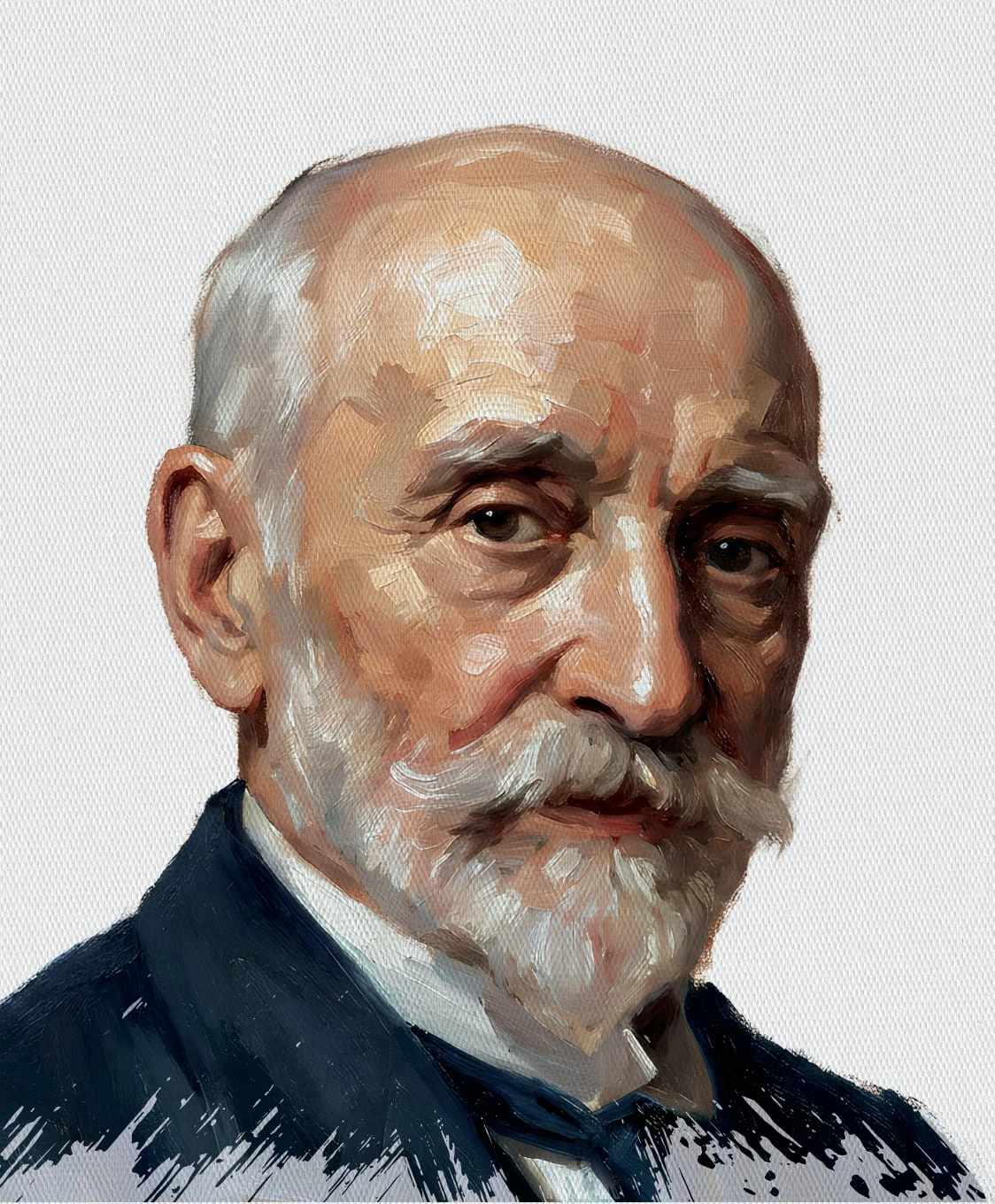
SIR DORABJI TATA:A VISIONARY PIONEER OF NATION-BUILDING AND SPORTS
True greatness often manifests in a form that seeks no acclaim, quietly strengthening the foundations of nation-building instead. Sir Dorabji Tata embodied this selfless spirit. He laid the groundwork for an industrial India by transforming rugged wilderness into a steel plant; he established hospitals for the afflicted, laboratories for inquisitive minds, and sports grounds for aspiring youth.

SIR DORABJI TATA:A VISIONARY PIONEER OF NATION-BUILDING AND SPORTS
27-AUG-ENG 8


RAJIV NAYAN AGRAWAL
ARA------------------------True greatness often manifests in a form that seeks no acclaim, quietly strengthening the foundations of nation-building instead. Sir Dorabji Tata embodied this selfless spirit. He laid the groundwork for an industrial India by transforming rugged wilderness into a steel plant; he established hospitals for the afflicted, laboratories for inquisitive minds, and sports grounds for aspiring youth.
Jamsetji Nasarwanji Tata passed away before he could see the realization of his dream for a self-reliant India. The responsibility of fulfilling his unfinished dreams and upholding his vast legacy fell upon the shoulders of his eldest son, Dorabji Tata. While this obligation could have been an extraordinary challenge for an ordinary individual, Dorabji transformed it into a magnificent opportunity through his determination, vision, and leadership.
As we commemorate Sir Dorabji Tata’s birth anniversary in August 2026, India is approaching a significant milestone in its sporting history—the centenary of the Indian Olympic Association (IOA) in 2027. A staunch advocate of India’s participation in international sports, Sir Dorabji Tata personally provided financial support and encouragement to athletes for India’s historic debut at the 1920 Antwerp Olympics. His pioneering efforts played a pivotal role in strengthening the foundation of the organized Olympic movement in India, paving the way for the establishment of the Indian Olympic Association in 1927, of which he became the first President.
Today, Tata Steel is taking Sir Dorabji Tata’s sporting legacy to new heights. Through five world-class sports academies, a High-Performance Centre, the Tata Steel Adventure Foundation, and 16 training and feeder centres spanning from the grassroots to the high-performance level, the company is nurturing talent across 19 sporting disciplines. The Tata Football Academy (TFA) has trained over 300 cadets to date, with more than 150 players going on to represent the national team. Meanwhile, the Tata Steel Foundation’s football training centers are grooming a large number of talented players for Jharkhand’s Under-14 and Under-16 boys' teams. The Tata Archery Academy has trained over 180 cadets in the last 25 years and produced eight Olympians for the country.
Additionally, the Naval Tata Hockey Academy operates three regional development centers and 32 grassroots-level centers. The company runs world-class sports academies for disciplines such as archery, hockey, sport climbing, and rowing, and organizes major marathons and chess competitions to foster community engagement. Inspired by Sir Dorabji Tata, the company is continuously increasing investment in grassroots football and the development of elite athletes, while also expanding essential infrastructure.
Whether it was laying the foundation of modern industry or giving Indian sports a new identity, Sir Dorabji Tata built a visionary legacy that continues to resonate in the nation's progress today. Despite numerous challenges—such as limited capital, difficult geographical terrain, and the apathy of colonial rule—he realized the dream of establishing India's first major steel plant at Sakchi. When TISCO supplied approximately 290,000 tonnes of steel during World War I, the British administration named this industrial hub 'Jamshedpur' in honor of his father, Jamsetji Nusserwanji Tata. Later, during a severe economic crisis, Sir Dorabji and Lady Meherbai pledged their entire personal wealth—including the famous Jubilee Diamond—to save the enterprise. Under his leadership, the plant expanded fivefold. Even during the major labor strike of 1920, he personally intervened to resolve the situation peacefully through dialogue and mutual understanding.
However, Sir Dorabji’s vision for nation-building was not limited to the steel industry. He strengthened the foundations of Tata Power by establishing three hydroelectric companies in the Western Ghats, played a pivotal role in the development of the Indian Institute of Science (IISc) in Bengaluru, and established the ‘Sir Dorabji Tata Trust.’ It was with the support of this trust that the country’s premier institutions—such as the Tata Institute of Social Sciences (TISS), Tata Memorial Hospital, Tata Institute of Fundamental Research (TIFR), and the National Centre for the Performing Arts (NCPA)—were subsequently established.
When Sir Dorabji Tata passed away in 1932, he left behind not merely a legacy of industries and institutions, but the robust foundation of an India that was far better prepared for independence and self-reliance. His 167th birth anniversary offers a moment to pause and remember him—and to reflect on how a life dedicated to a cause greater than oneself can transform the future for generations to come.
What's Your Reaction?
 Like
0
 Dislike
0
 Love
0
 Funny
0
 Wow
0
 Sad
0
 Angry
0










Comments (0)