
SHARADIYA NAVRATRAI 2026: THE RARE CONJUNCTION OF HORSE BORNE ARRIVAL AND COCK-BORNE DEPARTURE OF ALL-BHUVANESHWARI WITH GUIDANCE ON KALASH INSTALLATION AND SACRED SANSKARS
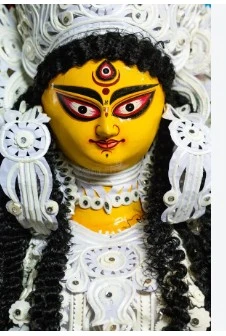
-Sharadiya Navratri, the autumnal festival of the Divine Mother, holds a central place in the Hindu calendar as a period of intense devotion, spiritual discipline, and cosmic renewal. Observed in the bright fortnight of the lunar month of Ashwin, it commemorates the triumph of Goddess Durga over the forces of darkness and invites devotees to invoke the nine forms of the Goddess, collectively known as the Navadurga. In 2026, according to the formal announcement made by Acharya Pt. Dharmendra Mishra during a meeting, Sharadiya Navratri commenced on Sunday, 11 October, and extends over ten days of continuous divine presence. The Goddess remains seated to bestow blessings upon her devotees until her departure on the eleventh day, Tuesday, 20 October, coinciding with Vijayadashami.

SHARADIYA NAVRATRAI 2026: THE RARE CONJUNCTION OF HORSE BORNE ARRIVAL AND COCK-BORNE DEPARTURE OF ALL-BHUVANESHWARI WITH GUIDANCE ON KALASH INSTALLATION AND SACRED SANSKARS
13-OCT-ENG 11


RAJIV NAYAN AGRAWAL
ARA----------------------Sharadiya Navratri, the autumnal festival of the Divine Mother, holds a central place in the Hindu calendar as a period of intense devotion, spiritual discipline, and cosmic renewal. Observed in the bright fortnight of the lunar month of Ashwin, it commemorates the triumph of Goddess Durga over the forces of darkness and invites devotees to invoke the nine forms of the Goddess, collectively known as the Navadurga. In 2026, according to the formal announcement made by Acharya Pt. Dharmendra Mishra during a meeting, Sharadiya Navratri commenced on Sunday, 11 October, and extends over ten days of continuous divine presence. The Goddess remains seated to bestow blessings upon her devotees until her departure on the eleventh day, Tuesday, 20 October, coinciding with Vijayadashami.
This year’s observance carries distinctive astrological and scriptural markers that set it apart. The Acharya highlighted that All-Bhuvaneshwari, the Mother of the Universe, arrives riding a horse, a vehicle traditionally associated with disturbances. Scriptural tradition holds that when the Goddess enters the earthly realm on horseback, the year is marked by upheavals and challenges across various spheres of life. Yet the same texts assure that the wishes of sincere devotees are fulfilled and that those who remain steadfast in worship experience a period of inner happiness and protection. The Goddess will remain present for the full ten days, granting darshan and grace, before departing on the eleventh day mounted on a cock. Scriptures interpret departure upon a cock as portending disturbances of many kinds for the wider world. The simultaneous occurrence of a horse-borne arrival and a cock-borne departure is described as a rare combination, one that appears only infrequently in the cycle of years.
These traditional associations of the Goddess’s vehicles derive from longstanding interpretations linked to the weekday on which the festival begins and ends. While the primary vehicle of Durga remains the lion, the temporary mounts for arrival and departure are understood as indicators of the prevailing cosmic currents. The horse, symbolising speed, restlessness, and sudden change, signals a period in which external stability may be tested. The cock, associated with alertness, vigilance, and the breaking of dawn, is said to usher in a phase requiring heightened awareness and collective caution. Devotees are counselled not to regard these omens with fear but to respond with intensified sadhana, charity, and adherence to dharma, thereby transforming potential turbulence into opportunities for spiritual growth.
The ritual inauguration of Navratri centres on Ghatasthapana, or the installation of the Kalash. This sacred pot, filled with water, topped with mango leaves, a coconut, and often a betel nut, becomes the temporary abode of the Goddess for the duration of the festival. Scriptural injunctions are precise regarding the timing of this rite. When Vaidhriti Yoga coincides with Chitra Nakshatra, the Kalash is not to be installed during that period; instead, the Abhijit Muhurta is prescribed. Acharya Pt. Dharmendra Mishra clarified that in 2026 neither Chitra Nakshatra nor Vaidhriti Yoga prevails on the day of installation. Consequently, the entire period from morning until the close of day is considered favourable, specifically under Uttara Phalguni Nakshatra and Hasta Nakshatra, accompanied by Shukla Yoga.
Among the available windows, the Abhijit Muhurta stands out as particularly potent. Lasting from 11:36 a.m. to 12:24 p.m., this midday interval is traditionally regarded as a time that confers victory and fulfils all legitimate desires. Abhijit, associated with the constellation that never sets and linked to Lord Vishnu’s protective aspect, is free from many of the doshas that affect ordinary muhurtas. Installing the Kalash during this period is therefore recommended for those seeking the highest auspiciousness. The choice of Uttara Phalguni and Hasta further enhances the quality of the rite. Uttara Phalguni, ruled by Aryaman, supports partnerships, prosperity, and lasting foundations, while Hasta, governed by Savitar, bestows skill, precision, and the power of manifestation. Shukla Yoga, characterised by purity and growth, completes the favourable configuration.
Beyond the communal celebration of Navratri, the same day is described as exceptionally suitable for several of the sixteen traditional Sanskars, or life-cycle sacraments, that mark the journey of an individual from conception through maturity. The Acharya specifically named Punsavan Sanskar, Seemant Sanskar (Seemantonnayana), Jatakarma Sanskar, Namkaran Sanskar, and Bhoomiupaveshan Sanskar as particularly favoured on this occasion.
Punsavan Sanskar is performed in the early months of pregnancy, traditionally in the second or third month, with the purpose of ensuring the healthy physical and mental development of the foetus and, in classical texts, the birth of a strong and virtuous child. The ritual involves the administration of specific herbal preparations energised by mantras and the invocation of protective deities. Seemantonnayana, often conducted in the later months of pregnancy, centres on the parting of the expectant mother’s hair and the offering of blessings for her well-being and the safe delivery of the child. It is a rite of protection and joyful anticipation, reinforcing the sacred bond between mother and unborn offspring.
Jatakarma Sanskar takes place immediately after birth. The father or a designated elder whispers sacred mantras into the infant’s ear, offers a mixture of honey and ghee, and seeks longevity, intelligence, and strength for the newborn. Namkaran Sanskar, the naming ceremony, ordinarily occurs on the eleventh day or within the first month. The selection of a name is guided by the child’s birth nakshatra and rashi, and the ceremony formally introduces the child into the social and spiritual community. Bhoomiupaveshan Sanskar, less frequently discussed in everyday discourse yet equally significant, concerns the first formal contact of the child with the earth, often involving the placing of the infant upon the ground under auspicious conditions, symbolising rootedness in the material world while remaining under divine protection.
The convergence of these Sanskars with the opening day of Sharadiya Navratri is not accidental. The presence of the Goddess in her most accessible form, the purity of the nakshatras, and the strength of Abhijit Muhurta combine to create an atmosphere in which the subtle impressions of these rites are believed to take deeper root. Families contemplating any of these sacraments are advised to consult their traditional Panchang for precise local timings and to perform the ceremonies under the guidance of a qualified priest, ensuring that the mantras, offerings, and sequences remain faithful to the lineage’s practice.
Throughout the ten days, the daily worship follows the sequence of the Navadurga. Each day is dedicated to a distinct manifestation—Shailputri, Brahmacharini, Chandraghanta, Kushmanda, Skandamata, Katyayani, Kalaratri, Mahagauri, and Siddhidatri—each embodying particular powers and responding to specific human aspirations. Devotees observe fasts of varying intensity, recite the Durga Saptashati or Devi Mahatmya, perform aarti, and offer flowers, fruits, and sweets according to regional customs. The festival culminates on Vijayadashami with the symbolic victory of righteousness, the immersion or formal farewell of the Goddess, and the performance of Aparajita Puja or Shami Puja in many traditions.
The rare alignment of the horse and the cock this year invites a deeper reflection on the nature of divine grace. Scriptural statements about disturbances are not predictions of inevitable calamity but reminders of the impermanence of worldly conditions and the necessity of inner fortitude. The assurance that devotees’ wishes will be fulfilled and that they will pass through the period in happiness underscores the protective power of sincere devotion. In an age of rapid change and uncertainty, the message of Sharadiya Navratri 2026 is clear: the Mother arrives amid turbulence yet remains present long enough to strengthen her children, and she departs under a sign that calls for continued vigilance and collective harmony.
Acharya Pt. Dharmendra Mishra’s exposition therefore serves both as a practical guide for the correct performance of Ghatasthapana and the associated Sanskars and as a spiritual orientation for the entire season. By installing the Kalash in the recommended muhurta, by honouring the Goddess through the nine nights, and by conducting life-affirming sacraments under her gaze, devotees align themselves with the currents of grace that the festival makes available. May the ten days of All-Bhuvaneshwari’s presence bring fulfilment of righteous desires, protection amid outer disturbances, and the lasting joy that arises from unwavering faith in the Divine Mother.
What's Your Reaction?
 Like
0
Like
0
 Dislike
0
Dislike
0
 Love
0
Love
0
 Funny
0
Funny
0
 Wow
0
Wow
0
 Sad
0
Sad
0
 Angry
0
Angry
0








Comments (0)