
ODISHA’S ‘PALA’ FOLK THEATRE ON THE VERGE OF EXTINCITON
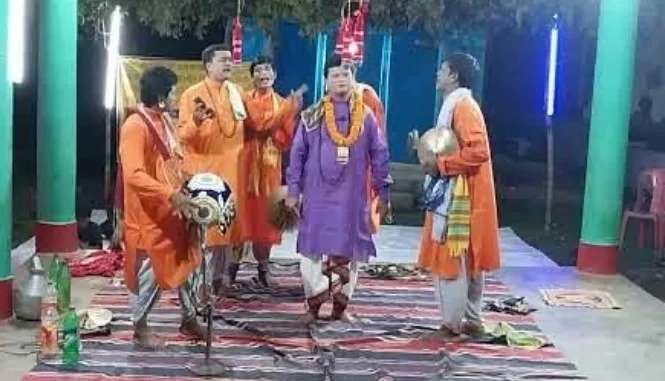
Amidst India’s vast cultural diversity, Odisha’s unique folk theatre tradition, ‘Pala’, now stands on the brink of extinction due to a lack of preservation. Much like the ‘Nacha’ tradition of Chhattisgarh, ‘Pala’ has long served as a powerful medium—not only for entertainment but also for narrating mythological tales and fostering public awareness. As a unique fusion of music and literature, this folk art form possesses a profound capacity to enlighten society through religious and moral teachings. There is an urgent need for serious cultural initiatives to safeguard this rich, traditional heritage, which is currently losing its identity in the race toward modernity.

ODISHA’S ‘PALA’ FOLK THEATRE ON THE VERGE OF EXTINCITON
26-OCT-ENG 2


RAJIV NAYAN AGRAWAL
BUXAR-------------------------Amidst India’s vast cultural diversity, Odisha’s unique folk theatre tradition, ‘Pala’, now stands on the brink of extinction due to a lack of preservation. Much like the ‘Nacha’ tradition of Chhattisgarh, ‘Pala’ has long served as a powerful medium—not only for entertainment but also for narrating mythological tales and fostering public awareness. As a unique fusion of music and literature, this folk art form possesses a profound capacity to enlighten society through religious and moral teachings. There is an urgent need for serious cultural initiatives to safeguard this rich, traditional heritage, which is currently losing its identity in the race toward modernity.
The primary objective of this ancient folk theatre is rooted in devotion; to this day, local communities stage it on a grand scale during religious occasions such as Dussehra and Vasant Panchami. However, its geographical reach has shrunk, now confined primarily to certain parts of Odisha and the border regions between Odisha and Chhattisgarh—a clear indicator that the art form is gradually fading away.
The very term ‘folk art’ implies that it belongs to the people; it has no single, identifiable creator. According to local residents and elders who have dedicated much of their lives to this tradition, ‘Pala’ originated as an act of devotion. In the past, performers would express their faith by singing songs and narrating the divine pastimes of Lord Jagannath, as well as the stories of Goddess Durga and Lord Shiva.
Over time, the folk artists incorporated elements of drama into the performances, and the thematic focus evolved to encompass epics like the Ramayana, the Mahabharata, and the Bhagavad Gita. In the present day, some groups have even begun to incorporate social issues into their ‘Pala’ performances. This performance is primarily carried out by a group of eight to ten individuals, known in the local language as a ‘mandali’. These groups are typically named after their village or their lead singer. To understand the structure and nature of this art form, it is essential to recognize its two fundamental styles: ‘Thia Pala’—in the Odia language, ‘thia’ means ‘to stand’. In this style, the performers deliver their presentation while standing, incorporating dance and acting alongside singing. This is the more extensive and popular form of ‘Pala’.
‘Baithaki Pala’—in this style, the performers remain seated and deliver their presentation exclusively through songs and dialogue.
Beyond these two primary styles, other variations exist depending on the narrative or theme, such as ‘Bhagavat Pala’, ‘Satyapir Pala’, and ‘Baisi Pala’. However, ‘Thia Pala’ and ‘Baithaki Pala’ remain the most prominent performance styles.
At the beginning of the performance, the lead singer—positioned on a wooden platform (referred to in Odia as a ‘khatali’) placed at the center of the stage—offers prayers and invocations, including the lighting of a lamp and incense sticks, and the offering of flowers before an image of Lord Jagannath or Goddess Saraswati. Following this, the main narrative commences. The key features of this performance include:
Engaging Style – Religious and mythological tales are rendered highly compelling through the use of humor, satire, songs, dance, and direct interaction—including questions and answers—with the audience.
Duration – This unique performance style typically lasts for three to four hours, and at times, continues throughout the entire night, with the audience remaining deeply engrossed until the very end.
The lead performer—known as the ‘Shri Gayaka’ or, in many regions, as the ‘Bahaka’—recites the core narrative, sings songs, and chants verses. The accompanying performers, known as ‘Palias’, repeat the songs and engage in acting. The *mridangam* player, referred to as a ‘Bayaka’, carries the *mridangam* (a percussion instrument) around his neck; he not only repeats the songs but also handles the musical accompaniment and acting. The entire performance is characterized by a highly dramatic, satirical, and humorous style.
According to mythological tradition, there are 16 types of ‘Pala’, categorized based on their narrative themes—which is why it is also known as ‘16 Pala’ in Odisha. Over time, new forms have emerged to cater to evolving tastes in entertainment; one such variation is ‘Badi Pala’. In this format, two groups perform simultaneously, engaging in a debate centered around a specific narrative. Through this exchange, they trade barbs and satirical remarks, while conveying a message to the audience.
The primary musical instruments used in a performance include the *mridangam*, *jhanjh* (cymbals), *manjira* (small hand cymbals), and the harmonium. In the Odia language, the *mridangam* and *manjira* are referred to as ‘Murdanga’ and ‘Gini’, respectively, while the other instruments are known by their standard names. Regarding the performers' attire, the lead singer wears a *dhoti*, *kurta*, turban, and a floral garland, while the other ‘Palia’ performers wear *dhotis* paired with colorful, elaborate garments suited to their specific roles. As for the stage setup, no elaborate decoration is required, as the performance itself—the acting—is considered the most essential element. Shows are typically held under small tents with microphones suspended overhead; however, many seasoned, veteran performers are capable of delivering an impactful performance even without the use of a microphone. In this article, I have used the term "on the verge of extinction" several times, with the sole intention of highlighting the current state of this art form. Today, this art is fading into extinction because most of its practitioners are no longer able to perform due to advancing age, and the younger generation shows no interest in it. Furthermore, due to the influence of the digital age, people's attention Attention has shifted entirely away from this.
This art form is a beautiful part of the culture—not just of Odisha, but of all of India. Its primary purpose goes beyond mere entertainment; through song, music, acting, and dance, it brings laughter and joy while imparting moral values and fostering public awareness—a role it fulfills remarkably well. The main objective of this article is to raise awareness about such folk art forms, encouraging people to learn about and understand them, so that they may be saved from extinction.
What's Your Reaction?
 Like
0
 Dislike
0
 Love
0
 Funny
0
 Wow
0
 Sad
0
 Angry
0












Comments (0)