
MAHARAJA AGRASEN:THE LEGENDARY FOUNDER OF THE AGRAWAL COMMUNITY
-Maharaja Agrasen is one of the most revered figures in Indian history and folklore. He is celebrated as the legendary founder of the Agrawal (or Agarwal) community, a prominent Vaishya trading community known for its business acumen, philanthropy, and cultural contributions. Though historical records about him are limited and mixed with mythology, his story continues to inspire millions, especially among Agrawals across India and the diaspora.

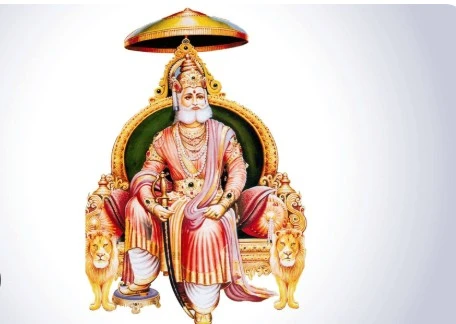
MAHARAJA AGRASEN:THE LEGENDARY FOUNDER OF THE AGRAWAL COMMUNITY
11-OCT-ENG 12


RAJIV NAYAN AGRAWAL
ARA----------------------------Maharaja Agrasen is one of the most revered figures in Indian history and folklore. He is celebrated as the legendary founder of the Agrawal (or Agarwal) community, a prominent Vaishya trading community known for its business acumen, philanthropy, and cultural contributions. Though historical records about him are limited and mixed with mythology, his story continues to inspire millions, especially among Agrawals across India and the diaspora.
According to traditional accounts, Maharaja Agrasen was born in the ancient city of Agroha (near present-day Hisar in Haryana, India) around 3082 BCE, during the Dvapara Yuga. He is described as a Suryavanshi (Solar dynasty) Kshatriya king and a contemporary of Lord Krishna in some legends. His father was King Ballabh, and his mother was Queen Bhagwati Devi. From a young age, Agrasen showed qualities of leadership, justice, and compassion.
The most popular legend states that he was the eldest of 18 sons. After ascending the throne of Agroha, he established a prosperous kingdom based on principles of equality, non-violence, and economic self-sufficiency.
Maharaja Agrasen is credited with founding the city of Agroha, which became a major center of trade and commerce. He is said to have invited people from all walks of life to settle there and created a unique social system.
One of the most famous stories associated with him is the “18 Gotra” tradition. When Agrasen wanted to perform a grand yajna (sacrifice), he was advised that it required the participation of 18 Brahmins. Instead of following the conventional path, he is believed to have divided his kingdom or his people into 18 gotras (clans), each headed by one of his sons or representatives. These gotras form the foundation of the Agrawal community even today. The 18 gotras include names such as Garg, Goyal, Bansal, Mittal, Singhal, Jindal, Tingal, Airan, Madhukul, Bindal, Dharan, Kansal, Kuchhal, Naag, Mangal, and others (variations exist in different traditions).
Agrasen is also remembered for promoting the values of Ahimsa (non-violence) and Vaishya Dharma. Though born a Kshatriya, he is said to have adopted the path of trade and commerce, encouraging his people to become merchants rather than warriors. This shift is often cited as the reason the Agrawal community became predominantly a business community.
Maharaja Agrasen’s ideals centered on:
- Equality and Social Justice: He is believed to have abolished the practice of Sati and other discriminatory customs in his kingdom.
- Economic Prosperity: He promoted free trade, fair business practices, and the idea that wealth should be used for the welfare of society.
- Philanthropy: The concept of Agroha itself symbolizes a place where no one goes hungry. Even today, many Agrawal organizations run Agrawal Dharamshalas, hospitals, schools, and charitable trusts in his name.
- Unity: The tradition of the 18 gotras emphasizes unity among diversity within the community.
Although solid archaeological or textual evidence from ancient times is scarce, Maharaja Agrasen’s cultural impact is undeniable. The Agrawal community, numbering in the millions, continues to regard him as their progenitor and spiritual guide. Festivals such as Agrasen Jayanti (usually celebrated in the month of Ashwin according to the Hindu calendar) are observed with great enthusiasm. Temples dedicated to him exist in several parts of India, particularly in northern and western regions.
In modern times, the name “Agrasen” appears in institutions, roads, hospitals, and educational centers across India. The Agroha Dham temple complex in Haryana stands as a major pilgrimage and cultural center for the community. Many successful industrialists, business leaders, and philanthropists from the Agrawal community openly credit the values associated with Maharaja Agrasen for their ethical approach to business and social responsibility.
Maharaja Agrasen remains more than a historical or mythological figure—he is a symbol of entrepreneurial spirit combined with social responsibility. His legendary shift from warrior to merchant, his emphasis on equality, and his vision of a prosperous yet compassionate society continue to resonate in contemporary India. Whether viewed through the lens of history, folklore, or community identity, Maharaja Agrasen’s story is one of leadership, innovation, and enduring values that have shaped a vibrant community for centuries.
His message remains simple yet powerful: build prosperity, practice fairness, and use wealth for the greater good.
What's Your Reaction?
 Like
0
Like
0
 Dislike
0
Dislike
0
 Love
0
Love
0
 Funny
0
Funny
0
 Wow
0
Wow
0
 Sad
0
Sad
0
 Angry
0
Angry
0









Comments (0)