
INDIA RIGHT TO VETO:DEVANAND SINGH
The question of India’s permanent membership in the United Nations Security Council is no longer merely a diplomatic demand; it is increasingly becoming a natural outcome of the shifting global power structure. It is certainly significant that UN Secretary-General António Guterres, during the BRICS summit, spoke openly in favor of reforming and expanding the Security Council and included India among the key nations championing this cause. Support from Russia and China for a greater role for India adds further weight to this debate.

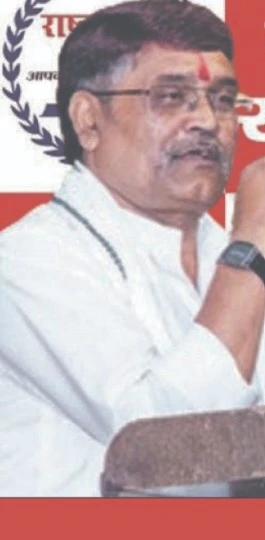
INDIA RIGHT TO VETO:DEVANAND SINGH
15-SEP-ENG 11


RAJIV NAYAN AGRAWAL
ARA------------------------The question of India’s permanent membership in the United Nations Security Council is no longer merely a diplomatic demand; it is increasingly becoming a natural outcome of the shifting global power structure. It is certainly significant that UN Secretary-General António Guterres, during the BRICS summit, spoke openly in favor of reforming and expanding the Security Council and included India among the key nations championing this cause. Support from Russia and China for a greater role for India adds further weight to this debate.
However, at this juncture, it is crucial to view these developments through the lens of reality rather than emotion. Gaining support for permanent membership and actually securing the right to veto are two distinct matters. India has not yet obtained the veto power, nor has there been any formal announcement regarding its immediate granting. Nevertheless, it must be acknowledged that India’s candidacy is now in a far stronger position than ever before.
The current structure of the UN Security Council is a legacy of the era when the world was emerging from the Second World War. The global power dynamics that existed in 1945—when five nations were granted permanent membership and veto rights—have undergone a complete transformation. Today, Asia stands as a major hub of the global economy. India ranks among the world's leading economies; it possesses a vast population and market, and is continuously enhancing its capabilities across economic, strategic, and technological domains. Despite this, the absence of a permanent role for India in the world's most critical security institution remains a historical anomaly.
India’s claim is further bolstered by its decades-long contribution to UN peacekeeping operations. From championing the cause of developing nations to playing a responsible role during global crises, India has demonstrated that it is not merely concerned with its own national interests but possesses the capacity to be a responsible partner within the international order.
This is precisely why the demand for expanding the Security Council is becoming increasingly difficult to ignore. If the United Nations is truly the collective voice of the world, then its most powerful body must also provide adequate representation to a significant portion of the globe. Asia, Africa, and Latin America have not received the level of representation they deserve under the current system.
Support from Russia and China holds special significance for India. Both are permanent members of the Security Council and possess veto power. Russia’s support for India has been long-standing and consistent, while China’s support is particularly crucial given its own status as a permanent member of the existing order. However, India will need to employ cautious diplomacy regarding China's support; it would be unwise to mistake any declaration or statement for final success.
The real challenge now lies in India’s ability to transform the support it has garnered into a broad international consensus. Reforming the Security Council is no easy task; the interests of existing permanent members, regional equations, and the veto mechanism pose major hurdles. Consequently, India must be prepared for a protracted diplomatic struggle.
Another critical question arises here: if India secures permanent membership, will it also be granted veto power? This question is vital for India because permanent membership alone—without equal rights—would not fully eliminate existing inequalities. If new permanent members are not accorded the same rights as the original ones, a two-tiered system of permanent membership would emerge within the Security Council, potentially undermining the very objective of the reform.
Prime Minister Narendra Modi’s assertion that the Global South should be a rule-maker rather than merely a rule-follower reflects a call for this sweeping transformation. The world is no longer unipolar; economic power is becoming multipolar, and the landscape of political influence is shifting rapidly. In this context, governing the world of 2026 based on the power structures of 1945 is unlikely to remain viable for long.
India should not limit its use of this opportunity merely to demanding veto power; it should also strengthen the collective voice of the developing world. Diplomatic partnerships with nations across Africa, Latin America, and Asia could infuse this campaign with renewed momentum. Guterres's statement is significant because it lends international legitimacy to the idea that United Nations institutions must be aligned with contemporary realities. However, rather than celebrating just yet, India needs to further intensify its diplomatic strategy.
India has not yet secured the veto, but the debate surrounding it has certainly moved to the center stage of global discourse. This signals India's rising power and the shifting global order. The coming years will determine whether the international community merely acknowledges this shift or gives it a permanent place within the United Nations' structure.
The imperative is clear: if the global order has changed, its institutions must evolve as well. And if the United Nations is to remain a truly global organization, then placing India at the heart of the decision-making process should no longer be a matter to be deferred, but one to be embraced.
What's Your Reaction?
 Like
0
 Dislike
0
 Love
0
 Funny
0
 Wow
0
 Sad
0
 Angry
0






Comments (0)