
GEN-Z GRIEVANCES ARE VALID:LALIT GARG
Recent voices of the youth emerging from Jantar Mantar have raised several new questions regarding Indian democracy. While society may hold divided opinions on the movement—debating its style, leadership, and political exploitation—no one can deny the fundamental truth that in a democracy, every citizen has the right to voice their opinion, express dissent, and protest peacefully. In this context, the perspective shared by Rashtriya Swayamsevak Sangh (RSS) chief Mohan Bhagwat regarding the youth—and Gen-Z in particular—becomes highly significant. He clearly stated that the new generation asks questions and seeks rational answers; they cannot be convinced merely by issuing orders. According to him, the need today is for 'discussion' rather than 'dictation,' and for consensus rather than command. Going a step further, Bhagwat recently remarked that protest is a legitimate medium of dialogue in a democracy and that the grievances raised by the Gen-Z movement are valid. He also clarified that it is inappropriate to label protesters as 'anti-national.' He believes that the objective of a movement should not be to create divisions in society, but rather to move towards consensus and solutions. He also pointed to the link between the need for educational reform and student discontent.

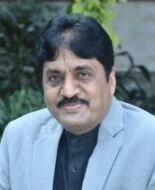
GEN-Z GRIEVANCES ARE VALID:LALIT GARG
11-AUG-ENG 13


RAJIV NAYAN AGRAWAL
ARA------------------------Recent voices of the youth emerging from Jantar Mantar have raised several new questions regarding Indian democracy. While society may hold divided opinions on the movement—debating its style, leadership, and political exploitation—no one can deny the fundamental truth that in a democracy, every citizen has the right to voice their opinion, express dissent, and protest peacefully. In this context, the perspective shared by Rashtriya Swayamsevak Sangh (RSS) chief Mohan Bhagwat regarding the youth—and Gen-Z in particular—becomes highly significant. He clearly stated that the new generation asks questions and seeks rational answers; they cannot be convinced merely by issuing orders. According to him, the need today is for 'discussion' rather than 'dictation,' and for consensus rather than command. Going a step further, Bhagwat recently remarked that protest is a legitimate medium of dialogue in a democracy and that the grievances raised by the Gen-Z movement are valid. He also clarified that it is inappropriate to label protesters as 'anti-national.' He believes that the objective of a movement should not be to create divisions in society, but rather to move towards consensus and solutions. He also pointed to the link between the need for educational reform and student discontent.
This perspective of Bhagwat deserves appreciation because the issue is not limited to any single movement or government. It touches upon the very soul of Indian democracy, wherein power is derived from the people, and listening to the public voice is both a constitutional and moral responsibility. Equating dissent with rebellion reflects a narrow understanding of democracy; regarding disagreement as anti-national is an even greater error. The nation is greater than the government, and democracy is greater than the ruling power. A citizen questioning the country's future is not necessarily opposing the nation; often, they are expressing an earnest desire to make the country better. As we celebrate the achievements of independent India on its anniversary, we must also ask ourselves: what is the true meaning of our freedom? Is freedom limited merely to hoisting the Tricolour, singing the national anthem, and remembering freedom fighters? Or does it also mean that the nation's youth can question their future, draw attention to systemic flaws, and voice their opinions without fear? If we truly dream of a developed, prosperous, and powerful India, we must listen to the dreams of India's youth.
Great Indian thinkers have regarded youth power as the foundation of nation-building. Swami Vivekananda called upon the youth to awaken, recognize their strength, and march towards their goals. The core message of his philosophy was that the youth are not merely the future of the nation but also an active force in the present. Mahatma Gandhi believed that change does not originate solely from the corridors of power but arises from the consciousness of aware citizens. Dr. A.P.J. Abdul Kalam repeatedly linked the dreams of the youth to India's future. For him, a dream was not what one sees while sleeping, but what prevents one from sleeping. The restlessness of today's youth needs to be understood from this very perspective. A difference between the new generation and the previous one is natural. In the past, there was little scope to ask "why" within the family, school, or society; accepting what the elders said was considered a mark of good upbringing. Today’s youth ask—why, how, and for what purpose? They do not accept anything merely in the name of tradition. They seek evidence, logic, and results. This shift presents both a challenge and an opportunity. If we suppress this inquisitive spirit, it will breed frustration; if we channel it in the right direction, these very questions will become a force for innovation, research, and nation-building.
There is no need to be alarmed by a clash of ideas. Indian culture itself has evolved through a tradition of dialogue encapsulated in the maxim *'Vade vade jayate tattvabodhah'* (True understanding emerges from debate). The Upanishads contain questions, answers, and further inquiries. Lord Mahavira’s philosophy of *Anekantavada* (the doctrine of manifold aspects) teaches us that truth cannot be viewed from a single, narrow perspective. A single subject can have multiple facets. Therefore, debate is not a weakness of democracy but its intellectual strength. The problem lies not in the debate itself, but when it turns violent; not in disagreement, but in the anarchy that arises in the name of disagreement. That is why the other aspect of this perspective is equally important: dissent must remain within the bounds of the Constitution and be peaceful; its goal should not be to humiliate an individual, but to bring about positive change in the system. Agitation is a democratic right, but with strict discipline. Criticizing the government is part of democracy; violence is not. Questioning is an exercise of freedom; damaging public property is not. Therefore, both the government and the protesters bear responsibilities. However, the government’s responsibility is greater because it holds power, administrative control, and institutional authority. A student's voice can be suppressed with a baton, but their apprehensions cannot be dispelled by it. Labeling a protester "anti-national" does not invalidate their question. If their demand is flawed, it should be proven wrong through facts and logic. If the demand is valid, why hesitate to accept it? In a democracy, the government's most effective weapon is not the police, but dialogue.
Here, Mohan Bhagwat appears to play the role of a guide. On numerous occasions, rather than merely offering praise, he has raised issues concerning the broader social interest. When the government or the establishment appears to be veering too far in a particular direction, it is the duty of a responsible guide to steer it toward introspection. This role played by Bhagwat reminds us of Bhishma Pitamah from the *Mahabharata*—a figure who, despite remaining at the center of power, periodically reminds the establishment of *Dharma* (righteousness), propriety, and the greater good. This comparison is not intended to promote hero-worship, but rather to illustrate the role of a guide. When governments heed the public's voice in time, a protest can lead to a solution before it escalates into a crisis. However, when grievances languish in files for months or years, when channels of dialogue are blocked, and when citizens feel they will not be heard, discontent spills onto the streets. The protest then becomes a battleground for political parties, opportunists, and vested interests. Consequently, the core issue is sidelined, and the nature of the movement begins to change. This is precisely the situation from which democracy must be safeguarded.
Controversies surrounding NEET and the examination system have also conveyed a clear message: the government and institutions must demonstrate extraordinary sensitivity regarding matters that affect the future of the youth. An examination is not merely a question paper; it is deeply intertwined with the years of hard work, dreams, and the socio-economic aspirations of millions of families. If a student feels that their hard work has not been fairly evaluated, their resentment is natural. Recent student movements have brought the need for educational reform to the forefront of national debate. In this context, the role of the police also needs to be redefined. Not every protester is a criminal, and not every slogan is anti-national. The police should receive training in protecting democratic rights alongside maintaining law and order. Distinguishing between anti-national activity and legitimate civic dissent is the primary benchmark of a democratic police system. Therefore, rather than viewing Mohan Bhagwat's remarks solely through the lens of Gen-Z movements, they should be seen as a broader message regarding India's democratic journey. Governments will come and go, political parties will change, and the nature of movements will evolve, but the fundamental requirement of democracy will remain unchanged: the people must be heard.
What's Your Reaction?
 Like
0
 Dislike
0
 Love
0
 Funny
0
 Wow
0
 Sad
0
 Angry
0







Comments (0)