
DEMOCRACY CANNOT FUNCTION THROUGH PARLIAMENTARY DEADLOCK:LALIT GARG
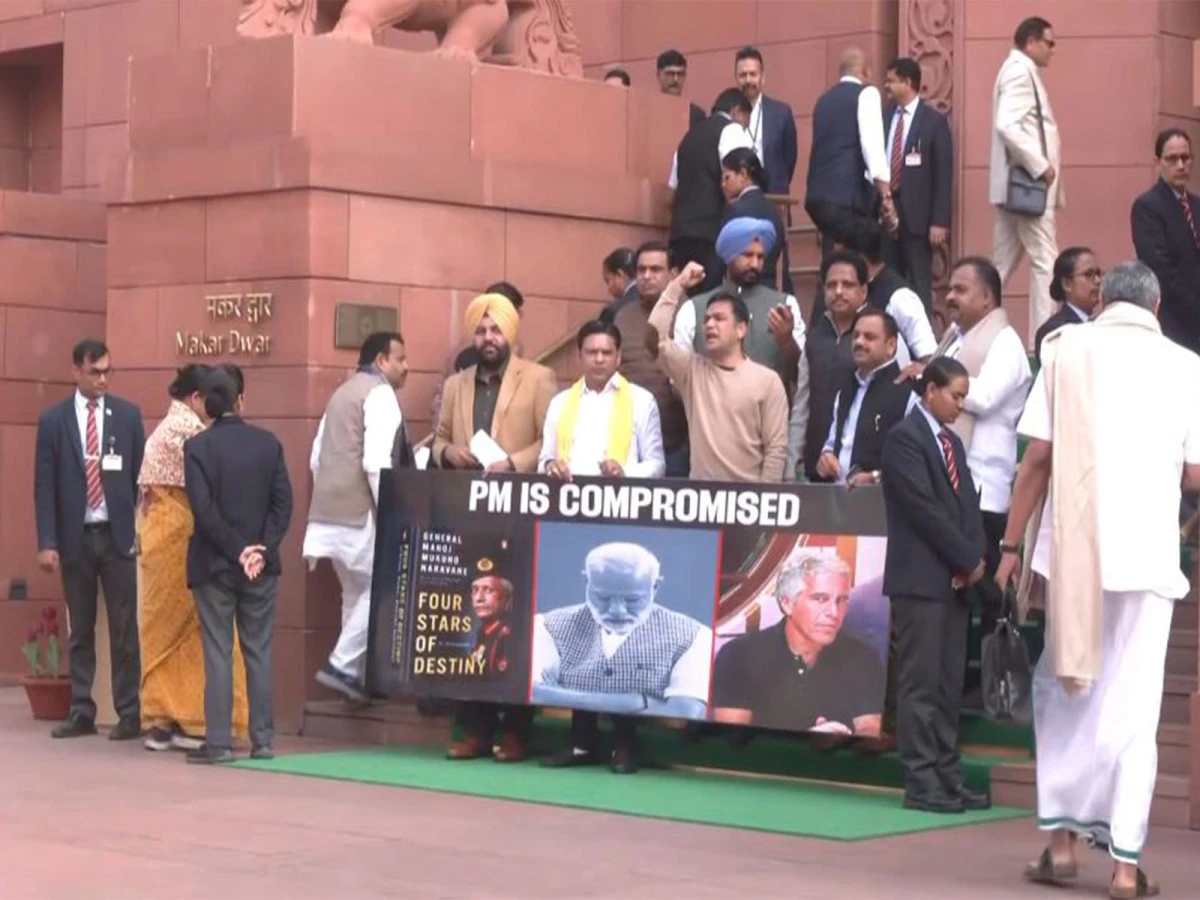
The greatest strength of Indian democracy is its Parliament. It is the supreme democratic forum where serious deliberations on the nation's present and future take place, the government is held accountable, the opposition voices public sentiment, and the direction of the country's development is determined through legislation. However, it is deeply unfortunate that today, instead of serving as a platform for dialogue and consensus, Parliament is increasingly becoming an arena for confrontation, mutual recrimination, slogan-shouting, and political obstinacy. The persistent deadlock during the Monsoon Session is not merely disrupting parliamentary proceedings; it is also wounding the very soul of democracy.

DEMOCRACY CANNOT FUNCTION THROUGH PARLIAMENTARY DEADLOCK:LALIT GARG
7-AUG-ENG 9


RAJIV NAYAN AGRAWAL
ARA--------------------------The greatest strength of Indian democracy is its Parliament. It is the supreme democratic forum where serious deliberations on the nation's present and future take place, the government is held accountable, the opposition voices public sentiment, and the direction of the country's development is determined through legislation. However, it is deeply unfortunate that today, instead of serving as a platform for dialogue and consensus, Parliament is increasingly becoming an arena for confrontation, mutual recrimination, slogan-shouting, and political obstinacy. The persistent deadlock during the Monsoon Session is not merely disrupting parliamentary proceedings; it is also wounding the very soul of democracy. Even the talks held between Parliamentary Affairs Minister Kiren Rijiju and Leader of the Opposition Rahul Gandhi to resolve the impasse failed to yield any concrete outcome. This situation indicates that both sides have become so entangled in their respective political compulsions that the national interest has been sidelined. The opposition insists that parliamentary proceedings will not be allowed to function until the government agrees to make statements and hold discussions on specific issues in the House. On the other hand, the government remains adamant about advancing its legislative agenda. Consequently, the Parliament's valuable time is being squandered on futile disputes.
While dissent is natural in a democracy, transforming dissent into chaos is not part of democratic culture. The opposition's responsibility is not merely to protest but also to offer constructive suggestions. Although it is the opposition's right to hold the government accountable, bringing parliamentary proceedings to a complete standstill cannot be justified by any standard. There are limits to protest in a democracy; when protest prevents Parliament from functioning altogether, that democratic right On the contrary, it amounts to a disregard for democratic obligations. In recent years, there has been a growing and worrying trend where issues are politically stoked just before a parliamentary session begins, specifically to disrupt the proceedings. Consequently, many crucial bills are passed without adequate discussion, while others remain pending. The country suffers the most from this. Every minute of Parliament’s functioning is funded by crores of rupees of public money; if that time is squandered merely on uproar and sloganeering, it is an affront to both the taxpayers' money and democratic trust.
In a democracy, dialogue is the most effective means of finding solutions. From Mahatma Gandhi to Atal Bihari Vajpayee, the finest traditions of Indian politics have been rooted in dialogue, consensus, and sensitivity. Today, there is a need for both the ruling party and the opposition to set aside their respective prejudices and come to the negotiating table. The dignity of Parliament lies not in who puts whom in the dock, but in the seriousness with which issues of national interest are deliberated. The Congress party and its leader, Rahul Gandhi, in particular, must understand that democracy is not merely about agitation and protest. The role of the opposition is not to topple the government, but to uphold democracy. If a strategy of disrupting Parliament over every issue is adopted, it sends a message to the public that the opposition lacks alternative policies and a vision. In a democracy, the people seek solutions, not just protests. If the opposition itself shies away from dialogue, the ideal of "finding solutions through dialogue" will remain nothing more than a slogan.
The government, too, bears a significant responsibility. In a democracy, a majority mandate does not imply the right to act arbitrarily. The government should listen to the opposition's legitimate demands and, wherever possible, seek a path of consensus. Parliament is an institution belonging to the entire nation, not just a single party; therefore, the government must also demonstrate sensitivity, patience, and a broad-minded approach. However, if every attempt at dialogue gets entangled in political preconditions and obstinacy, the prospects for a solution vanish. Today, political maturity is the need of the hour. Unfortunately, the influence of obstinacy, prejudice, and malice is growing in Indian politics. Every issue is viewed through the prism of electoral gain or loss. Parliamentary proceedings are witnessing less debate and more political posturing. This trend weakens democracy. The purpose of Parliament is to deliberate on policies for public welfare, not to serve as a platform for electoral strategies.
Today, the country is navigating numerous challenges, including economic growth, technological advancement, employment, education, agriculture, national security, global competitiveness, and social harmony. In such times, every day in Parliament is invaluable. If this time is consumed solely by political confrontation, the pace of development will inevitably suffer. Delays in legislation and policy decisions, along with parliamentary instability, directly impact the lives of ordinary citizens. The strength of Indian democracy lies not in the volume of noise raised in Parliament, but in the substance of the meaningful ideas presented there. In a healthy democracy, the ruling party and the opposition are certainly rivals, but not enemies; the ultimate goal for both must be the national interest. If political parties lose sight of this fundamental spirit, democracy will be reduced to a mere numbers game.
There is an urgent need for all political parties to engage in introspection. The opposition should make its dissent constructive, the government should broaden its dialogue, and together they should restore the prestige of Parliament. The future of democracy is secured through dialogue, not confrontation. The dignity of Parliament is enhanced by deliberation, not by slogan-shouting. In a vast democracy like India, if Parliament itself becomes a symbol of deadlock, public trust will erode—a development that bodes ill for any democratic system. The need of the hour is for politics to rise above the confines of elections and move towards nation-building. Both the ruling side and the opposition must remember that they are, first and foremost, representatives of India, not merely of a political party. Every moment in Parliament is an invaluable national asset; sacrificing it to obstinacy, arrogance, and political self-interest would be an injustice to future generations. If democracy is to be strengthened, the prestige of Parliament restored, and India transformed into a developed nation, there is only one path: dialogue, consensus, and the national interest. This constitutes the true strength of Indian democracy and represents the highest ideal of parliamentary decorum.
What's Your Reaction?
 Like
0
Like
0
 Dislike
0
Dislike
0
 Love
0
Love
0
 Funny
0
Funny
0
 Wow
0
Wow
0
 Sad
0
Sad
0
 Angry
0
Angry
0










Comments (0)