
BABA LANGATNATH DHAM
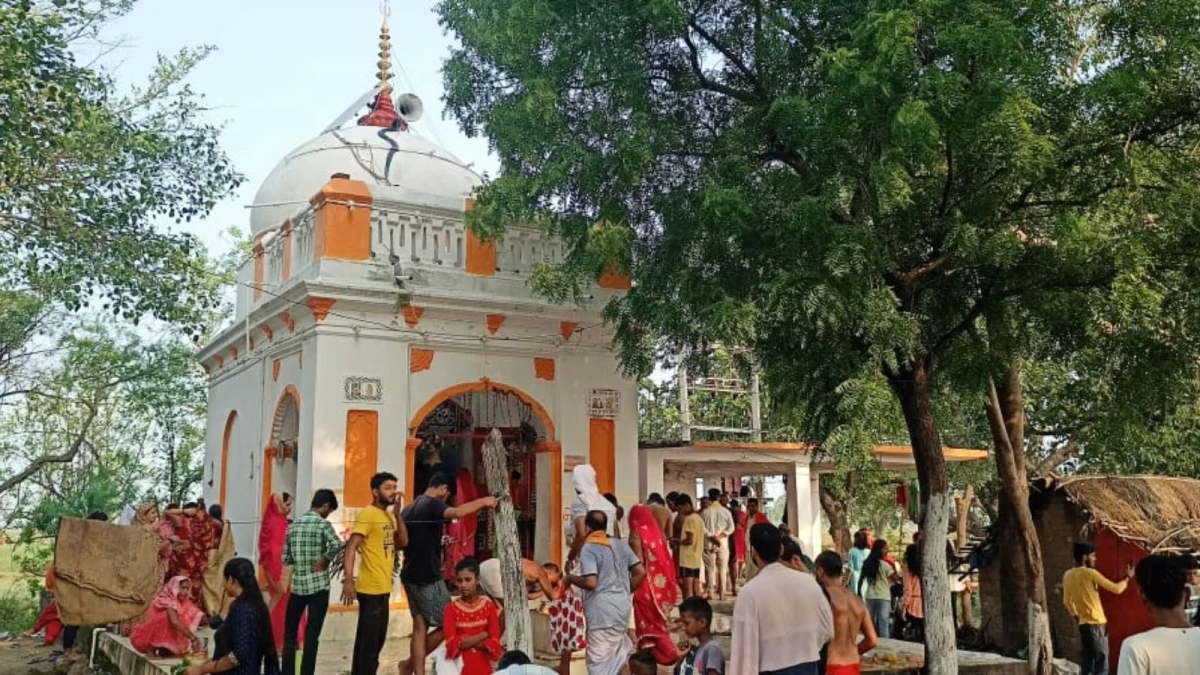
In the heart of Bihar’s Bhojpur district lies a quiet yet powerful centre of Shaivite devotion known as Baba Langatnath Dham. Situated in Garha village under the Udwantnagar block and within Sonpura Panchayat, the shrine stands roughly ten to eleven kilometres from the district headquarters at Ara. The nearest railway point is Karisath station, about five kilometres away. What draws thousands of devotees here is not architectural grandeur but an ancient self-manifested Shivling believed to have appeared in the Dwapar Yuga, the era associated with the Mahabharata. Locals and pilgrims alike revere the place as Manokamna Dham—the abode where sincere wishes find fulfilment.

BABA LANGATNATH DHAM
12-AUG-ENG 8


RAJIV NAYAN AGRAWAL
ARA-------------------------In the heart of Bihar’s Bhojpur district lies a quiet yet powerful centre of Shaivite devotion known as Baba Langatnath Dham. Situated in Garha village under the Udwantnagar block and within Sonpura Panchayat, the shrine stands roughly ten to eleven kilometres from the district headquarters at Ara. The nearest railway point is Karisath station, about five kilometres away. What draws thousands of devotees here is not architectural grandeur but an ancient self-manifested Shivling believed to have appeared in the Dwapar Yuga, the era associated with the Mahabharata. Locals and pilgrims alike revere the place as Manokamna Dham—the abode where sincere wishes find fulfilment.
According to long-standing local tradition, the Shivling is swayambhu, meaning it arose of its own accord rather than being installed by human hands. The mythological narrative links the site closely to Banasura, the mighty asura king and eldest son of the devotee Bali. Banasura was a fervent worshipper of Lord Shiva. Pleased with his intense penance, Shiva is said to have taken residence in Banasura’s capital, Shonitpur. Local belief identifies Shonitpur with the present-day Masaad village in Bhojpur. In those dense forested surroundings of ancient times, Banasura is remembered as having come regularly to offer worship at this very spot. The continuous tradition of jalabhishek—pouring water over the lingam—traces its roots back to that distant age.
Later rulers of the region, particularly the Chero and Kharwar kings, also maintained the practice of worshipping Shiva here. Over centuries the lingam remained exposed to the elements, without any covering structure. This open, uncovered state gave rise to the name Langatnath or Langot Nath—literally the naked lord. The name stuck and gradually became the identity of both the deity and the place.
Approximately a century ago, a local devotee named Govardhan Pathak of Jaitpur undertook the construction of a proper temple over the sacred lingam. During the digging for the foundation, an extraordinary phenomenon was observed: the girth of the Shivling appeared to increase. This event further strengthened the conviction of the local people that the lingam possessed living, divine presence. The temple that stands today is the result of that effort, though the surroundings retain a largely natural and unpretentious character.
One of the most striking features of the shrine is the enormous banyan tree that shelters the Shivling. The lingam rests within the embrace of this ancient tree. Attempts in the past to cut the tree or relocate the shrine met with unexplained obstacles and were abandoned. Devotees regard the tree itself as part of the sacred presence, a living canopy under which the lord has chosen to remain. The depth of the lingam beneath the ground remains unknown; no one has been able to determine how far it extends into the earth. This mystery only adds to the sense of awe that surrounds the place.
Close by stretches a vast pond, or pokhar, covering an area of approximately fifty-two bighas. Tradition attributes the creation of this water body to Banasura himself. The pond lies near Karisath and is regarded as an integral part of the sacred complex. Devotees often perform rituals and offer prayers along its banks, especially during festivals. The open landscape of fields, trees, and water creates an atmosphere of quiet natural beauty that complements the spiritual atmosphere of the dham.
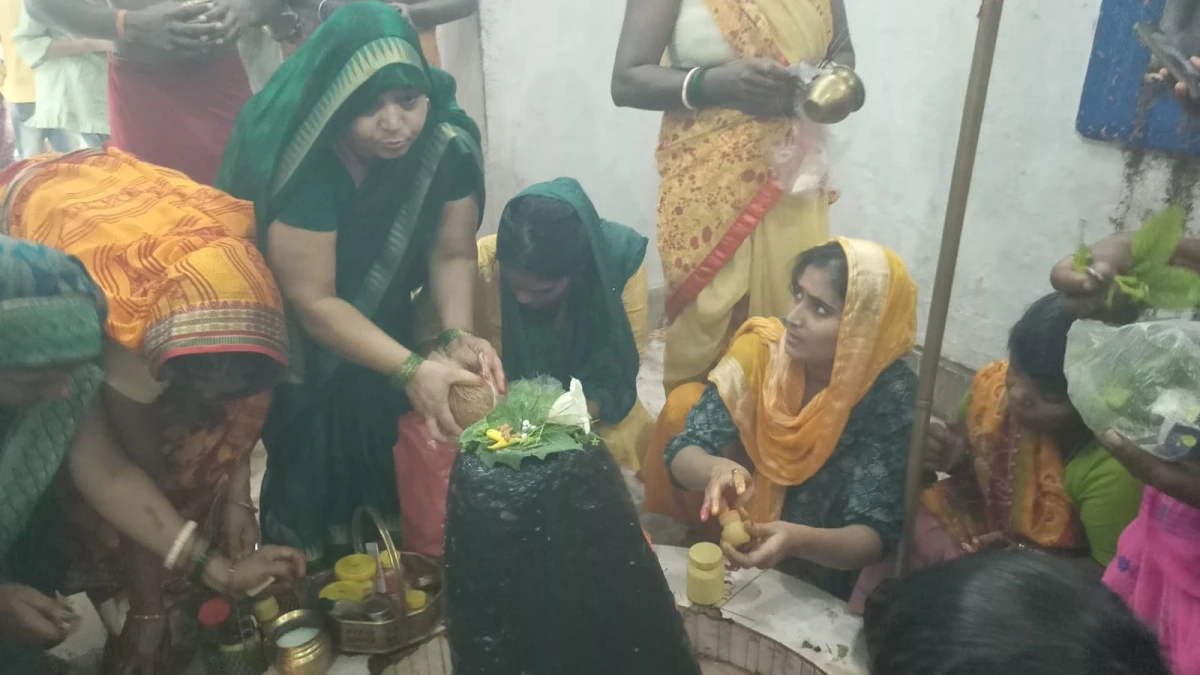
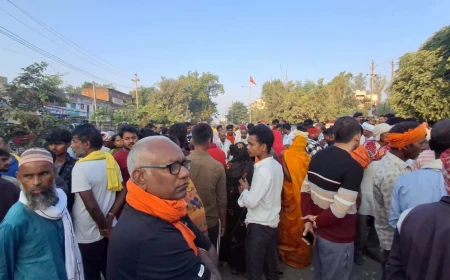
Worship at Baba Langatnath is simple and direct. The primary offering is water poured over the lingam, accompanied by flowers, bilva leaves, and the chanting of Shiva mantras. Mondays throughout the year hold special significance, as Monday is traditionally associated with Lord Shiva. The month of Sawan (Shravan) brings the largest gatherings. On the Mondays of Sawan, long queues form from early morning as pilgrims arrive for jalabhishek. Mahashivratri is another major occasion when the temple complex and the surrounding area fill with devotees. Vaishakh also sees increased numbers of visitors. People come from nearby villages and from farther districts, carrying water pots and faith that their heartfelt requests will be heard.
The belief that Baba Langatnath grants manokamna—the fulfilment of pure desires—is the central pillar of the dham’s reputation. Devotees speak of answered prayers related to health, family welfare, education, employment, and other personal concerns. The priest and local residents recount stories of people who returned year after year after experiencing relief or success they attributed to the grace of the lingam. Such accounts, passed down orally, sustain the living tradition of the place.
Despite its deep roots and the steady stream of pilgrims, the shrine faces practical difficulties. For a long time there has been no proper paved road leading directly to the temple. Approach paths remain unpaved, and during the monsoon the low-lying tracks become waterlogged, forcing devotees—including women, children, and the elderly—to walk through mud and water for the final stretch. Two-wheelers often have to be left some distance away. Local residents, including priests such as Madhusudan Yadav and Lal Dhari Prasad, along with villagers from Garha, Jaitpur, Raghupur, and neighbouring settlements, have repeatedly petitioned panchayat representatives, legislators, and the district administration for a proper connecting road. In recent years some official recommendations have been made to link Sonpura Panchayat headquarters with Raghupur and onward to the dham and Jaitpur, yet the full realisation of all-weather connectivity is still awaited.
The absence of basic infrastructure has not diminished the flow of faith. During Sawan the numbers swell into thousands, sometimes described in local reports as lakhs over the entire month when cumulative visits are considered. People come on foot, by shared vehicles, or by whatever means available, determined to offer water and seek the blessing of the ancient lingam. The natural setting—trees, open sky, the large pond, and the quiet village landscape—continues to provide a sense of peace that many urban pilgrims find restorative.
The history of Baba Langatnath Dham illustrates how local memory preserves layers of time. From the mythological association with Banasura and the Dwapar Yuga, through the medieval worship by regional kingdoms, to the temple built a hundred years ago by a local devotee, the site has remained continuously sacred. The unexplained increase in the lingam’s girth during construction, the refusal of the banyan tree to yield to human plans, and the unknown depth of the lingam all form part of a living oral tradition that resists easy explanation. These elements keep the dham distinct from more commercialised pilgrimage centres.
In the broader cultural landscape of Bihar, where numerous ancient Shaivite sites exist, Langatnath occupies a special niche. It is neither a grand stone temple of the classical period nor a modern concrete structure. It is a place where nature and devotion meet under an old banyan tree, where water from ordinary wells and ponds becomes sacred when poured with faith, and where the memory of an asura king’s devotion still shapes the identity of a rural shrine. The large pond attributed to Banasura serves as a reminder of the scale of that ancient presence, while the modest temple and the open lingam speak of continuity rather than monumentality.
For the people of Bhojpur and the surrounding districts, Baba Langatnath is more than a destination. It is a source of quiet confidence that sincere prayer is heard. The annual cycle of Mondays, Sawan, and Shivratri renews this confidence. Families return generation after generation, carrying the same simple offerings and the same hope. In an age of rapid change, the dham remains largely unchanged in its essential character—an uncovered or lightly sheltered lingam under a great tree, a vast pond nearby, and the unbroken belief that the lord who once accepted the worship of Banasura continues to accept the worship of ordinary devotees today.
The challenges of access and development persist, yet they have not eroded the core of the tradition. Efforts by local residents to improve the approach road reflect a desire that the place become more accessible without losing its natural simplicity. Whether or not those efforts reach full fruition, the faith that animates Baba Langatnath Dham continues as it has for centuries. In the quiet fields of Garha village, under the shade of an ancient banyan, the self-manifested lingam stands as a living link between mythological time and the present, inviting all who come with a pure heart to pour water and leave their wishes in the care of the naked lord of the place.
What's Your Reaction?
 Like
0
Like
0
 Dislike
0
Dislike
0
 Love
0
Love
0
 Funny
0
Funny
0
 Wow
0
Wow
0
 Sad
0
Sad
0
 Angry
0
Angry
0








Comments (0)