
BHOJPUR’S PIDIYA PAINTING GETS GI TAG
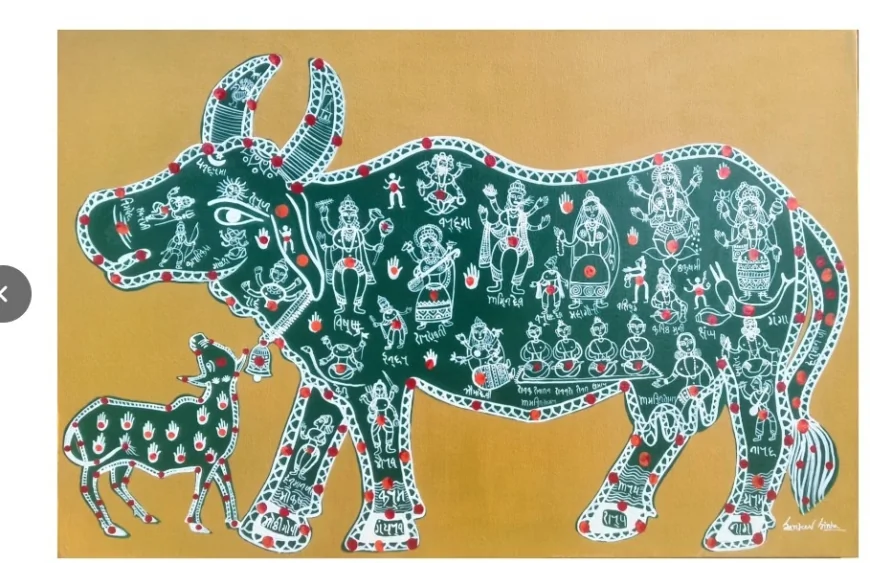
While the Bhojpuri language still awaits inclusion in the Eighth Schedule of the Constitution, Bhojpuri culture has achieved a significant milestone. Bhojpur’s traditional 'Pidiya' painting has been awarded the Geographical Indication (GI) tag. This recognition signifies more than just an art form; it represents a victory for Bhojpuri identity, folk traditions, and the decades-long struggle of the artists who kept this heritage alive.

BHOJPUR’S PIDIYA PAINTING GETS GI TAG
15-JUNE-ENG 5


RAJIV NAYAN AGRAWAL
ARA-------------------------While the Bhojpuri language still awaits inclusion in the Eighth Schedule of the Constitution, Bhojpuri culture has achieved a significant milestone. Bhojpur’s traditional 'Pidiya' painting has been awarded the Geographical Indication (GI) tag. This recognition signifies more than just an art form; it represents a victory for Bhojpuri identity, folk traditions, and the decades-long struggle of the artists who kept this heritage alive.
Through the concerted efforts of NABARD and the Government of Bihar, three traditional products and art forms from the state have secured the GI tag. In addition to Bhojpur’s Pidiya painting, these include Nalanda’s 'Bawan Buti' and Gaya’s 'Patharkatti' stone craft. However, the Pidiya painting of the Bhojpuri region has garnered the most attention, as this marks the first time an art style rooted in Bhojpuri cultural tradition has achieved such national recognition.
According to experts, the cultural organization 'Sarjana Nyas' from Arrah played a pivotal role in securing the GI tag for Pidiya painting. About a year ago, the organization provided paintings, documents, historical references, and essential information related to the Pidiya style, thereby strengthening the GI registration process.
Sarjana Nyas is the organization founded by Sanjeev Sinha, a world-record-holding painter. For nearly three decades, Sinha has been consistently working on Bhojpuri painting and its distinctive folk styles. Through his art, he has showcased the folk songs, folklore, wedding rituals, festivals, agricultural culture, and rural life of the Bhojpuri community to audiences both within the country and abroad.
In the Bhojpur region, Pidiya paintings have been created by women for centuries. These are not merely paintings but documents of folk memory, reflecting family, relationships, nature, agriculture, folk deities, and social life. Once created on the earthen walls of village homes, this art form is now poised to reach global markets and international platforms.
Until now, Madhubani painting has largely been considered synonymous with the art of Bihar. With the granting of the GI tag, Pidiya painting and the Pattharkatti stone craft of Gaya will gain new recognition at both national and international levels.
Nalanda’s 'Bawan Buti' is a distinctive handloom textile art featuring 52 types of woven Buddhist and cultural motifs. Meanwhile, Gaya’s Pattharkatti stone craft is renowned across the country for its intricate carvings and sculptures made from black granite.
Experts believe that the GI tag will create new opportunities for artists associated with Pidiya painting, particularly rural women and folk painters. This will not only ensure the preservation of the art form but also boost the artists' income and expand their access to markets.
Painter Sanjeev Sinha states that while receiving the GI tag is indeed a major achievement, the real challenge begins now. The need of the hour is to take Pidiya painting to domestic and global markets, train artists, and connect the younger generation with this art form.
Although the Bhojpuri language has not yet received constitutional recognition, the GI tag awarded to Pidiya painting proves just how deep, rich, and globally significant the roots of Bhojpuri culture are. This achievement represents a cultural victory not just for the Bhojpur region, but for the entire Bhojpuri community.
Securing the GI tag will give Bhojpuri 'Pidiya' art a new identity on national and international platforms. It will generate new employment and income opportunities for local artists. Furthermore, this achievement will strengthen campaigns such as 'Vocal for Local' and 'Atmanirbhar Bharat' (Self-Reliant India).
A GI tag provides legal protection for a product's uniqueness, quality, and geographical identity. The process of granting GI tags is handled by the Geographical Indications Registry in Chennai.
This achievement will prove to be a significant milestone in preserving Bihar's cultural heritage and promoting the state's traditional industries.
Senior painter Sanjeev Sinha, President of Sarjana Nyas, noted that obtaining a GI tag is a lengthy process; Sarjana Nyas had applied for it last year. The GI tag was awarded following scrutiny and hearings at multiple levels. Key figures in this process included Mr. Gautam Kumar Singh (Chief General Manager, NABARD), Mr. Ranjit Sinha (former Manager, Bhojpur), and Padma Shri Dr. Rajnikant (General Secretary, Human Welfare Association, Varanasi), who assisted with the legal procedures and documentation. Additionally, artists, associates, and well-wishers associated with Sarjana Nyas played a pivotal role.
Securing the GI tag will not only establish a cultural identity for Bihar but also provide livelihoods for thousands of artists. It was noted that obtaining the GI tag for these products is not merely an achievement but the beginning of a new cultural journey.
"GI registration not only grants a product legal identity and protection but also enables it to establish a strong presence in both national and international markets," he stated.
What's Your Reaction?
 Like
0
Like
0
 Dislike
0
Dislike
0
 Love
0
Love
0
 Funny
0
Funny
0
 Wow
0
Wow
0
 Sad
0
Sad
0
 Angry
0
Angry
0





Comments (0)