
BABUJI DEFEATS ‘BOBBY’
-It was Sunday, March 6, 1977, and the atmosphere in Delhi was charged with activity. The Ramlila Maidan stood ready to serve as the venue for a massive protest against the then-incumbent central government led by Indira Gandhi. From the stage, the thunderous voice of 'Babuji'—Jagjivan Ram—was set to ring out. Just then, an announcement was made that the film *Bobby* would be screened on Doordarshan. The government knew the film was a blockbuster hit; they assumed people would not bother heading to the Ramlila Maidan. However, things did not unfold as expected. Approximately 10,000 people flocked to the venue. The very next day, newspaper headlines screamed: "'Babuji' Defeats *Bobby*! Babuji's Victory Over *Bobby*."

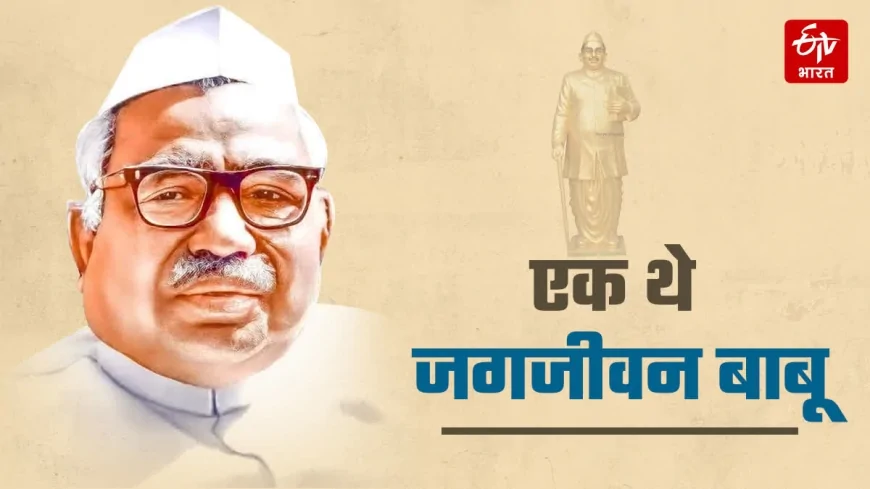
BABUJI DEFEATS ‘BOBBY’
6-APRIL-ENG 8


RAJIV NAYAN AGRAWAL
ARA------------------------It was Sunday, March 6, 1977, and the atmosphere in Delhi was charged with activity. The Ramlila Maidan stood ready to serve as the venue for a massive protest against the then-incumbent central government led by Indira Gandhi. From the stage, the thunderous voice of 'Babuji'—Jagjivan Ram—was set to ring out. Just then, an announcement was made that the film *Bobby* would be screened on Doordarshan. The government knew the film was a blockbuster hit; they assumed people would not bother heading to the Ramlila Maidan. However, things did not unfold as expected. Approximately 10,000 people flocked to the venue. The very next day, newspaper headlines screamed: "'Babuji' Defeats *Bobby*! Babuji's Victory Over *Bobby*."
Renowned historian Ramachandra Guha has recounted this intriguing incident in his book, *India After Gandhi*. In his book, he notes that the film *Bobby*—directed by Raj Kapoor and starring Rishi Kapoor and Dimple Kapadia—was produced in 1973. The film had proven to be a massive commercial success.
Ahead of the 1977 general elections, Jagjivan Ram and Jayaprakash Narayan announced that they would hold a rally in Delhi on March 6, 1977, to protest against the central government. Guha writes that, in an attempt to sabotage the rally organized by Jagjivan Ram and Jayaprakash Narayan, the government of the day devised a clever stratagem. An announcement was made that the film *Bobby* would be broadcast on Doordarshan on March 6—the very day and at the exact same time that the rally was scheduled to take place in Delhi. At that time, Doordarshan was under the complete control of the government; consequently, the decision was taken to air a blockbuster film like *Bobby* with the specific intent of ensuring the rally would be a flop.
In his book, Ramachandra Guha observes that the Congress party fully expected the rally to be a complete failure. However, the people of Delhi defied expectations; by spurning the film *Bobby*, they turned the rally into a resounding success. More than 10,000 people gathered at Delhi's Ramlila Maidan to listen to Jagjivan Ram and Jayaprakash Narayan. Thus, Babu Jagjivan Ram achieved significant success in the politics of dissent against the formidable Congress leader, Indira Gandhi.
In a conversation with ETV Bharat, senior journalist Kaushalendra Priyadarshi remarked that it is an unfortunate reality of Indian politics that the younger generation remains largely unaware of Babu Jagjivan Ram. While people are familiar with figures like Bhimrao Ambedkar, Mayawati, and Kanshi Ram, the new generation possesses very little knowledge about Jagjivan Babu. He was the first Dalit leader in Indian politics to truly make his mark and hoist his banner of success in the political arena.
"Jagjivan Ram was never reactionary. From his very childhood, he had to endure the sting of untouchability. He faced similar discrimination throughout his academic life and later in politics, yet he never reacted to it."—Kaushalendra Priyadarshi, Senior Journalist
Kaushalendra Priyadarshi notes that Jagjivan Babu's father, Sobhi Ram, had served as a soldier in the British Army. However, he eventually left his service job to embrace an ascetic life. When Jagjivan Babu passed his matriculation examination with a first-class distinction, a British woman—recognizing his exceptional talent—offered to sponsor his further education in England. However, Jagjivan Babu's mother did not agree to this proposal, fearing that her son might undergo religious conversion while abroad.
"Jagjivan Babu was a personality who consistently worked to raise awareness among people regarding their faith. Moreover, during that era, he successfully dissuaded numerous Dalits from converting their religion. A parliamentary career spanning 50 years is no ordinary feat. Within the realm of Congress politics, if there was anyone who dared to raise his voice against Indira Gandhi, it was none other than Babu Jagjivan Ram." "It was during his tenure as Defense Minister that Pakistan was split into two parts." — Kaushalendra Priyadarshi, Senior Journalist
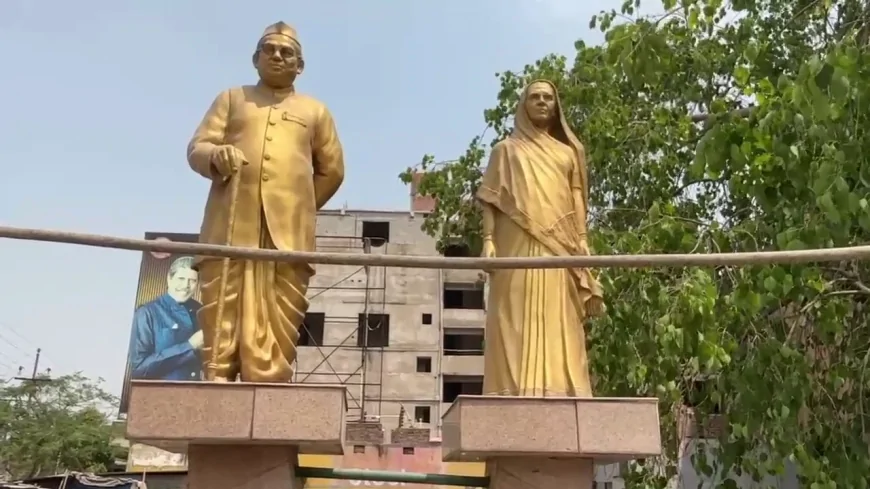
Today marks the 118th birth anniversary of the figure affectionately known in Indian politics as 'Babuji'—Jagjivan Ram. Jagjivan Ram was born on April 5, 1908, in Chandwa, a small village in the Bhojpur district of Bihar. His father's name was Sobhi Ram, and his mother was Basanti Devi. Members of Babu Jagjivan Ram's family now visit his ancestral village of Chandwa only on rare occasions. Yet, Babuji continues to reside deep within the hearts and souls of the villagers.
Ashish Kumar, the caretaker of Jagjivan Ram's home, states: "Every year on the occasion of his birthday, the villagers gather at his residence in Chandwa to celebrate the day and pay tribute to his memory. The reverence the people still hold for Babuji is so profound that, even in the absence of any family members, the villagers come together to offer their homage. A short distance from the house lies his memorial site, where his daughter, Meira Kumar, visits every year on July 6th to pay her tributes."
In honor of Jagjivan Ram, the Railways constructed a small halt station near his village, Chandwa. Yet, this very halt—named after Jagjivan Ram, a son of the village that once gave the nation a Deputy Prime Minister—now stands in a state of utter neglect, a testament to its own dilapidation. Rohan Kumar, a local resident, points out that the halt lacks even basic amenities; there is neither an adequate supply of drinking water nor are there any toilet facilities. Consequently, passengers face immense hardships, particularly during the scorching summer months.
Jagjivan Ram’s early education began at the Town School in Arrah. When he was six years old, his father passed away. In 1925, he attended a student conference held in Arrah. There, he was given the opportunity to deliver the welcome address for Pandit Madan Mohan Malaviya. Deeply impressed by his speech, Malaviya invited him to pursue his higher studies at the Kashi Hindu University (now Banaras Hindu University). Despite facing discrimination based on caste and religion, Jagjivan Ram successfully completed his higher education at both Banaras Hindu University and the University of Calcutta.
Jagjivan RamHe remained a staunch opponent of casteism right from his childhood. Anshul Abhijit, the grandson of Jagjivan Ram, shared an interesting anecdote about his grandfather with ETV Bharat. Anshul recounted that when he was young, his grandfather would often share stories and experiences with him.
"My grandfather told me that when he was 12 years old and studying in the 6th grade at the Town School in Arrah, Dalits were treated as second-class citizens in the country. At the school he attended, there was a separate water pot for children from the upper castes and a different one for Dalits. This deeply distressed him; consequently, one day he smashed both water pots in the school. Although he was punished for this act, the practice of maintaining two separate water pots was abolished in the school thereafter." — Anshul Abhijit, Grandson of Jagjivan Ram
Jagjivan Ram participated actively and enthusiastically in the freedom movement. The credit for integrating the Dalit community into the struggle for independence goes to Jagjivan Ram. In 1934, he founded the *Akhil Bharatiya Ravidas Mahasabha* and the *Akhil Bharatiya Dalit Varg League* in Kolkata (then Calcutta). Through these organizations, the Dalit community was inspired to join the fight for freedom. As a result, a large number of people from the Dalit community joined the independence movement.
It was during the days of the freedom struggle that Jagjivan Ram's affinity for the Congress party grew. In 1931, he became a member of the Congress party. Jagjivan Ram's parliamentary career spanned 50 years—a feat that stands as a world record in its own right. In 1936, at the age of 28, he became a member of the Bihar Legislative Council. When elections for the Bihar Legislative Assembly were held in 1937 under the provisions of the Government of India Act, 1935, Jagjivan Ram was elected as a Member of the Legislative Assembly (MLA). Jagjivan Ram served as a Member of Parliament (MP) for eight consecutive terms—from 1952 to 1984—representing the Sasaram reserved constituency in Bihar. From 1952 to 1971, he was elected to the Lok Sabha on a Congress party ticket. Following the Emergency, Jagjivan Ram secured a victory in 1977 on a Janata Party ticket. Subsequently, in 1980, he achieved another victory on the ticket of the same party. During the 1984 Lok Sabha elections, Jagjivan Babu formed his own party—the Indian Congress (Jagjivan)—and once again registered a victory. Thereafter, Jagjivan Ram rejoined the Congress party. He passed away in July 1986.
Jagjivan Ram held several significant portfolios in Pandit Jawaharlal Nehru's cabinet. From 1946 to 1963, Jagjivan Ram shouldered the responsibility of various key ministries within Jawaharlal Nehru's cabinet, serving as the Minister of Labour, Transport, Railways, and Communications. In 1966, he was appointed as the Minister of Agriculture in Indira Gandhi's cabinet. Subsequently, from 1970 to 1974, he served as the Minister of Defence in Indira Gandhi's cabinet. It was during this tenure that the war between India and Pakistan took place, resulting in an Indian victory and the formation of the new nation of Bangladesh. In 1977, Jagjivan Ram was appointed as the Minister of Defence in the Janata Party government. In 1979, Jagjivan Ram became the Deputy Prime Minister of the country.
In a conversation with ETV Bharat, Jagjivan Ram's grandson, Anshul Abhijit, recounted that when the conflict between India and Pakistan was about to erupt, the United States' stance was tilted in favor of Pakistan. The U.S. Secretary of Defence, Kissinger, spoke with "Babuji" (Jagjivan Ram) and advised him to visit the United States. However, Babuji told the U.S. Defence Secretary in unequivocal terms: "First, you must stop supplying weapons to Pakistan." Within ten minutes, Kissinger walked out of the meeting. Yielding to Indian pressure, the United States was compelled to recall its Seventh Fleet. Pakistan suffered a defeat in this conflict, leading to the formation of the new nation of Bangladesh.
What's Your Reaction?
 Like
0
 Dislike
0
 Love
0
 Funny
0
 Wow
0
 Sad
0
 Angry
0








Comments (0)