
AKANKSHA SINGH: OVERCOMING LEGACY AND ACHIEVING EXCELLENCE IN UPSC 2025
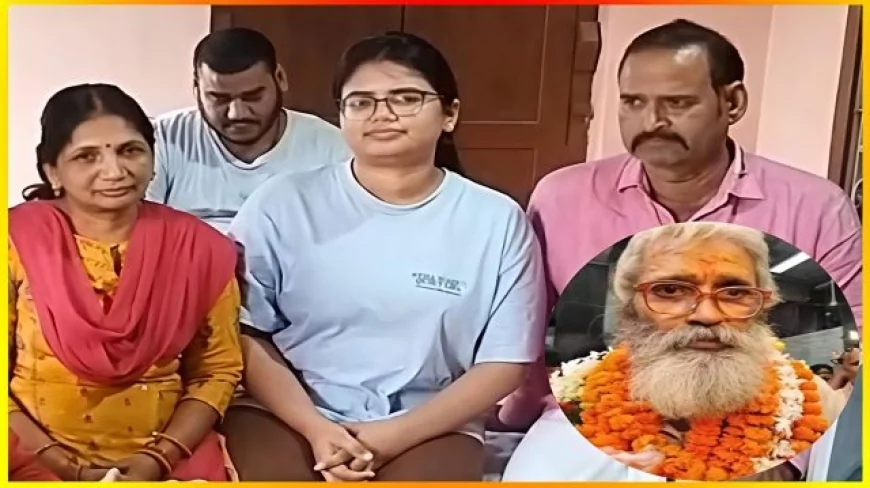
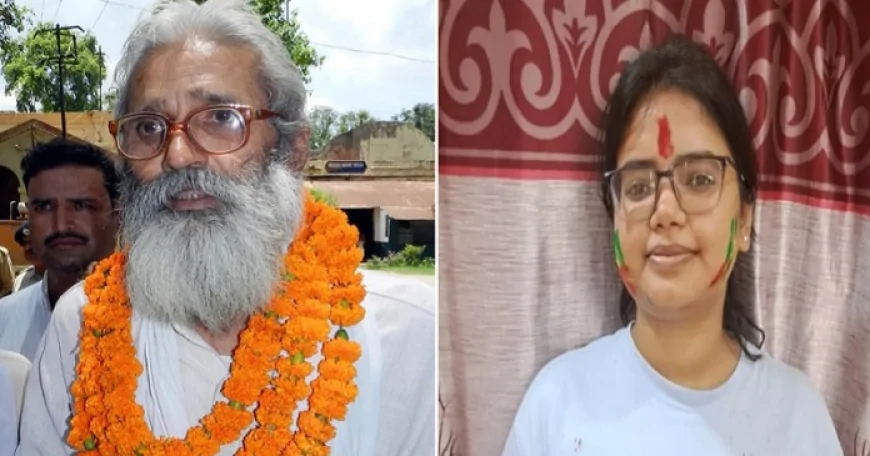
In the heart of Bihar's Bhojpur district, where the echoes of a turbulent past often linger, a story of triumph and determination has emerged. Akanksha Singh, the granddaughter of the late Brahmeshwar Singh Mukhiya—once the supremo of the controversial Ranvir Sena—has cracked one of India's most prestigious examinations, the Union Public Service Commission (UPSC) Civil Services Exam 2025. Securing the 301st rank, Akanksha has not only illuminated her family's name but also brought pride to her ancestral village and the entire district. Her achievement stands as a testament to the power of perseverance, education, and ambition, transcending the shadows of her grandfather's legacy to forge a path in public service.

AKANKSHA SINGH: OVERCOMING LEGACY AND ACHIEVING EXCELLENCE IN UPSC 2025
7-MARCH-ENG 4


RAJIV NAYAN AGRAWAL
ARA--------------------------In the heart of Bihar's Bhojpur district, where the echoes of a turbulent past often linger, a story of triumph and determination has emerged. Akanksha Singh, the granddaughter of the late Brahmeshwar Singh Mukhiya—once the supremo of the controversial Ranvir Sena—has cracked one of India's most prestigious examinations, the Union Public Service Commission (UPSC) Civil Services Exam 2025. Securing the 301st rank, Akanksha has not only illuminated her family's name but also brought pride to her ancestral village and the entire district. Her achievement stands as a testament to the power of perseverance, education, and ambition, transcending the shadows of her grandfather's legacy to forge a path in public service.
Brahmeshwar Singh Mukhiya, often referred to simply as "Mukhiyaji," was a polarizing figure in Bihar's socio-political landscape. As the leader of Ranvir Sena, a private militia formed in the 1990s by upper-caste landowners, he was embroiled in the caste conflicts that plagued rural Bihar during that era. The Sena was accused of several violent incidents, including massacres targeting lower-caste communities, leading to Mukhiya's arrest and eventual acquittal in some cases before his assassination in 2012. His life was marked by controversy, but within his family, he is remembered as a man who valued education and aspired for his descendants to contribute positively to society. Akanksha's father, Indu Bhushan Singh, recalls how his late father had himself cleared the MBBS entrance exam in his time but was unable to enroll due to unforeseen circumstances. This unfulfilled dream seems to have fueled a generational pursuit of academic excellence.
Akanksha, the eldest of three siblings—one sister and one brother—hails from the Katira Mohalla in Ara town, though her ancestral roots trace back to Khopira village in the Pavana police station area of Bhojpur district. Growing up in a region where opportunities for higher education are often limited, especially for girls, Akanksha's journey is particularly inspiring. She completed her schooling up to the 12th grade at the Catholic Mission High School in Ara, a institution known for its disciplined environment and focus on holistic development. Following this, she pursued her graduation in English Honors from Har Prasad Das Jain College, also in Ara. Her choice of English literature reflects a deep interest in language, culture, and perhaps the broader world, which aligns with her future aspirations.
From a young age, Akanksha harbored a burning desire to crack the UPSC exam. "I had made up my mind early on to clear the UPSC," she shared in interviews following the results. To achieve this, she adopted a rigorous study routine, dedicating 8 to 10 hours daily to her preparation. This level of commitment is no small feat, especially in an exam known for its grueling three-stage process: the Preliminary exam, the Mains, and the Personality Test (interview). The UPSC Civil Services Exam is often dubbed the "mother of all exams" in India, attracting lakhs of aspirants each year, with only a few hundred making the final cut. In 2025, a total of 958 candidates were selected, highlighting the fierce competition.
Akanksha's success is not just a personal victory but a milestone for her community. As her father proudly notes, this is the first time someone from Khopira village—son or daughter—has cleared the UPSC. "I do not differentiate between a son and a daughter," Indu Bhushan Singh emphasized, underscoring a progressive mindset in a traditionally patriarchal society. Her mother, Rinku Devi, became emotional while speaking about her daughter's achievement, saying, "I always had faith in her; I knew she would succeed." The family's support was crucial, blending blessings from elders, gurus, and the community. In a region where caste and historical conflicts still influence social dynamics, Akanksha's accomplishment serves as a bridge toward reconciliation and progress, showing that education can redefine legacies.
The interview phase of the UPSC, which lasted 30-32 minutes for Akanksha, was a critical hurdle. The panel posed questions related to Padma Shri awardee Bharat Singh Bharti, a renowned folk singer from Bhojpur known for his contributions to Bhojpuri culture and music. Bharti's work in preserving and promoting regional art forms through songs that address social issues made him a fitting topic for discussion, especially given Akanksha's local roots. Her confident and composed responses impressed the board, reflecting her deep connection to her heritage while demonstrating a broad worldview.
Despite her impressive rank, Akanksha remains ambitious and unsatisfied. "This result is good, but I am not fully content," she admitted. Her ultimate goal is to join the Indian Foreign Service (IFS), where she hopes to strengthen India's diplomatic ties with other nations. This aspiration reveals a forward-thinking mindset, one that envisions contributing to global relations rather than being confined to domestic administration. In a world increasingly interconnected, the IFS plays a pivotal role in shaping India's foreign policy, and Akanksha's background in English literature could prove advantageous in diplomatic communications.
The broader context of the UPSC 2025 results adds another layer of pride for Bihar. While the all-India topper was Anuj Agnihotri from Rawatbhata in Chittorgarh, Rajasthan, Bihar shone brightly with two candidates in the top 10. Raghav Jhunjhunwala from Muzaffarpur's Saraiyaganj area secured the fourth rank. His educational journey began at Delhi Public School in Muzaffarpur and continued at Shri Ram College of Commerce in Delhi, showcasing how urban opportunities can propel rural talent. Similarly, Ujjwal Priyank from Patna clinched the 10th rank. Additionally, two students from Samastipur made headlines: one the son of a kirana shop owner, and the other the son of a university vice-chancellor, illustrating the diverse socio-economic backgrounds of successful aspirants.
These successes from Bihar highlight a growing trend. Historically, the state has produced numerous bureaucrats, but recent years have seen a surge in toppers, thanks to improved coaching facilities in cities like Patna and the rise of online resources. However, challenges persist—rural areas like Bhojpur still grapple with inadequate infrastructure, limited access to quality education, and socio-economic disparities. Akanksha's story is a beacon for young aspirants in such regions, proving that with dedication, even those from modest backgrounds can compete on a national stage.
The announcement of the results on the official UPSC website, upsc.gov.in, sparked celebrations across Khopira and surrounding villages in central Bihar. People flocked to Akanksha's home to offer congratulations, turning her achievement into a communal festivity. In an era where social media amplifies success stories, her journey has inspired countless posts and discussions, encouraging more girls to pursue higher education and competitive exams.
Akanksha's triumph also underscores the evolving role of women in Indian civil services. Over the years, female participation and success rates have increased, with women now holding key positions in governance. Her story aligns with national initiatives like Beti Bachao Beti Padhao, which promote girls' education. By aiming for the IFS, Akanksha is poised to represent India on international platforms, potentially influencing policies that foster global peace and cooperation.
In reflecting on her grandfather's unfulfilled medical dreams, Akanksha has, in a way, completed a family circle. Brahmeshwar Mukhiya's life was fraught with conflict, but his emphasis on education has borne fruit through his granddaughter. This narrative shift—from militia leadership to civil service excellence—symbolizes hope for Bihar, a state often stereotyped for its caste politics and underdevelopment. As Akanksha prepares for her future role, she carries forward a legacy redefined by knowledge and service.
Her message to aspiring students is clear: discipline, hard work, and family support are key. In a country where the UPSC is seen as a gateway to power and prestige, Akanksha Singh's 301st rank is more than a number—it's a symbol of resilience. As she steps into the corridors of bureaucracy, she not only honors her roots but also paves the way for others to dream big. In the words of her father, this is a matter of immense pride, not just for the family, but for the entire village and district. Akanksha's journey reminds us that true success lies in transforming challenges into opportunities, one exam at a time.
What's Your Reaction?
 Like
0
 Dislike
0
 Love
0
 Funny
0
 Wow
0
 Sad
0
 Angry
0










Comments (0)