
AIR POLLUTION NEEDS TO BE VIEWED AS A NATIONAL HEALTH EMERGENCY, MOVING BEYOND THE REALM OF A SEASONAL PROBLEM OR A POLITICAL WEAPON: DEVANAND SINGH
The winter session of Parliament, which began with much noise and mutual accusations, ended in the same frustrating manner. Slogans echoed in the temple of democracy, placards were waved, and the House was repeatedly adjourned. Amidst this din, several important issues remained awaiting discussion. Most unfortunately, no substantive debate could take place on the life-and-death issue of air pollution in Delhi-NCR, despite verbal agreement between the ruling party and the opposition. This is not just a parliamentary failure, but proof of our collective insensitivity towards the health and future of millions of citizens.

AIR POLLUTION NEEDS TO BE VIEWED AS A NATIONAL HEALTH EMERGENCY, MOVING BEYOND THE REALM OF A SEASONAL PROBLEM OR A POLITICAL WEAPON: DEVANAND SINGH
3-JAN-ENG 6


RAJIV NAYAN AGRAWAL
ARA--------------------------The winter session of Parliament, which began with much noise and mutual accusations, ended in the same frustrating manner. Slogans echoed in the temple of democracy, placards were waved, and the House was repeatedly adjourned. Amidst this din, several important issues remained awaiting discussion. Most unfortunately, no substantive debate could take place on the life-and-death issue of air pollution in Delhi-NCR, despite verbal agreement between the ruling party and the opposition. This is not just a parliamentary failure, but proof of our collective insensitivity towards the health and future of millions of citizens.
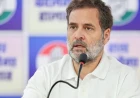
Last week, Leader of the Opposition in the Lok Sabha, Rahul Gandhi, had called air pollution a health emergency and demanded a systematic and serious discussion. Other opposition leaders also agreed, and positive signals were given by the government. But on Thursday, when it was time to discuss this issue, the uproar over the 'Viksit Bharat - Guarantee for Employment and Livelihood Mission (Rural)' being introduced in place of MNREGA brought the proceedings of the House to a standstill. As a result, the debate on the suffocating pollution in Delhi-NCR was postponed again. Now the government is washing its hands of the matter by saying that it was ready for discussion, while the Congress is questioning why the discussion did not take place if there was an agreement. Amidst this political tug-of-war, the real issue—people's health—has once again been left behind.
The irony is that while this commotion was going on in Parliament, the AQI in many areas of Delhi was around 400, which is an extremely critical situation. Since November, the air in the capital has remained almost continuously toxic. Last month, the AQI remained above 300 for 24 days, and the situation worsened in December. Despite the implementation of strict restrictions like GRAP-4, the pollution level remains between 350 and 400. This is a clear indication that our current strategies are insufficient and that we are reacting to the symptoms of the problem, not its root cause.
Air pollution in Delhi-NCR is not a political issue to be viewed through a partisan lens. It is neither a Congress issue, nor a BJP issue, nor an Aam Aadmi Party issue. It is a question for the millions of people who are forced to breathe toxic air every morning, regardless of which party they vote for or which ideology they subscribe to. Air pollution does not discriminate between rich and poor, Hindu and Muslim, ruling party and opposition. Its effects are felt equally by everyone – on the lungs of children, the hearts of the elderly, pregnant women, and daily wage laborers.
The Centre for Research on Energy and Clean Air estimates that in 2023 alone, air pollution claimed the lives of approximately 17,200 people in Delhi. This figure is far higher than the deaths caused by road accidents, criminal incidents, or many serious diseases. In other words, pollution has become Delhi's biggest silent killer, silently shortening people's lifespans every day without any sirens or headlines.
Despite this, air pollution is still treated as a seasonal problem in our politics, one that arrives every year in winter and disappears on its own after a few months. As soon as smog descends in November-December, GRAP is implemented, schools are closed, construction work is stopped, and vehicles are restricted for a few days. But as soon as the air clears a little, we breathe a sigh of relief and forget about the problem until the next year. This firefighting approach is neither scientific nor sustainable.
GRAP, or the Graded Response Action Plan, is essentially a measure taken after the problem has already begun. It is not a preventive measure, but merely an attempt to mitigate the damage. The question is, why do we even reach a situation where emergency measures like GRAP-4 have to be implemented? Why isn't a year-round, long-term, and multi-faceted strategy developed? The causes of pollution in Delhi-NCR are not limited to a single factor. They include vehicular emissions, industrial emissions, dust from construction activities, burning of waste and crop residue, coal-based power plants, as well as geographical and seasonal factors. Such a complex problem cannot be solved by a single order, a single ban, or a single government. It requires a year-round action plan, clear guidelines, strict monitoring, and better coordination among the states.
The biggest challenge is that Delhi-NCR is not limited to the jurisdiction of the Delhi government alone. It includes several areas of Haryana, Uttar Pradesh, and Rajasthan. Pollution does not respect state boundaries, but our policies and politics are still bound by them. When the air quality deteriorates, the blame game begins—sometimes Punjab and Haryana are blamed for stubble burning, sometimes UP is held responsible for industrial pollution, and sometimes Delhi's vehicles are cited as the main culprits. In this blame game, the solution gets lost.
What is needed is an institutional framework that brings all the states of the NCR onto a common platform and establishes accountability. Meetings and announcements alone will not suffice. Concrete targets, time-bound plans, and strict enforcement mechanisms are essential. For example, dependence on private vehicles cannot be reduced without strengthening public transport. There is much talk about promoting electric vehicles, but without charging infrastructure, affordable prices, and a reliable supply chain, this dream will remain unfulfilled. Similarly, while there are regulations on construction activities, their enforcement is extremely lax. Dust control measures often remain confined to paper. Emission standards are set for industries, but the monitoring and enforcement mechanisms are weak. Until the cost of violating these regulations becomes politically and economically prohibitive, the prospects for change will remain dim.
Public awareness is equally crucial in tackling air pollution. Assuming that all the responsibility lies with the government is only understanding half the problem. Citizens also have a vital role to play, whether it's reducing the use of private vehicles, not burning waste, conserving energy, or adopting environmentally friendly alternatives. But for this, the government needs to engage the public through reliable information, transparent data, and continuous dialogue, rather than simply imposing orders during times of crisis.
Most importantly, tackling the challenge of air pollution requires strong political will. This will is demonstrated not through speeches or tweets, but through making difficult decisions—decisions that may be unpopular in the short term but are in the public interest in the long run. Are we prepared for strict controls on private vehicles? Can we take the political risk of cracking down on polluting industries? Can we rise above politics and cooperate across states? These are the questions whose answers will determine whether the future of Delhi-NCR will be breathable or not.
The winter session of Parliament was a missed opportunity in this regard. When the country's largest democratic institution fails to discuss a serious issue like air pollution, despite the consensus of all parties, it is not just a failure of process, but also a failure of priorities. If more than 17,000 deaths cannot compel us to rise above politics, then the question arises—what will?
There is still time to move beyond treating air pollution as a seasonal problem or a political weapon and recognize it as a national health emergency. This requires a serious, fact-based, and solution-oriented debate in Parliament. We need a debate that isn't limited to just one session or one season, but one that forms the basis for year-round policy and action. The air in Delhi-NCR isn't just toxic in the statistics; it's poisoning people's lungs. This cannot be allowed to be drowned out by political noise
What's Your Reaction?
 Like
0
 Dislike
0
 Love
0
 Funny
0
 Wow
0
 Sad
0
 Angry
0







Comments (0)