
MOBILES ARE BECOMING A HEALTH ISSUE
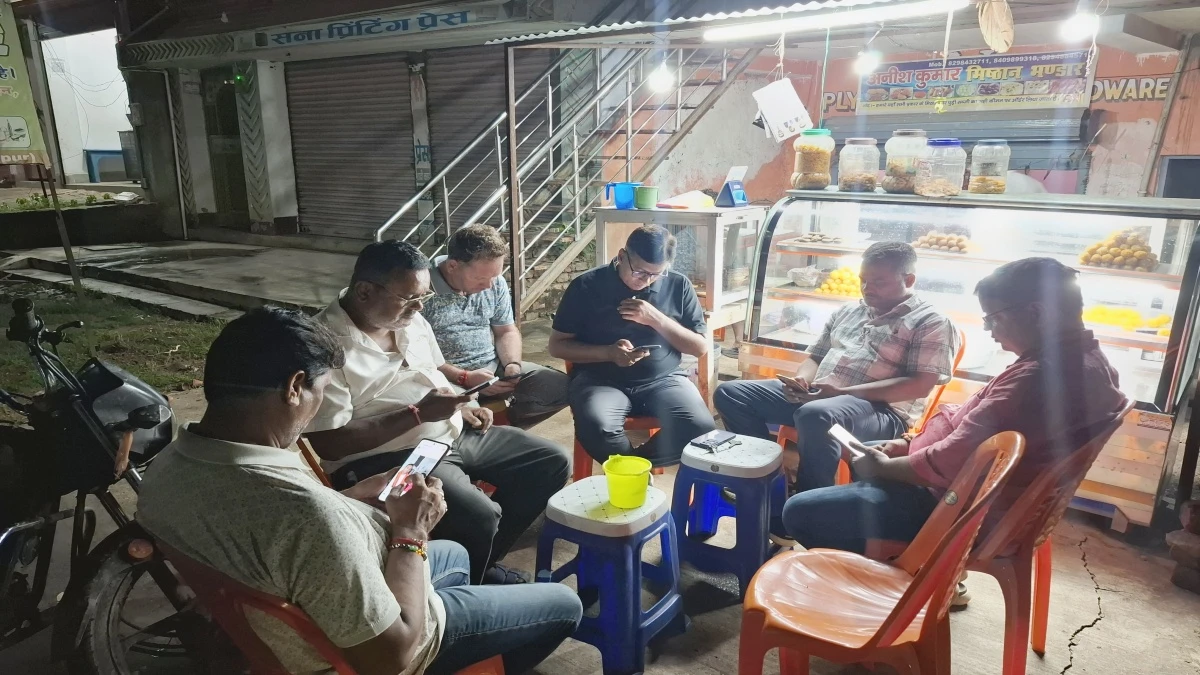
In today’s digital age, mobile phones have become an integral part of children’s daily routines. Whether they are eating, studying, or even preparing for bed, children are constantly glued to their screens. This has a direct, adverse impact on their physical activity, overall health, sleep, and vision. Currently, excessive screen time is leading to a rapid rise in cases of strabismus (squint/misalignment of the eyes) among children.

MOBILES ARE BECOMING A HEALTH ISSUE
27-OCT-ENG 13


RAJIV NAYAN AGRAWAL
ARA--------------------------In today’s digital age, mobile phones have become an integral part of children’s daily routines. Whether they are eating, studying, or even preparing for bed, children are constantly glued to their screens. This has a direct, adverse impact on their physical activity, overall health, sleep, and vision. Currently, excessive screen time is leading to a rapid rise in cases of strabismus (squint/misalignment of the eyes) among children.
According to Dr. Ajit Kumar Dwivedi, Director of the Rajendra Nagar Super Specialty Eye Centre in Patna, mobile phone usage among children has increased significantly. Instead of playing outdoors, children are spending more time at home on their mobile devices—a trend partly driven by the busy schedules of parents. Often, parents—occupied with their own work—hand mobile phones to their children, keeping them engaged with screens for long periods.
Dr. Dwivedi clarifies that the appearance of a squint in a child does not necessarily mean that mobile phone use is the sole cause. In some cases, a child may have an underlying, pre-existing eye condition that only becomes apparent over time. Furthermore, certain eye issues are sometimes incorrectly attributed to mobile phone use without proper clinical evaluation. Therefore, to understand the link between strabismus and mobile phone usage, each child’s situation must be assessed individually.
Dr. Ajit Kumar Dwivedi notes that global studies have established a connection between "near work"—tasks that require focusing on objects at close range—and the development of myopia (nearsightedness) in children. Viewing a mobile screen at close range falls under the category of "near work." Consequently, prolonged focus on a screen can increase the risk of vision-related problems in children, potentially leading to an increase in the axial length of the eye and the development of myopia. "However, it would be incorrect to assume that this is the sole cause of strabismus (squint). Some children may have congenital strabismus, while in other cases, it could be due to vision defects or issues with the eyes' ability to focus. Therefore, if you notice the eyes moving abnormally or failing to focus properly in the same direction, it should not be ignored." — Dr. Ajit Kumar Dwivedi, Director, Rajendra Nagar Centre for Advanced Eye Care, Patna.
Dr. Dwivedi advises parents that if a child appears to have a squint or if their eyes are not focusing in the same direction, the child should undergo a comprehensive examination by a qualified ophthalmologist or at an eye care institution. Simply reducing mobile phone usage is not sufficient in every case, as it is essential to identify the root cause of the problem.
He explained that, depending on the child's condition, the treatment might involve prescription glasses, medication, or other interventions. For some children, limiting digital screen time can also be helpful; however, the specific course of treatment depends on the underlying cause and the severity of the condition.
According to experts, if a child shows signs of a squint, it is crucial to seek professional medical advice rather than relying on home remedies or attempting self-treatment. Early detection—especially at a young age—significantly improves the chances of a positive outcome through timely examination and treatment.
Dr. Dwivedi also highlighted the vital role of parents regarding children's growing habit of using mobile phones. He noted that, in the past, family members would gather in the living room to talk and share their experiences; today, however, in many households, everyone remains preoccupied with their own mobile devices.
Describing this as a matter of serious concern, he emphasized that parents must set an example themselves to help manage digital screen habits. It is not enough to merely advise children to stay away from mobile phones; instead, clear rules regarding screen usage should be established for everyone in the household. Dr. Dwivedi suggested utilizing features like 'child lock' and 'parental control' available on mobile devices. Instead of handing a mobile device directly to a child, parents could opt to display content on a larger screen when necessary; this allows them to monitor what the child is watching.
He further noted that children could be permitted to use screens for a limited duration—but only after they have completed their homework, drawing, or other assigned tasks. However, this should not become a justification for allowing them to use mobile devices for long periods every day. Many schools today provide study materials and homework through digital channels; in such cases, where possible, alternatives like printouts or computers should be used instead.
Dr. Ajit Kumar Dwivedi also highlighted the importance of managing children's daily routines and their mobile usage at night. He suggested establishing a family rule to avoid using digital screens between 9:00 PM and 7:00 AM. This can help regulate children's screen-viewing habits and improve their sleep-wake cycle.
According to him, using mobile devices late at night can disrupt sleep; therefore, it is essential to ensure that children complete their necessary tasks on time and that an environment conducive to adequate rest is maintained at night. Furthermore, the eyes also require rest after a full day of activity.
He also emphasized the importance of providing children with a balanced diet. He noted that Vitamin A and green leafy vegetables are vital for eye health. Children's meals should contain balanced nutrition to ensure their bodies receive the essential nutrients they need. .so that they can receive the necessary nutrients. He also emphasized the importance of taking periodic preventive measures against worm infestations, as advised by medical professionals.
Parents are also expressing concern regarding eye-related issues in children, attributing these to increased mobile phone usage and a decline in physical activity. Rajiv Kumar noted that children are engaging in less outdoor play and physical activity than in the past. They remain glued to their mobile screens throughout the day—whether they are awake, eating, or going about their daily routines.
According to Rajiv Kumar, many children have developed a habit where they refuse to eat unless they are watching something on a mobile device. They also stay occupied with their phones late into the night, which is disrupting their daily routines. He stressed that physical activity, adequate sleep, and a balanced lifestyle are essential for a child's overall development.
"The busy schedules of parents are also a contributing factor. Often, children are given mobile phones just to keep them occupied so that parents can attend to their own tasks. However, in the long run, this habit can negatively impact a child's daily routine and behavior. Instead of handing them a mobile phone, parents should spend time with their children and encourage them to engage in physical play," says Rajiv Kumar, a parent.
Another parent, Nupur, expressed her concerns regarding children's dietary habits and the influence of digital content. She pointed out that children's preferences today are not shaped solely by their home environment; they are also significantly influenced by the advertisements and marketing they encounter on their mobile devices.
Nupur shared that, even when parents have not introduced their children to certain types of junk food, the children—having seen them on their mobile screens—begin demanding items like pizza, burgers, chow mein, pasta, and noodles. This, in turn, affects what they carry in their lunchboxes and their overall daily diet. "Nowadays, many children demand something new to eat every day, rather than traditional meals like roti-sabzi or parathas. There is also an increasing demand for various types of fast food in their lunchboxes. It is important to recognize the role that digital content and advertisements play in shaping children's changing preferences. At the same time, parents play a crucial role in improving their children's eating habits." — Nupur, a parent.
Sudhanshu Abhishek, an educator and parent, has emphasized the importance of proper nutrition and caution regarding screen usage for the sake of children's eye health. He suggests that children should be provided with a balanced diet rich in nutrients essential for eye health. If digital media must be used for studies, parents should select screens appropriate for the child's age and specific needs.
He also advises viewing content on larger screens from an appropriate distance and taking regular breaks to rest the eyes, rather than staring at a screen continuously. He cautions against allowing children to spend long, consecutive hours playing games or watching videos on mobile devices. Instead, it is essential to encourage them to engage in outdoor sports, play with toys, and participate in other creative activities.
"To bring about changes in children's daily routines, parents must also exercise control over their own mobile usage. Furthermore, if a child exhibits abnormal eye movement or a squint, it is essential to consult an ophthalmologist rather than simply assuming that mobile usage is the sole cause." — Sudhanshu Abhishek, educator and parent.
The risks associated with mobile usage are not limited to children; they also pose a 'silent threat' to young adults. The growing dependence on mobile devices among the youth affects more than just their studies or work. Excessive mobile use can lead to increased irritability and a diminished interest in real-world social activities. Even when couples are at home together, they often remain engrossed in their own mobile devices, which hinders their communication and emotional connection.
The reduction in meaningful conversation—despite living under the same roof—is creating a growing distance in marital relationships. In the long run, this situation can become a primary cause of severe strain and fragmentation within family relationships. People are jeopardizing their real and invaluable relationships for the sake of the virtual world—a deeply concerning trend for society.
Clinical Psychologist and Head of the Mental Health Department, Vinod Kumar Pandey, explains that it is not practical to completely remove digital technology from one's life. The need today is not to abandon technology, but to cultivate discipline and self-control in how it is used. Exercising self-control is the most crucial step toward achieving a balanced life.
He noted that research has highlighted a disparity in academic performance between children who study using technology and those who do not. Children who rely heavily on technology tend to achieve lower scores, whereas those who study through traditional methods perform better. This research confirms that excessive screen time negatively impacts children's education.
"Our brain functions much like a machine; it requires engagement in diverse activities to remain active. In the past, writing down a name or a mobile number involved using a pen and paper—a process that engaged various parts of the body, including the eyes, hands, and the brain. Today, however, many tasks can be completed with a single click on a mobile device. This has led to a decline in the use of many of our natural cognitive processes," says psychologist Vinod Kumar Pandey.
Psychologist Vinod Kumar Pandey further mentions that the families of patients seeking psychiatric care often share a common concern: their children spend about eight to nine hours a day on their mobile phones. These children show absolutely no interest in household responsibilities or other creative pursuits. Such serious cases are frequently encountered in hospital OPDs. are now increasing very rapidly.
In such cases, excessive mobile phone use may also be linked to other serious mental health issues. Therefore, simply forcibly taking the mobile phone away from a child is not a permanent solution. It is crucial to understand why the child is spending so much time on their mobile phone, so that healthy alternatives can be provided instead.
Vinod Kumar Pandey noted that prestigious mental health institutions, such as NIMHANS in Bengaluru, operate specialized clinics for mobile addiction—clinics that see a large number of children. He believes that, given the growing problem of excessive mobile phone use in Bihar, similar specialized clinics are needed there as well. Currently, about 100 patients visit the OPD daily, and the number of people affected by mobile-related issues is on the rise.
Psychologist Vinod Kumar Pandey suggests that students in the seventh, eighth, and ninth grades should be educated—at the school level—about the benefits and drawbacks of mobile phones, as well as their impact on mental health. Small, specialized booklets could be developed for this purpose. Furthermore, essential guidelines on the balanced use of digital technology should be mandatorily incorporated into the school curriculum.
There is also an urgent need for the government to launch comprehensive awareness campaigns to help the public understand that a mobile phone is merely a useful tool; its excessive use can be extremely detrimental to human health. To effectively curb this dangerous habit among children and young people, the expert recommends practical measures such as "mobile fasting."
Mobile fasting involves staying away from social media for at least one day a week and using the phone only for essential calls. Additionally, reducing screen brightness, removing non-essential apps from the home screen, and disabling unnecessary notifications can help decrease usage. Particular caution should also be exercised regarding mobile phone use at night.
Avoiding screens before bedtime and limiting mobile phone use in the evening can help improve one's sleep routine. At night, the artificial light from screens disrupts the body’s natural sleep-wake cycle. Melatonin, a hormone produced by the body, plays a key role in the sleep process. Using a phone late into the night inhibits the secretion of this hormone, which can lead to insomnia.
Simply hiding or completely removing mobile phones will not provide a permanent solution to this problem. What is needed is for individuals to learn how to manage their own responses to technology. Just as we cannot stop the rain but can carry an umbrella, we cannot eliminate mobile phones—but we can strengthen our self-control.
Do not ignore the symptoms of myopia. Reducing screen time can prevent children from needing new glasses or seeing their prescription strength increase. Parents should gently explain the situation to their children and help them steer clear of this "silent" danger; in today’s world, mobile phones are evolving from mere tools for passing time into devices that contribute to the development of health issues.
What's Your Reaction?
 Like
0
 Dislike
0
 Love
0
 Funny
0
 Wow
0
 Sad
0
 Angry
0













Comments (0)