
RAM NAVAMI CELEBRATED WITH UNPRECENDENTED RELIGIOUS POMP AND FERVOUR, ARA TURNS INTO A LIVING CANVAS OF DEVOTION, UNITY AND TRADITION
--Ara, the bustling headquarters of Bhojpur district in the eastern Indian state of Bihar, underwent a profound spiritual metamorphosis on the auspicious occasion of Ram Navami. The historic city, known for its rich cultural heritage and strategic location along the banks of the Ganga, transformed into a saffron-hued spiritual metropolis. The 26th anniversary of the iconic Ramnavami Mahatsav Shobha Yatra was observed with extraordinary religious zeal and fervour, drawing more than one lakh devotees from every corner of the district and beyond.

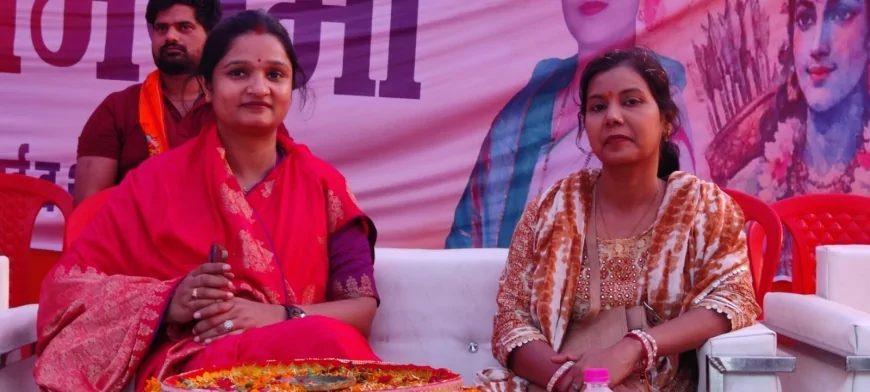
RAM NAVAMI CELEBRATED WITH UNPRECENDENTED RELIGIOUS POMP AND FERVOUR, ARA TURNS INTO A LIVING CANVAS OF DEVOTION, UNITY AND TRADITION
28-MARCH-ENG 14


RAJIV NAYAN AGRAWAL
ARA-----------------------------Ara, the bustling headquarters of Bhojpur district in the eastern Indian state of Bihar, underwent a profound spiritual metamorphosis on the auspicious occasion of Ram Navami. The historic city, known for its rich cultural heritage and strategic location along the banks of the Ganga, transformed into a saffron-hued spiritual metropolis. The 26th anniversary of the iconic Ramnavami Mahatsav Shobha Yatra was observed with extraordinary religious zeal and fervour, drawing more than one lakh devotees from every corner of the district and beyond.
Despite the scorching sun beating down mercilessly from a cloudy; sky, the unwavering spirit of Lord Ram’s bhaktas remained undimmed. Men, women, and children from rural hinterlands and urban pockets alike converged in large numbers, their faces radiant with devotion. The entire town wore a festive look, with vibrant saffron banners, flags, and festoons fluttering proudly from every electric pole, rooftop, balcony, and street corner. What was once a regular administrative town turned into a veritable fairy land of devotion, where every nook and cranny echoed the timeless glory of Maryada Purushottam Lord Shri Ram.
The celebrations were anchored by the grand Shobha Yatra organised under the banner of the Ramnavami Mahatsav Shobha Yatra Samiti. This annual event has grown significantly over the past quarter-century, evolving from a modest local procession into a grand spectacle that unites thousands in collective reverence. The procession commenced from the sacred Ramgarhia locality — a place steeped in legend. According to local tradition, it was here that Lord Ram, accompanied by his revered guru Maharishi Vishwamitra and his loyal brother Laxman, once passed through while en route to Janakpur for the swayamvar of Sita. This historical and mythological connect lent an added layer of sanctity to the starting point, making every step of the yatra feel like a pilgrimage retracing divine footsteps.
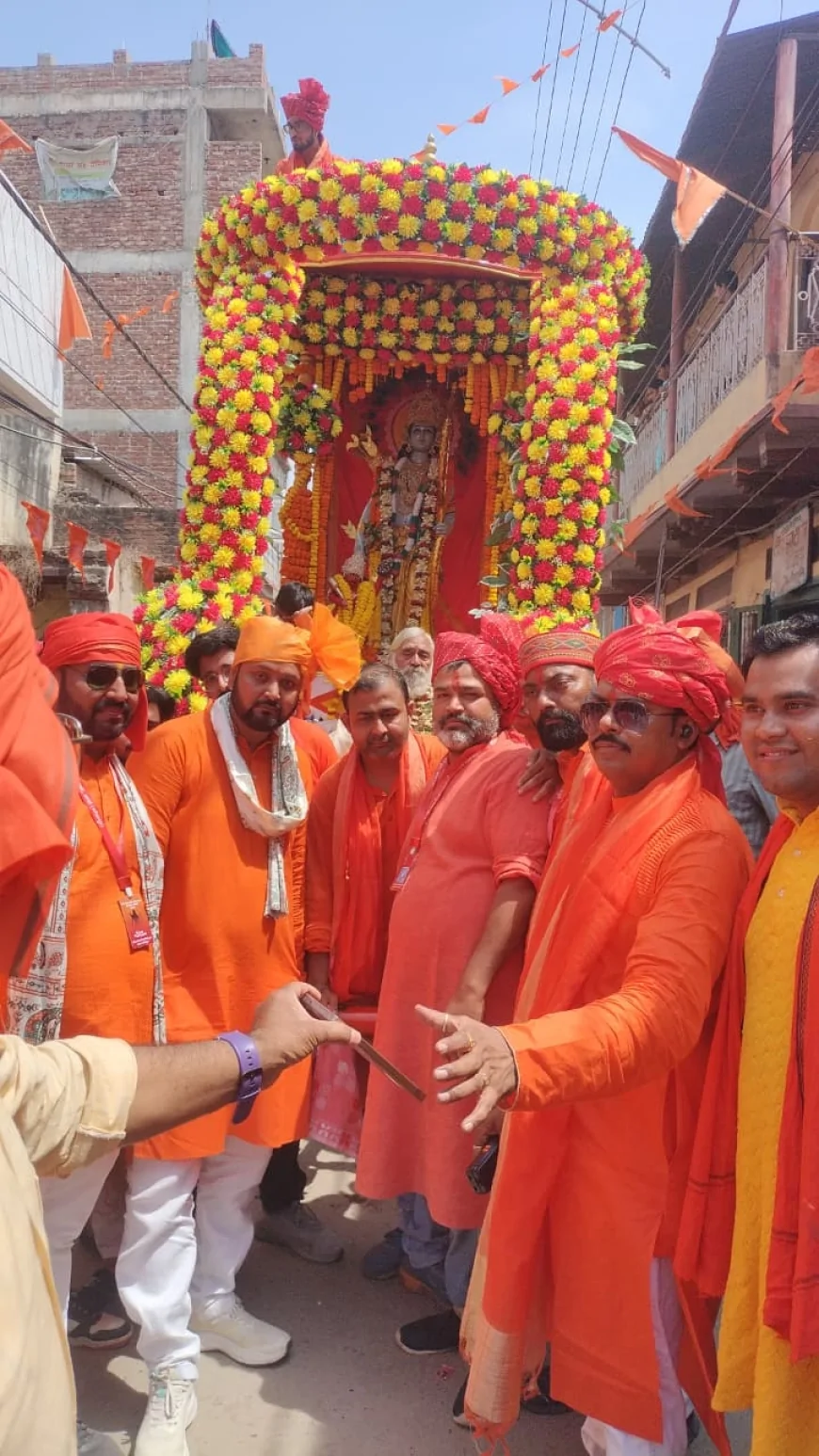
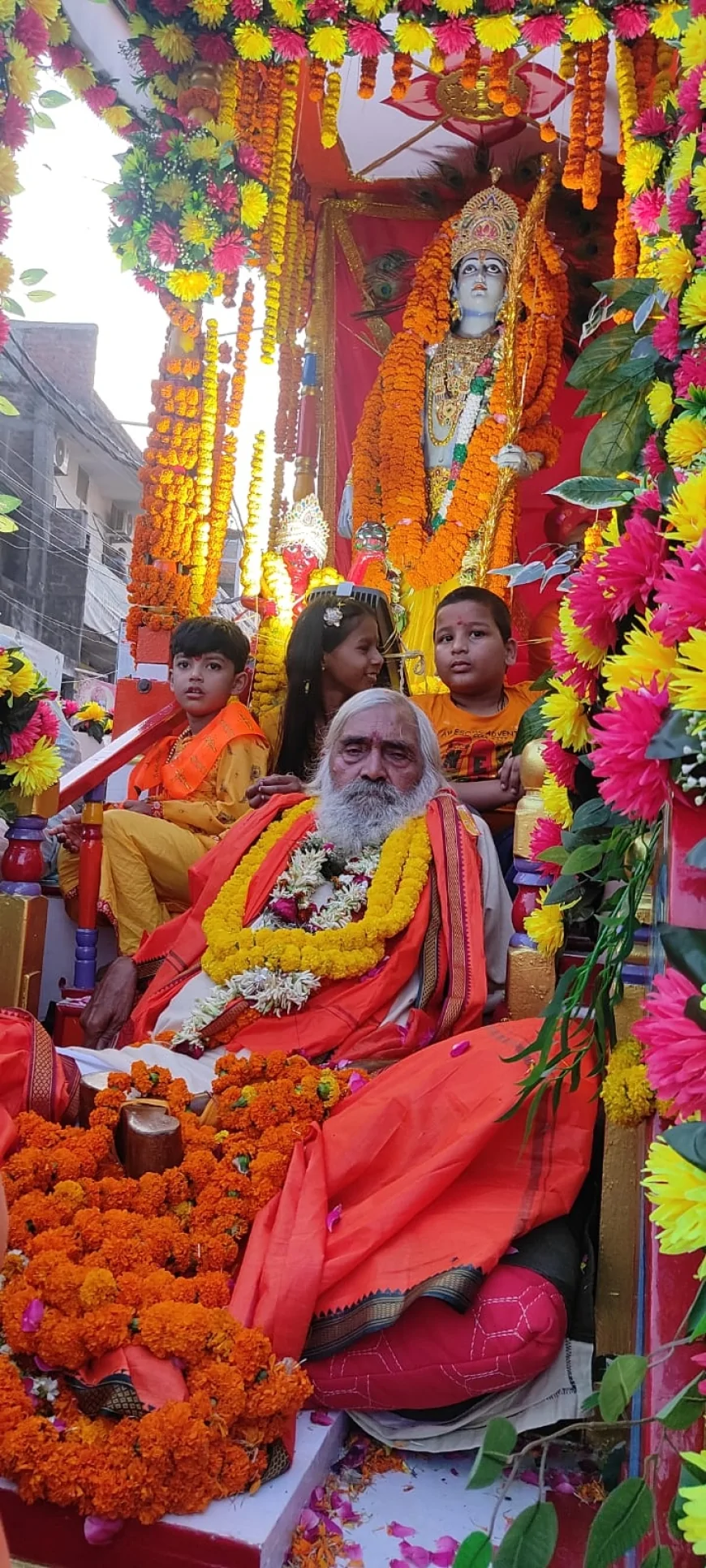
Under the divine and charismatic leadership of Trikaldarshi Param Siddh Sant Shri Devraha Shivnath Das Jee Maharaj, the national president of the committee, the yatra began with a grand Maha Aarti. The aarti of Lord Ram and the saint himself at Ramgarhia created an electrifying atmosphere. Thousands of devotees stood with folded hands, their eyes moist with emotion as lamps, incense, and floral offerings were presented amidst the rhythmic chanting of Vedic mantras. Following the Maha Aarti, the revered saint addressed the surging sea of devotees. His words resonated deeply: “Today, the integration of Shri Dham Ayodhya and Ara has been accomplished. Looking at this unprecedented flood of Ram bhaktas, I cannot tell whether I am in Ayodhya or in Ara.”
Sant Devraha Shivnath Das Jee Maharaj further invoked the inspiring spirit of the ancient devotee Sutikshna, for whom Lord Ram appeared everywhere he looked. He blessed the gathering, stating that the magnificent sight of bhakta and Bhagwan’s grand union had left everyone spiritually fulfilled and eternally blessed. His message emphasised the universality of Ram bhakti, transcending geographical boundaries and reminding everyone that true devotion dissolves all distinctions.
The Shobha Yatra was far more than a mere religious procession; it was a living, moving tapestry of faith, culture, heritage, and collective resolve. It wound its majestic way through the main thoroughfares of Ara, covering an extensive and meticulously planned route: Ramgarhia, Abrapur (Abarpur), Padav Mod, Chowk Arya Path, Sheesh Mahal Chowk, Gopali Chowk, Jail Road, Shivganj Mod, Sadar Hospital Road, Mathia Mod, Mahadeva Road, Dharman Chowk, Chitrotoli Road, Deens Tank Golambar, Ramna Road, Mahavir Tola Road, Karman Tola, Nawada Thana Mod, Krishi Bhawan, Katira, Pakdi, Judge Kothi Golambar, and finally culminating at the expansive Ramana Maidan.
At the conclusion of this long and spiritually charged journey, devotees collectively took a solemn vow to contribute towards the construction of a grand Krishna temple at Mathura. This pledge echoed the eternal message of dharma, unity, and the interconnectedness of Sanatan traditions, reinforcing that the celebration of one avatar’s birth inspires service to the entire divine pantheon.
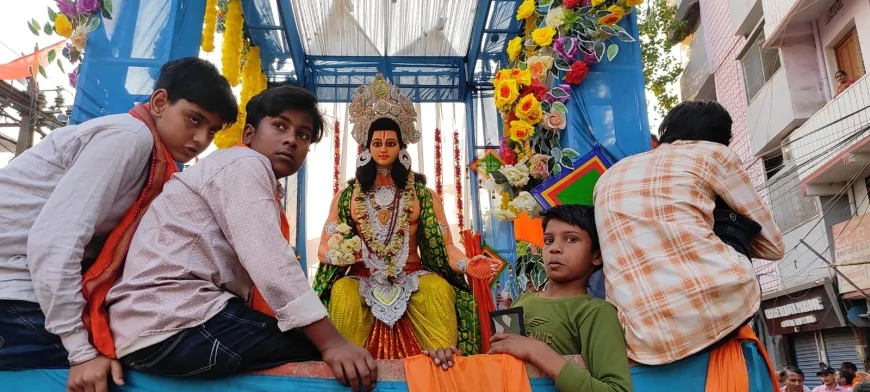
More than 75 exquisitely crafted tableaux (jhankis) formed the visual and narrative backbone of the yatra. These tableaux depicted various significant episodes from the life of Lord Ram in vivid, colourful detail — from his divine birth in Ayodhya and childhood leelas in the palace, to his exile in the forest, the abduction of Sita, the epic battle with Ravana, and the triumphant return to Ayodhya after victory in Lanka. Artisans and local artists had poured their heart and soul into creating these moving dioramas, using intricate costumes, props, lighting, and live performers to bring the Ramayana alive on the streets of Ara.
The undisputed centrepiece of the entire procession was a stunning living statue of Lord Ram. This portrayal bore an uncanny and inspiring resemblance to the iconic murti installed in the newly constructed grand Ram Mandir at Ayodhya. The devotee enacting the role stood with regal poise, bow in hand, exuding the perfect blend of maryada (dignity) and divinity. As the chariot carrying this living idol moved forward, devotees thronged both flanks of the roads in thousands. They offered aarti with camphor lamps and flowers, showered petals liberally, and performed heartfelt kirtans. The collective energy was palpable.
Adding a celestial dimension to this earthly spectacle, helicopters showered fragrant flower petals from the sky onto the tableaux and the marching devotees below. The gentle rain of blossoms created a dreamlike atmosphere, symbolising divine blessings from above. Traditional weapons were displayed in a disciplined and limited manner as part of cultural heritage exhibits, while any attempts by hoodlums or disruptive elements to create chaos were firmly discouraged and controlled by the vigilant organisers and volunteers.
The air reverberated continuously with thunderous, soul-stirring chants of “Jai Shri Ram” and “Har Har Bum Bum” that seemed to pierce the heavens and fill every heart with courage and piety. Bhajans and devotional kirtans echoed without pause along the entire route. Women and young girls observed strict fasts (vrat) throughout the day, many singing traditional devotional songs including Chaita and Sohar. In numerous households across Ara and surrounding villages, beautifully decorated cradles (jhulas) were gently rocked with strings in a tender, loving reenactment of baby Ram’s jhula leela. This simple yet profound ritual brought tears of joy to the eyes of elders and instilled deep cultural values in the younger generation.
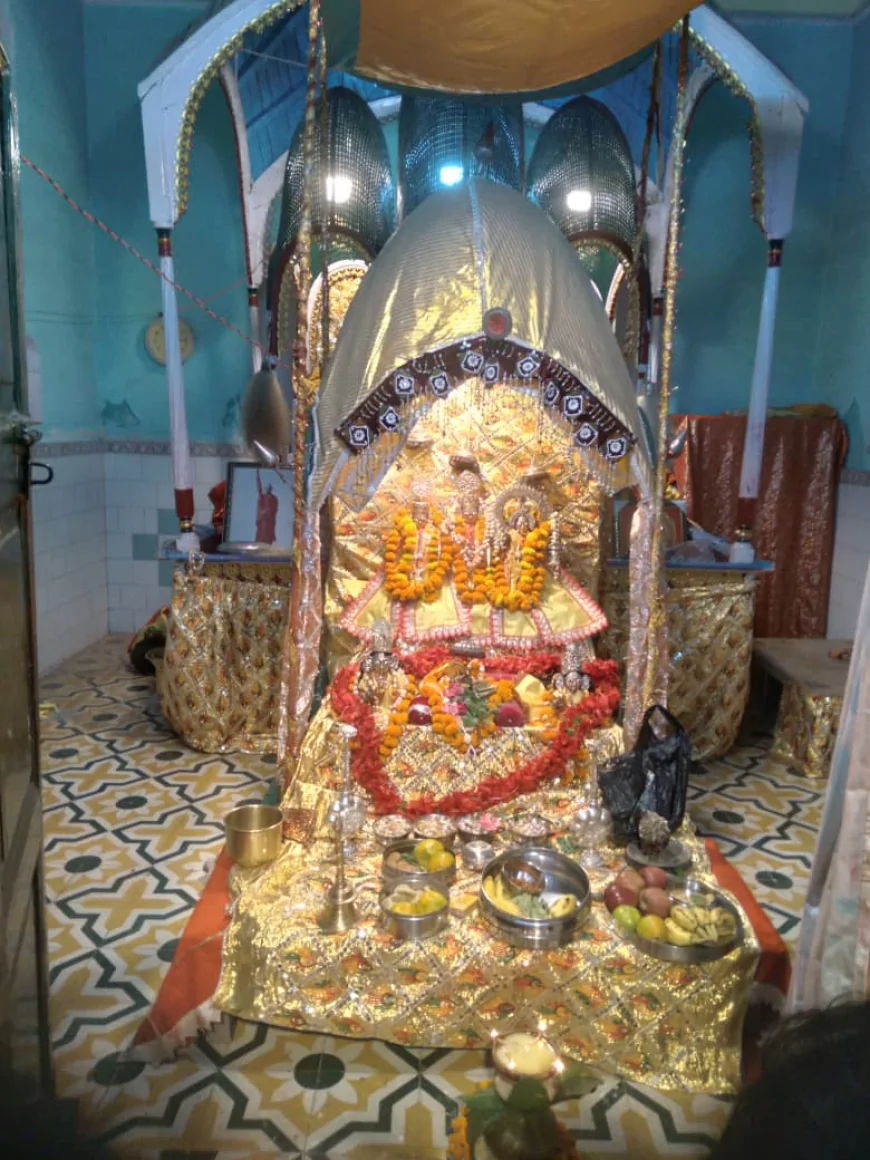
Parallel to the grand procession, a six-day Ramnavami Mahotsav was organised at two key spiritual centres: Bari Mathia and Manas Mandir located at Ramana Maidan. These venues became focal points of sustained devotion. The programmes featured colourful dandiya dances that blended folk energy with spiritual grace, soulful bhajan sandhya sessions, powerful Devi Jagran events, and continuous Akhand Hari Ram Kirtan that went on for hours. At Bari Mathia specifically, the six-day Ram Janmotsav saw generous distribution of prasad — ranging from sweets, fruits, and halwa to savouries — among thousands of devotees, reinforcing the beautiful Sanatan principle of sharing and selfless service (seva).
Political leaders from across party lines set aside differences to join the procession, pay obeisance, and participate wholeheartedly in the devotional fervour. Former Ara MP Raj Kumar Singh, MLA Sajay Singh Tiger and the local MLA as well as former Agriculture Minister of Bihar, Amrendra Pratap Singh, reached Ramgarhia early in the day. They walked, danced, and chanted “Jai Shri Ram” enthusiastically alongside common devotees right up to Gopali Chowk, showcasing their deep personal connect with the masses. Other prominent figures included Bihar’s Labour and Resources Minister Sanjay Singh Tiger, Dumraon MLA Rahul Ji, Sandesh MLA Radha Charan Seth Ji, former Aurangabad MP Sushil Kumar Singh, Mayor Indu Devi, and several other dignitaries. Many of these leaders reverentially touched the feet of Sant Devraha Shivnath Das Jee Maharaj, Brahmpur Peethadhishwar Acharya Dharmendra Tiwari, seeking divine blessings not only for themselves but for the entire people of Bihar. Their presence, particularly with assembly elections approaching, beautifully underscored the deep-rooted cultural and emotional bond between politics, public faith, and Sanatan traditions in the region.
The organising committee worked tirelessly behind the scenes for months to ensure the event’s success. Key members included Executive Chairman Guddu Singh Babuan, General Secretary Shambhu Prasad Chaurasia, Treasurer Gokul Singh, Joint Treasurer Virendra Singh, Secretary Sudhir Ji, Rath Sajavat (Chariot Decoration) Pramukh Anil Ji, Vice President and Rural Chairman Sunny Pandey, Vice President Naveen Prakash, City Decoration Head Badal Jalan, Security Head Rajeshwar Paswan, Jhanki (Tableau) Pramukh Shambhu Singh along with Harom Ji, Acharya Dharmendra Ji, Akhandanand Ji Maharaj, Ashok Tiwari, Harsh Raj Manglam, Star Pracharak Saroj Pandey, Rohit Singh Bajrangi, and scores of dedicated volunteers. Their coordinated efforts resulted in a flawless execution. General Secretary Shambhu Prasad Chaurasia warmly acknowledged the saint’s inspiring address and publicly thanked the massive turnout of Ram bhaktas, the district administration, and the media fraternity for their unwavering support and positive coverage.
One of the most heartening aspects of the celebrations was the visible and spontaneous expression of communal harmony. The Muslim community of Ara did not lag behind in extending warmth and support. At prominent points such as Gopali Chowk, Badi Masjid, and Abrapur localities, local Muslims set up generous stalls offering refreshing sharbat, cold drinking water, sweetmeats, and other refreshments to the tired yet joyful Hindu devotees. Md Zafar, a respected local resident, remarked with genuine warmth, “Bhojpur is historically known for its communal harmony, and this small gesture will go a long way in further strengthening the secular fabric of our beloved district.” The sight of Hindus and Muslims serving each other selflessly in the name of Lord Ram sent a powerful, enduring message of brotherhood and coexistence, especially meaningful in a region that has occasionally witnessed minor tensions in the past.
Similar processions marked by equal religious fervour were taken out in other important towns and blocks of Bhojpur district, including Piro, Jagdishpur, Sahar, Shahpur, Sandesh, and Bihia. All these events were conducted under tight security arrangements. Devotees thronged temples across the length and breadth of the district in thousands to have darshan of Lord Ram and Goddess Durga. Almost every temple was tastefully decorated with colourful lights, fresh flowers, and auspicious symbols. The main spiritual hubs at Bari Mathia and Manas Mandir continued to attract large crowds even after the main procession concluded.
The district administration, led by District Magistrate Tanay Sultania and Superintendent of Police Raj, demonstrated exemplary professionalism and proactiveness. They left no stone unturned to ensure the celebrations remained peaceful, orderly, and incident-free. Magistrates and police personnel, along with armed and lathi-wielding jawans, were strategically deployed at a total of 269 locations throughout the district, with special focus on 23 sensitive points. Additional deployments included 3 magistrates at Sandesh, 7 at Sahar, 7 at Tarari, 6 at Sikarhatta, 10 at Piro, 11 at Charpokhari, 5 at Shahpur, 2 at Bihia, and 4 at Jagdishpur. Sub-Divisional Officers (SDOs) and Sub-Divisional Police Officers (SDPOs) were personally instructed to monitor their respective areas round the clock.
As a critical precautionary measure against any risk of electrocution from the tall flag posts and overhead wiring carried during the procession, the entire town’s power supply was disconnected from 11:30 am till late evening. This decision was taken even though underground cabling work was nearly complete in many parts of Ara. Liquor shops across the district were ordered to remain shut for the entire day. Ambulances were stationed at regular intervals along the procession route, and Sadar Hospital was kept on high alert with adequate doctors, paramedical staff, life-saving medicines, and emergency facilities.
In a joint order issued by the DM and SP, strict guidelines were laid down: prohibition on the use of Disc Jockeys (DJs) mounted on trucks, restrictions on loud music beyond permissible decibel limits, but the people were recalcitrant and they played the DJ at high pitch, ban on indiscriminate exhibition of weapons, raising of inciting or provocative slogans, and irresponsible high-speed motorcycle riding by youths. A strong police contingent paraded through the town on the eve of the festival (Saturday evening), making public announcements warning hoodlums and anti-social elements against any disruptive activities. The administration made it clear that stern legal action would be taken against violators. Advanced drone surveillance, full videography of the entire yatra, and deployment of plainclothes officers were additional layers of security. Police biker teams escorted the procession from both front and rear for smooth movement.
Despite these comprehensive directives, a few minor deviations were observed. Some trucks were seen carrying six to eight DJ systems playing music at maximum volume, and groups of enthusiastic young followers wielding naked swords rode motorcycles at considerable speed through crowded stretches. Some elderly citizens and concerned onlookers expressed their anguish, noting that such reckless behaviour on the sacred land associated with Maryada Purushottam Lord Shri Ram sent an inappropriate message to the coming generations. However, these isolated incidents remained limited and could not overshadow the overwhelming positivity, discipline, and spiritual grandeur of the overall event.
The city of Ara was truly “Bhagwa May” (saffron-infused) and “Ram May” (permeated with Ram’s presence). Every neighbourhood, every building, shop, and even passing vehicles proudly displayed saffron flags. Streets were lined with welcoming banners and posters greeting Ram bhaktas. The atmosphere remained electric with devotion from the early morning hours till late into the evening.
The Shobha Yatra also had the honour of participation by senior academicians and spiritual luminaries. Former Vice Chancellor of Veer Kunwar Singh University and Brahmpur Peethadhishwar Acharya Dharmendra Tiwari, along with Akhandanand Ji Maharaj, rode the main chariot immediately behind the saint, lending additional sanctity and scholarly depth to the occasion.
In his memorable address, Sant Devraha Shivnath Das Jee Maharaj beautifully captured the essence of the divine experience with the poetic lines: “Disi aru bidisi panth nahin soojha. Ko main chaleun kahan nahin boojha.” The devotees, too, appeared completely lost in divine ecstasy, where only the presence of Ram was visible everywhere. The living statue of Lord Ram, the vibrant tableaux enacted by enthusiastic children (depicting powerful scenes such as Lanka Dahan, Shri Krishna Leela, and episodes from Shiv Puran alongside Ramayana), and the collective rocking of cradles symbolised the unbroken, living thread of Sanatan Dharma that connects generations.
The six-day festivities at Ramana Maidan and Bari Mathia continued vibrantly even after the main procession, featuring a harmonious blend of classical bhajans, lively folk dances, enlightening spiritual discourses by learned saints and scholars, and continuous kirtans. The generous distribution of prasad reinforced the timeless Indian value of anna daan and community bonding.
The administration’s proactive and balanced approach — including strict verification of procession routes before granting permissions, emphasis on social harmony, and round-the-clock monitoring — ensured that the festival passed off peacefully even in pockets where minor communal sensitivities had been noted in previous years. This successful model of faith-friendly yet firm governance set a positive example.
This year’s Ram Navami celebrations in Bhojpur were not merely a religious festival; they represented a grand, living reaffirmation of Bihar’s profound cultural ethos. Here, deep-rooted faith, responsible governance, and social harmony converged seamlessly. The massive participation of people from all walks of life, the flawless organisation by dedicated volunteers, the visible support from political leaders, and the heartwarming inter-community goodwill together painted a vibrant picture of a society that remains deeply anchored in its ancient spiritual heritage while being forward-looking in its commitment to unity, peace, and progress.
As the resounding chants of “Jai Shri Ram” gradually faded into the calm of the night and the twinkling lights of the beautifully decorated temples continued to glow softly, Ara and the entire Bhojpur district stood tall as a living testimony to the eternal, universal message of Lord Ram — the triumph of truth over falsehood, duty over desire, and universal brotherhood over division.
The 25th anniversary of the Ramnavami Mahatsav Shobha Yatra will undoubtedly be remembered for years to come as a significant milestone. It beautifully blended ancient, timeless devotion with modern administrative excellence and inclusive social values. It served as a gentle yet powerful reminder that on the sacred land associated with Maryada Purushottam Shri Ram, every celebration must uphold the highest standards of dignity, discipline, and dharma.
The people of Bhojpur have once again demonstrated with pride and devotion that when Ram truly resides in the heart, every city and every home truly becomes Ram May — radiating light, harmony, and inspiration not only for Bihar but for the entire nation.
What's Your Reaction?
 Like
0
 Dislike
0
 Love
0
 Funny
0
 Wow
0
 Sad
0
 Angry
0








Comments (0)