
MEMORIAL GATE AND DIGITAL LIBRARY TO BE BUILT IN THE MEMORY OF DEVI OJHA
A concrete and organized initiative is now taking shape in Sahjauli village—located in the Shahpur block of Bhojpur district—to preserve the legacy of the great warrior Veer Devi Ojha and pass it on to the new generation. Ojha was a hero who fueled the flames of the First War of Independence in 1857 through his courage, strategic acumen, and indomitable fighting spirit. This is being hailed as a significant step toward preserving history and heritage at the village level. As part of this initiative, the foundation stones for the ‘Veer Devi Ojha Memorial Gate’ and a ‘Digital Library’ were formally laid in his ancestral village, Sahjauli, on Sunday.
MEMORIAL GATE AND DIGITAL LIBRARY TO BE BUILT IN THE MEMORY OF DEVI OJHA
20-JULY-ENG 8


RAJIV NAYAN AGRAWAL
ARA--------------------A concrete and organized initiative is now taking shape in Sahjauli village—located in the Shahpur block of Bhojpur district—to preserve the legacy of the great warrior Veer Devi Ojha and pass it on to the new generation. Ojha was a hero who fueled the flames of the First War of Independence in 1857 through his courage, strategic acumen, and indomitable fighting spirit. This is being hailed as a significant step toward preserving history and heritage at the village level. As part of this initiative, the foundation stones for the ‘Veer Devi Ojha Memorial Gate’ and a ‘Digital Library’ were formally laid in his ancestral village, Sahjauli, on Sunday.
To make the event even more special, a commemorative souvenir focusing on Veer Devi Ojha’s life, his struggles, and his contribution to the nation was released. This souvenir attempts to encapsulate his personality, key events, and the circumstances of the 1857 era, enabling the general public—especially students and the youth—to understand history not merely through the limited context of textbooks, but through living examples from their own region.
The event's chief guest, former MP Meena Singh, stated in her address that great revolutionaries like Veer Devi Ojha remain a tremendous source of inspiration for society today. She noted that he sacrificed everything for the country's freedom and that every chapter of his life stands as an example of sacrifice, valor, and patriotism. Meena Singh also highlighted that the struggle of 1857 is often viewed through the lens of major centers and famous names, whereas the soil of Bihar and Bhojpur produced many such fighters whose contributions were second to none.
She mentioned that while the British administration made constant attempts to capture him, they never succeeded due to his combat skills and brilliant strategies. According to her, Devi Ojha’s agility, speed, knowledge of the local terrain, and public support established him as a symbol of a powerful mass movement. Meena Singh noted that historical records reveal that even Queen Victoria had announced a punishment for him that was described as "worse than death."
The former MP also heaped praise on the Devi Ojha Memorial Trust. She stated that preserving the memory of such a heroic son of the soil and making it accessible to future generations is not merely the task of a single organization, but a collective responsibility of society. Congratulating the Trust, she remarked that the memorial gateway and digital library could evolve into a future hub for research, study, and inspiration.
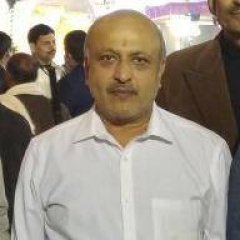
A commemorative souvenir was jointly unveiled during the event. Joining former MP Meena Singh on the dais were educationists M.K. Mishra and Shambhu Sharan Mishra, advocates Ashwini Kumar Pandey and Narendra Tiwari, and Devkumar Ojha, a descendant of the brave Devi Ojha. Speakers emphasized the need to disseminate such material to every village so that this history could be more firmly rooted in the public consciousness.
Following the unveiling of the souvenir, guests, intellectuals, local representatives, and other speakers stressed the vital importance of compiling, preserving, and disseminating material based on regional history. They noted that oral traditions tend to fade over time, and without proper documentation, many significant historical facts could be lost to future generations.
Immediately after the souvenir launch, the foundation stone was laid for the construction of the memorial gateway and digital library. This initiative is considered significant because the memorial gateway will serve as a symbolic entrance to the village, constantly reminding passersby of the heroism this land has witnessed. Meanwhile, the digital library—aligned with modern needs—could become a center where historical materials, documents, photographs, articles, videos, research papers, and information gathered from various sources are made systematically available.
Local MLA Rakesh Ranjan remarked that although the brave Devi Ojha is no longer among us, his courage and struggle during the freedom movement had once shaken the British administration to its core. He further remarked that institutionalizing the memory of such warriors strengthens the sense of self-pride and inspiration within society. Commending the proactive efforts of the trust and the villagers, the MLA stated that this initiative by Sahjauli could serve as an example for neighboring areas in the future.
Trust President Dilip Kumar Ojha announced that a comprehensive book detailing the life and struggles of Veer Devi Ojha, as well as her contribution to the First War of Independence in 1857, would be published in the coming months. He explained that while the current souvenir serves as an introductory document, the proposed book would be prepared based on extensive research and references to provide authentic material for history scholars and students. He also emphasized that the trust's objective extends beyond organizing just one or two events; rather, it is an ongoing campaign that requires sustained societal participation.
In his address, educationist M.K. Mishra stressed the urgent need to acquaint the younger generation with Veer Devi Ojha's contributions. In an era where youth are exposed to a multitude of choices, ideas, and influences, connecting them with their true history and local heroes can provide them with the right direction and strong values. He noted that a digital library would play a pivotal role in this endeavor by enabling children and young people to connect with history through technology.
He also suggested that By coordinating with schools and colleges, educational visits, lectures, debate competitions, and history-based workshops should be organized here. This will ensure that the memorial gate and library do not remain mere structures but evolve into active educational hubs.
Former MLA Rahul Tiwari remarked that honoring such a great freedom fighter is a matter of pride for the entire community. He noted that when a village or region becomes associated with such heroes, it instills a positive sense of self-confidence among the local people, which can serve as a catalyst for social development. He further stated that it is the local community's responsibility to bring to light those freedom fighters whose names have remained relatively obscure at the national level—and Sahjauli has demonstrated exactly that.
Meanwhile, Shambhu Sharan Mishra, Advocate Ashwini Kumar Pandey, Narendra Tiwari, and Mukteshwar Mishra (alias Sarji) recalled that even the British army used to tremble at the mere mention of Veer Devi Ojha during the First War of Independence. The speakers highlighted that her strategic acumen, fearlessness, and organizational skills set her apart. They described the construction of the memorial gate and digital library in her name at Sahjauli Mathiya as a crucial and far-reaching initiative to keep her legacy alive. This will not only foster a sense of respect but also create a hub for research and information.
Social activist Hiralal Ojha emphasized that it is the moral duty of all to pass on the story of Veer Devi Ojha’s struggle and sacrifice to future generations. He remarked that independence is not merely a historical event but the result of countless sacrifices; if we forget those sacrifices, we risk drifting away from our values, identity, and social responsibilities. According to him, initiatives like the memorial gate and digital library connect society to its past, making it more aware and united for the future.
PACS President Krishna Yadav, Chanchal Ojha, Rishikesh Ojha, Umesh Chandra Pandey, Vinay Shankar Ojha, Shivshankar Singh, Sureman Chaudhary, Shailesh Chandra, and Satyadev Rai also shared their views during the event. The speakers emphasized completing the construction work on schedule, organizing the storage of materials, and ensuring the library remains operational on a regular basis so that the project continues to be effective in the long run.
Prior to the main event, the Devi Ojha Memorial Trust honored all visiting guests by presenting them with *angavastras* (traditional ceremonial stoles). This gesture was not merely a formality but a token of gratitude towards everyone associated with this initiative in one way or another. The participation and enthusiasm of the local residents were clearly evident at the venue; the villagers viewed the event as an expression of solidarity and respect for their region's history.
A large number of local dignitaries attended this dignified event, including Trust Secretary Abhinav Ojha, Ramdev Tiwari, Golu Ojha, Ramkumar Yadav, Ankit Pandey, Chandan Pandey, Pankaj Tiwari, Pappu Ojha, Ashok Sharma, Shivshankar Singh, Babli Pandey, journalist Vikas Pandey, Mithilesh Kumar Sinha (alias Bullet), Ravi Yadav, Krishna Upadhyay, Pintu Kushwaha, and Bablu Singh.
What's Your Reaction?
 Like
0
Like
0
 Dislike
0
Dislike
0
 Love
0
Love
0
 Funny
0
Funny
0
 Wow
0
Wow
0
 Sad
0
Sad
0
 Angry
0
Angry
0





Comments (0)