
SEVEN DECADE OLD DULGA PUJA TRADITION IN MIRGANJ
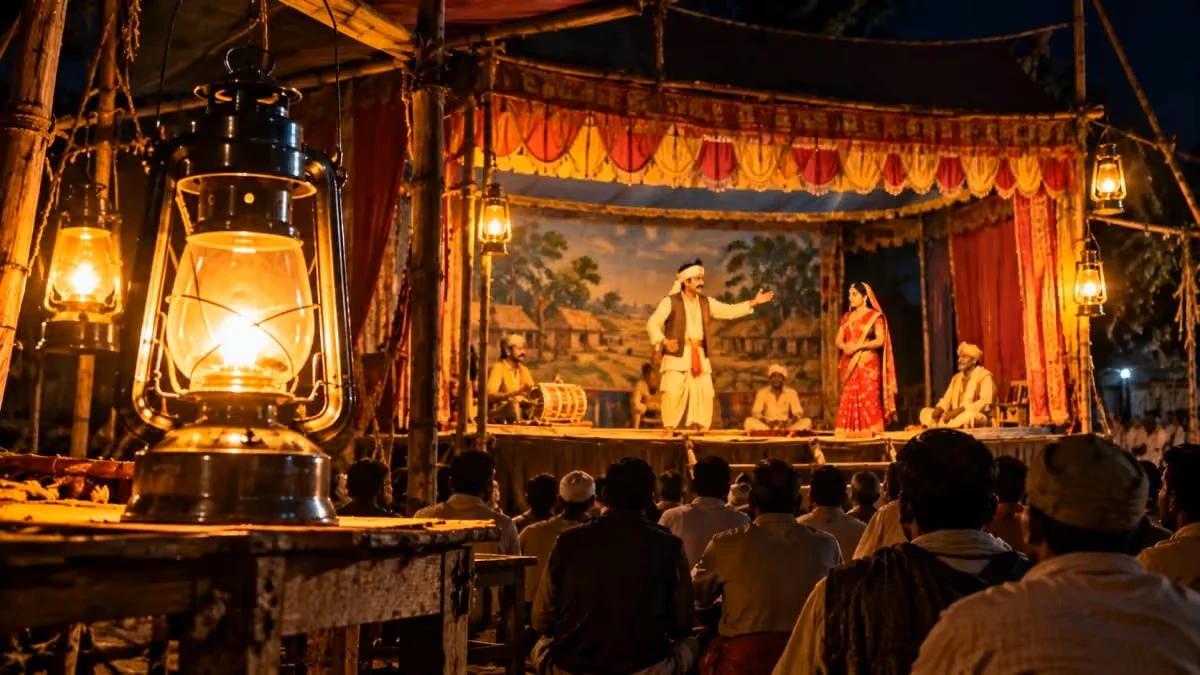
In the Mirganj locality of Arrah—a city in the Bhojpur district of Bihar—the Durga Puja tradition at ‘Ramdhyan Singh ka Hata’ (the premises of Ramdhyan Singh) transcends mere religious devotion; it is deeply intertwined with the history of Bhojpuri folk culture and theatre. About seven decades ago, the troupe of the renowned folk artist and playwright Bhikhari Thakur used to perform plays here during the Durga Puja festival. In those days, audiences from across the Bhojpur region, including Arrah, would gather to watch these performances, which lasted all night and were illuminated by the glow of Petromax (pressurized kerosene) lamps.

SEVEN DECADE OLD DULGA PUJA TRADITION IN MIRGANJ
18-OCT-ENG 4


RAJIV NAYAN AGRAWAL
ARA-------------------------In the Mirganj locality of Arrah—a city in the Bhojpur district of Bihar—the Durga Puja tradition at ‘Ramdhyan Singh ka Hata’ (the premises of Ramdhyan Singh) transcends mere religious devotion; it is deeply intertwined with the history of Bhojpuri folk culture and theatre. About seven decades ago, the troupe of the renowned folk artist and playwright Bhikhari Thakur used to perform plays here during the Durga Puja festival. In those days, audiences from across the Bhojpur region, including Arrah, would gather to watch these performances, which lasted all night and were illuminated by the glow of Petromax (pressurized kerosene) lamps.
This year, too, the family continues to celebrate Durga Puja at ‘Ramdhyan Singh ka Hata,’ upholding the long-standing tradition. The family—including former ward councillor Anita Singh, her daughter Engineer Shikha Singh (who is also a member of the Maa Aranya Devi Temple Trust), and her son-in-law, marketing officer Raunak Singh—is carrying forward the legacy of their ancestors. The festivities include *kirtan* (devotional singing) on *Ashtami*, and *Kanya Pujan* (worship of young girls) followed by a grand *bhandara* (community feast) on *Navami*.
According to local lore, Bhikhari Thakur and his troupe first arrived at ‘Ramdhyan Singh ka Hata’ in Mirganj at the special invitation of a local resident, Baleshwar Singh. Impressed by the arrangements, Thakur and his troupe performed their art here for three days. His plays gained immense popularity among the audiences of that era.
It is said that during Durga Puja, plays were staged on the nights of *Saptami*, *Ashtami*, and *Navami*. The performances would begin around 8:00 PM and continue until 5:00 AM the following morning. In the absence of modern electricity or generators, the stage was illuminated by Petromax lamps.
People would travel from far and wide—not just from Arrah city, but also from surrounding areas such as Piro, Barhara, Koilwar, Jagdishpur, and Bihiya—to witness these performances. This event served not only as a religious celebration but also as an occasion for people to come together in a cultural gathering.
Bikhari Thakur, a prominent figure in Bhojpuri folk theatre, used his plays to bring social issues and regressive practices to the stage. His well-known works include *Bidesiya*, *Beti Bechwa*, *Gabharghichor*, *Vidhwa Vilap*, and *Bhai Virodh*. These plays prominently addressed themes such as migration, family dynamics, the status of women, and various social anomalies.
His plays functioned as both a source of entertainment and a vehicle for conveying social messages. The staging of these plays in Mirganj reflects the public's keen interest in Bhojpuri folk culture and the vibrant cultural atmosphere of that era.
Bikhari Thakur passed away on July 10, 1971. According to available information, the theatrical tradition associated with his troupe continued for many years after his death, under the leadership of his nephew. These performances, held on a permanent stage in Mirganj, played a significant role in carrying forward the legacy of folk theatre.
To this day, the Durga Puja celebration at Ramdhyan Singh’s *hata* (homestead/premises) remains a symbol of the family’s faith and long-standing traditions. The entire family—including former ward councillor Anita Singh; Engineer Shikha Singh (daughter of Ashok Singh, a member of the Maa Aranya Devi Temple Trust); and her husband, marketing officer Raunak Singh—continues the tradition of installing the idol of Goddess Durga and performing worship, now involving the next generation as well.
During Navratri, religious traditions are kept alive through events such as *kirtan* (devotional singing), *kanya pujan* (worship of young girls), and *bhandara* (community feasts). The memories of Bikhari Thakur’s plays—evoked by the glow of *petromax* (pressurized kerosene) lamps—lend a unique cultural identity to this celebration. The family has prayed for the continued blessings of Goddess Durga upon everyone and for a bright future for all.
What's Your Reaction?
 Like
0
 Dislike
0
 Love
0
 Funny
0
 Wow
0
 Sad
0
 Angry
0











Comments (0)