
AN IN-DEPTH ANALYSIS OF THE EVOLVING LANDSCAPE AND RELEVANCE OF RESERVATION: MAHENDRA TIWARI
Reservation is a subject in India's political and social discourse whose heat never fully dissipates. Recent developments indicate that this issue is once again gaining significant momentum. The debate now centers not merely on existing rights but encompasses new and complex demands, such as a caste census, sub-categorization within quotas (quotas-within-quotas), and representation based on economic criteria. The tug-of-war over this issue between regional and national parties across various states demonstrates that the most effective path to the corridors of power still runs through this very issue. While political platforms present it as the next essential step toward social justice, a look beneath the surface reveals the strategic maneuvering of electoral arithmetic.

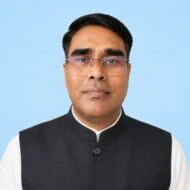
AN IN-DEPTH ANALYSIS OF THE EVOLVING LANDSCAPE AND RELEVANCE OF RESERVATION: MAHENDRA TIWARI
31-JULY-ENG 12


RAJIV NAYAN AGRAWAL
ARA---------------------------Reservation is a subject in India's political and social discourse whose heat never fully dissipates. Recent developments indicate that this issue is once again gaining significant momentum. The debate now centers not merely on existing rights but encompasses new and complex demands, such as a caste census, sub-categorization within quotas (quotas-within-quotas), and representation based on economic criteria. The tug-of-war over this issue between regional and national parties across various states demonstrates that the most effective path to the corridors of power still runs through this very issue. While political platforms present it as the next essential step toward social justice, a look beneath the surface reveals the strategic maneuvering of electoral arithmetic.
A major reason for the current controversy is the unequal distribution of reservation benefits. There is a growing demand that the advantages of reservation should not remain confined to the few castes or families that have already leveraged them to become empowered. The view that the reservation system requires sub-categorization—to bring the most marginalized and deprived sections of society into the mainstream—has even reached the courts. Those who have remained on the fringes for decades continue to languish there. In this context, the call for a re-evaluation of reservation appears logical. However, in a country like India, where caste is a highly sensitive and emotive issue, any such change carries immense political risk. Established and influential groups are unlikely to accept any curtailment of their entitlements, resulting in a persistent state of confrontation.
Amidst this entire debate, the nation's youth find themselves at a difficult crossroads. Since the advent of liberalization, the scope of government employment has steadily shrunk, while competition in the private sector has intensified. When resources and opportunities are scarce, policies like reservation inevitably trigger sharp reactions within society. On one side, there is the reserved category, for whom this system serves as the sole guarantee to break free from centuries of social discrimination and lead a dignified life. On the other side are the youths of the unreserved category who, despite struggling hard, find themselves deprived of opportunities and view this entire system as being contrary to merit. This ideological and social divide is splitting society into two opposing poles. The unfortunate reality is that the serious and far-reaching dialogue needed to bridge this chasm has been completely drowned out by political clamor.
The framers of the Constitution envisioned reservation as a means to build an egalitarian society and rectify historical injustices. Their objective was not to divide society but to provide everyone with equal opportunities for advancement. Today, the need of the hour is to look at this system from an impartial and transparent perspective, freeing it from the narrow politics of vote banks. Merely increasing quotas or adding new castes to the list will not eradicate poverty and backwardness; what is required is a concrete focus on quality education, skill development, and the strengthening of infrastructure. Until new employment opportunities are created for all sections of society, the issue of reservation will continue to fuel discontent. True social justice will only be achieved when policies are formulated and implemented in the broader interest of nation-building, free from political self-interest.
What's Your Reaction?
 Like
0
Like
0
 Dislike
0
Dislike
0
 Love
0
Love
0
 Funny
0
Funny
0
 Wow
0
Wow
0
 Sad
0
Sad
0
 Angry
0
Angry
0





Comments (0)