
ANCIENT HISTORY OF ARANYA DEVI IN ARA
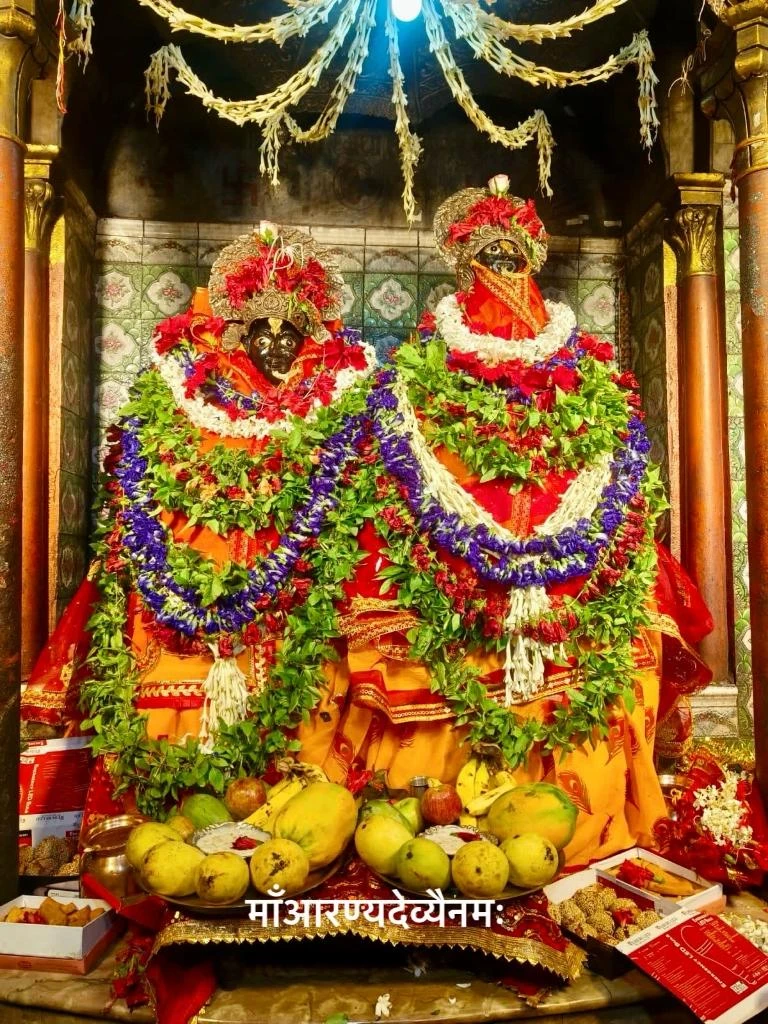
The history of "Maa Aranya Devi," the presiding deity of Ara city, is believed to be linked to the eras of the Ramayana and the Mahabharata. The city of Ara derives its name from this very goddess. **Mythology and Establishment (Pandavas and Yudhishthira):** It is believed that the Pandavas stayed in Ara during their exile. The area was once a dense forest. The Goddess appeared to Dharmaraj Yudhishthira in a dream and commanded him to install an idol of Aranya Devi; Yudhishthira subsequently consecrated the deity (Adi Shakti) here. **The Episode of Shri Ram:** After slaying the demoness Tadaka, Lord Ram, Lakshman, and Guru Vishvamitra worshipped Aranya Devi while passing through Ara on their way from Buxar to Janakpur for the *Dhanush Yajna* (bow-breaking ceremony). **Shaktipeeth:** It is believed that a part of Goddess Sati’s body fell here, and the site is considered one of the 51 *Shaktipeeths*. **Legend of the Name "Ara":** During the *Dvapara Yuga*, King Mayurdhwaj ruled this region. It is said that Lord Krishna, accompanied by Arjuna, came to test the King's spirit of charity. When the King prepared to sacrifice his own son, Maa Aranya Devi appeared. At that moment, the King was in the process of splitting his son's body using an *Ara* (a tool for sawing wood). Consequently, the place came to be known as "Ara," and the deity was named "Aranya Devi" (Goddess of the Forest). Some traditions also hold that it was Lord Krishna himself who named the city of Ratanpura as "Ara." **Temple Features (Idols):** The temple houses a large idol of Mahasaraswati made of black stone and a smaller idol of Mahalakshmi. The smaller idol is revered as a form of Lakshmi, while the larger one is worshipped as Saraswati. **Current Temple:** The present marble temple is situated in Ara. In 1953, idols of Shri Ram, Lakshman, Sita, Bharat, Shatrughna, and Hanuman were also installed here. **Other Names:** She is also known as "Kila ki Devi" (Goddess of the Fort) because King Mayurdhwaja's fort was located here during the Dwapara Yuga. **Religious Beliefs:** People believe that vows (mannats) made here are invariably fulfilled. Devotees light large ghee lamps until their wishes are granted. During Navaratri, devotees from across the country visit this site. **Location:** Situated north of Ara Railway Station and approximately 200 meters north-east of Sheesh Mahal Chowk. Aranya Devi is the *Kuldevi* (family/clan deity) of Ara, and her history is said to span from the Satya Yuga to the Kali Yuga.

ANCIENT HISTORY OF ARANYA DEVI IN ARA
1-AUG-ENG 5


RAJIV NAYAN AGRAWAL
ARA----------------------------The history of "Maa Aranya Devi," the presiding deity of Ara city, is believed to be linked to the eras of the Ramayana and the Mahabharata. The city of Ara derives its name from this very goddess. **Mythology and Establishment (Pandavas and Yudhishthira):** It is believed that the Pandavas stayed in Ara during their exile. The area was once a dense forest. The Goddess appeared to Dharmaraj Yudhishthira in a dream and commanded him to install an idol of Aranya Devi; Yudhishthira subsequently consecrated the deity (Adi Shakti) here. **The Episode of Shri Ram:** After slaying the demoness Tadaka, Lord Ram, Lakshman, and Guru Vishvamitra worshipped Aranya Devi while passing through Ara on their way from Buxar to Janakpur for the *Dhanush Yajna* (bow-breaking ceremony). **Shaktipeeth:** It is believed that a part of Goddess Sati’s body fell here, and the site is considered one of the 51 *Shaktipeeths*. **Legend of the Name "Ara":** During the *Dvapara Yuga*, King Mayurdhwaj ruled this region. It is said that Lord Krishna, accompanied by Arjuna, came to test the King's spirit of charity. When the King prepared to sacrifice his own son, Maa Aranya Devi appeared. At that moment, the King was in the process of splitting his son's body using an *Ara* (a tool for sawing wood). Consequently, the place came to be known as "Ara," and the deity was named "Aranya Devi" (Goddess of the Forest). Some traditions also hold that it was Lord Krishna himself who named the city of Ratanpura as "Ara." **Temple Features (Idols):** The temple houses a large idol of Mahasaraswati made of black stone and a smaller idol of Mahalakshmi. The smaller idol is revered as a form of Lakshmi, while the larger one is worshipped as Saraswati. **Current Temple:** The present marble temple is situated in Ara. In 1953, idols of Shri Ram, Lakshman, Sita, Bharat, Shatrughna, and Hanuman were also installed here. **Other Names:** She is also known as "Kila ki Devi" (Goddess of the Fort) because King Mayurdhwaja's fort was located here during the Dwapara Yuga. **Religious Beliefs:** People believe that vows (mannats) made here are invariably fulfilled. Devotees light large ghee lamps until their wishes are granted. During Navaratri, devotees from across the country visit this site. **Location:** Situated north of Ara Railway Station and approximately 200 meters north-east of Sheesh Mahal Chowk. Aranya Devi is the *Kuldevi* (family/clan deity) of Ara, and her history is said to span from the Satya Yuga to the Kali Yuga.
Virendra Mishra, Spokesperson and Media In-charge, Bhojpur District Congress Committee. **Ancient History of Ara's Aranya Devi:** The history of "Maa Aranya Devi," the presiding deity of Ara city, is believed to be linked to the eras of the Ramayana and the Mahabharata. The city of Ara derives its name from this very goddess. **Mythology and Establishment (Pandavas and Yudhishthira):** It is believed that the Pandavas stayed in Ara during their exile. At that time, the area was a dense forest. The Goddess appeared to Dharmaraj Yudhishthira in a dream and commanded him to install an idol of Aranya Devi; consequently, Yudhishthira established the deity (Adi Shakti) here. **Episode involving Shri Ram:** After the slaying of the demoness Tadaka, Lord Ram, Lakshman, and Guru Vishwamitra worshipped Aranya Devi while passing through Ara on their way from Buxar to Janakpur for the *Dhanush Yajna* (bow-breaking ceremony). **Shaktipeeth:** It is believed that a part of Mother Sati's body fell here; the site is considered one of the 51 *Shaktipeeths*. **Story Behind the Name "Ara":** King Mayurdhwaja ruled here during the Dwapara Yuga. It is said that saffron Lord Krishna, accompanied by Arjuna, came to test the King's spirit of charity. When the King prepared to sacrifice his son, the Goddess Aranya Devi appeared. At that moment, the King was in the process of splitting his son's body using an *ara*—a tool used for sawing wood. This event gave the place the name "Ara," and the Goddess came to be known as "Aranya Devi" (Goddess of the Forest). According to some beliefs, it was Lord Krishna himself who named the city "Ara." Temple Features (Idols): The temple houses a large idol of Mahasaraswati carved from black stone and a smaller idol of Mahalakshmi; the smaller one is revered as Lakshmi and the larger one as Saraswati. Current Temple: The present-day marble temple is situated in Ara. In 1953, idols of Shri Ram, Lakshman, Sita, Bharat, Shatrughna, and Hanuman were also installed here. Other Names: She is also known as "Kila ki Devi" (Goddess of the Fort) because King Mayurdhwaja's fort was located here during the Dwapara Yuga. Religious Belief: People believe that vows made here are invariably fulfilled. Devotees light large *ghee* lamps until their wishes are granted. During Navaratri, devotees from across the country visit the temple. Location: It is situated north of the Ara railway station and approximately 200 meters north-east of Sheesh Mahal Chowk. Aranya Devi is the presiding deity (*Kuldevi*) of Ara, and her history is said to span from the Satya Yuga to the Kali Yuga.
What's Your Reaction?
 Like
0
Like
0
 Dislike
0
Dislike
0
 Love
0
Love
0
 Funny
0
Funny
0
 Wow
0
Wow
0
 Sad
0
Sad
0
 Angry
0
Angry
0







Comments (0)